Hydroxytyrosol Foods: Essentially One Ingredient
Oct 1, 2026
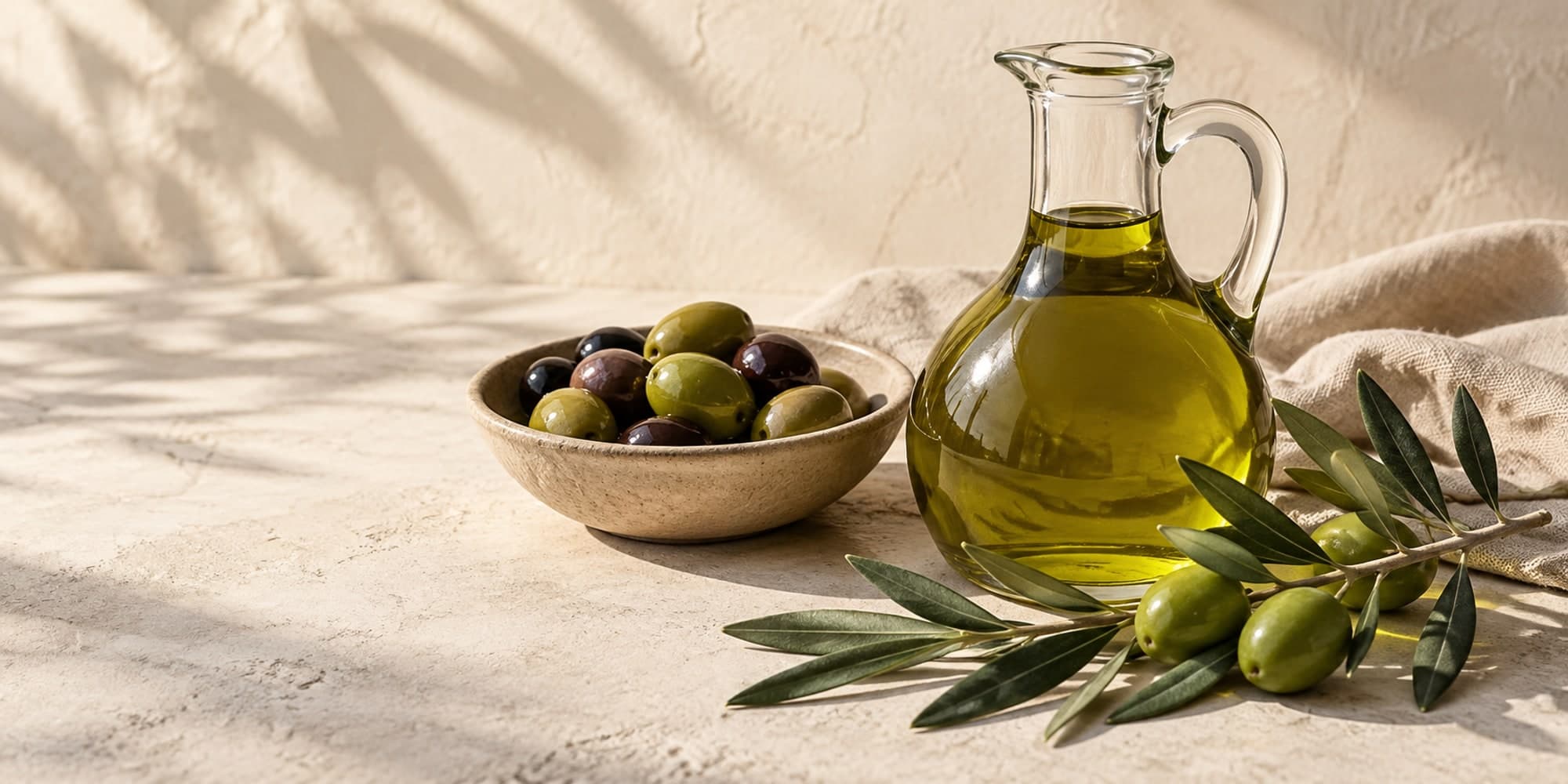
Hydroxytyrosol helps give fresh extra virgin olive oil its bitter, peppery bite. The list of hydroxytyrosol foods is unusually short: extra virgin olive oil and table olives. Refined or "light" olive oil is a poor substitute because refining removes much of the phenolic fraction.
There usually isn't a hydroxytyrosol number on the bottle. Check the grade, container and harvest date instead. Extra virgin oil in dark glass or metal, from a recent harvest, is a more useful bet than a vague antioxidant claim on the front label.
Food is the starting point. A concentrated supplement can still be useful when a clinician recommends a defined dose for a specific reason, but it brings separate questions about dose and interactions.
What hydroxytyrosol is
Hydroxytyrosol and oleuropein are olive polyphenols. They sit outside the flavonoid family that includes compounds such as quercetin and catechins. The category matters less at lunch than the source: hydroxytyrosol is closely tied to the olive tree rather than spread across berries, tea and cocoa.
Oil and olives also bring more than an isolated compound. That's why a food source should not be treated as a tiny version of a capsule. For the family tree, see our guide to what a polyphenol is.
Why the grade on the bottle decides it
Extra virgin olive oil is mechanically extracted without the refining used for "light" or generic olive oils. That processing difference is why the grade matters. Refining removes much of the phenolic material that made the fruit interesting in the first place.
Bitterness and a peppery catch in the throat can accompany fresher, more phenolic oil, though taste isn't a laboratory test. A harvest date is useful because these compounds decline during storage. Buy a size you will finish while the oil still tastes fresh.
The short list
Extra virgin olive oil is the obvious kitchen source, but the compound begins in the olive fruit. Table olives belong on the list too. Curing changes their composition, so different styles should not be assumed to contain identical amounts.
Olive leaves contain related compounds and appear in extracts, but an olive leaf supplement isn't another food serving. It has its own standardization, dose and safety questions. No other common food makes the short list as a meaningful hydroxytyrosol source.
| Source | What it gives you | What to check |
|---|---|---|
| Extra virgin olive oil | Carries hydroxytyrosol and oleuropein | That the label says extra virgin, since refining strips these compounds out |
| Refined or light olive oil | Little to nothing of these compounds, because refining removes them | Whether you're buying the oil for cooking heat rather than for its polyphenols |
| Table olives | The fruit itself, which is where the compounds sit in the first place | That curing changes what remains, since processing moves these amounts |
| Olive leaf products | Made from the leaf rather than the fruit or the oil | Which compound the product is standardized to |
| A hydroxytyrosol supplement | A concentrated form, which is a different proposition from oil on the table | That these products aren't approved before sale |
| Every other everyday food | No other everyday food is a meaningful source of hydroxytyrosol | Nothing, because the list genuinely stops here |
What happens to it in the kitchen
Cultivar, ripeness and processing all change the starting amount. Time, light and heat change what remains. This variation is why a precise food-dose claim is hard to defend without testing the individual oil.
Use extra virgin olive oil where you enjoy it, including dressings and finishing. Cooking with it doesn't turn it into junk, but prolonged high heat and storage in a bright, warm place work against the compounds you paid for. Our guide to heat and light in extra virgin olive oil goes deeper.
Where it sits among the other polyphenols
Hydroxytyrosol is one member of a much larger diet. Onions bring quercetin, tea brings catechins and dark berries bring anthocyanins. You don't need to rank those families or force every meal to contain all of them.
There is no recommended daily amount for olive polyphenols, so a spoonful of oil can't be measured against an official target. Evidence about an olive-oil-rich eating pattern also doesn't prove that one isolated molecule caused the result. See what the olive oil trials can support.
The supplement version
A hydroxytyrosol capsule concentrates one part of the food and removes the rest of the meal. That may be useful in a specific study or clinician-guided situation, but it doesn't make the capsule a more complete source.
U.S. dietary supplements aren't approved by the Food and Drug Administration before sale. The manufacturer is responsible for safety and labeling. Talk to a doctor or pharmacist before using a concentrated product if you take medication, are pregnant or are being treated for a health condition. Our comparison of food and supplement sources explains the tradeoff.
How much, and what nobody can tell you
No official intake target tells you how much hydroxytyrosol to eat. A number used in a trial belongs to that formulation, population and outcome; it's not automatically a daily recommendation.
That uncertainty is manageable with food. Use olives and extra virgin olive oil as foods you enjoy, not as medicine measured by the spoonful. A supplement requires the more exact conversation about dose.
Making the bottle worth it
Spend money on the details you can verify: extra virgin grade, recent harvest, opaque packaging and a bottle size you can finish. Skip undefined superlatives. Then use the oil instead of saving it for a perfect occasion.
Hydroxytyrosol doesn't need to carry the whole diet. Tea, coffee, cocoa, herbs, onions and berries bring other polyphenols. Our polyphenol grocery list turns that variety into ordinary shopping.
Common questions
What is the best source of hydroxytyrosol?
Extra virgin olive oil is the most practical source, and table olives contain it too. The exact amount varies with the olive, processing and storage.
What happens if I take a spoonful of olive oil every day?
There is no official hydroxytyrosol target, so a daily spoonful can't be scored against a recommended amount. Olive oil can still fit a balanced diet; that's a food choice, not a dosing protocol.
Is it safe to take hydroxytyrosol?
Food amounts and supplement doses are different decisions. Ask a doctor or pharmacist about a concentrated product if you take medication, are pregnant or are being treated for a health condition.
Where can you get hydroxytyrosol?
Olives and extra virgin olive oil are the everyday food sources. Olive leaf and hydroxytyrosol extracts are supplements, not additional foods on the list.
Does refined olive oil contain hydroxytyrosol?
Refining removes much of the phenolic material, so refined or "light" olive oil contains far less than extra virgin oil. Choose the grade according to what you want from the oil rather than assuming every bottle is equivalent.
Do olives contain hydroxytyrosol?
Yes. Hydroxytyrosol begins in the fruit, although curing changes the amount that remains. Different olive styles should not be treated as interchangeable doses.
What to buy
For food, buy extra virgin olive oil you will actually use and keep it away from heat and light. For a supplement, ignore a dramatic front label until the ingredient amount and evidence are clear.