
Polyphenols in Extra Virgin Olive Oil: What Heat and Light Destroy
Sep 9, 2026
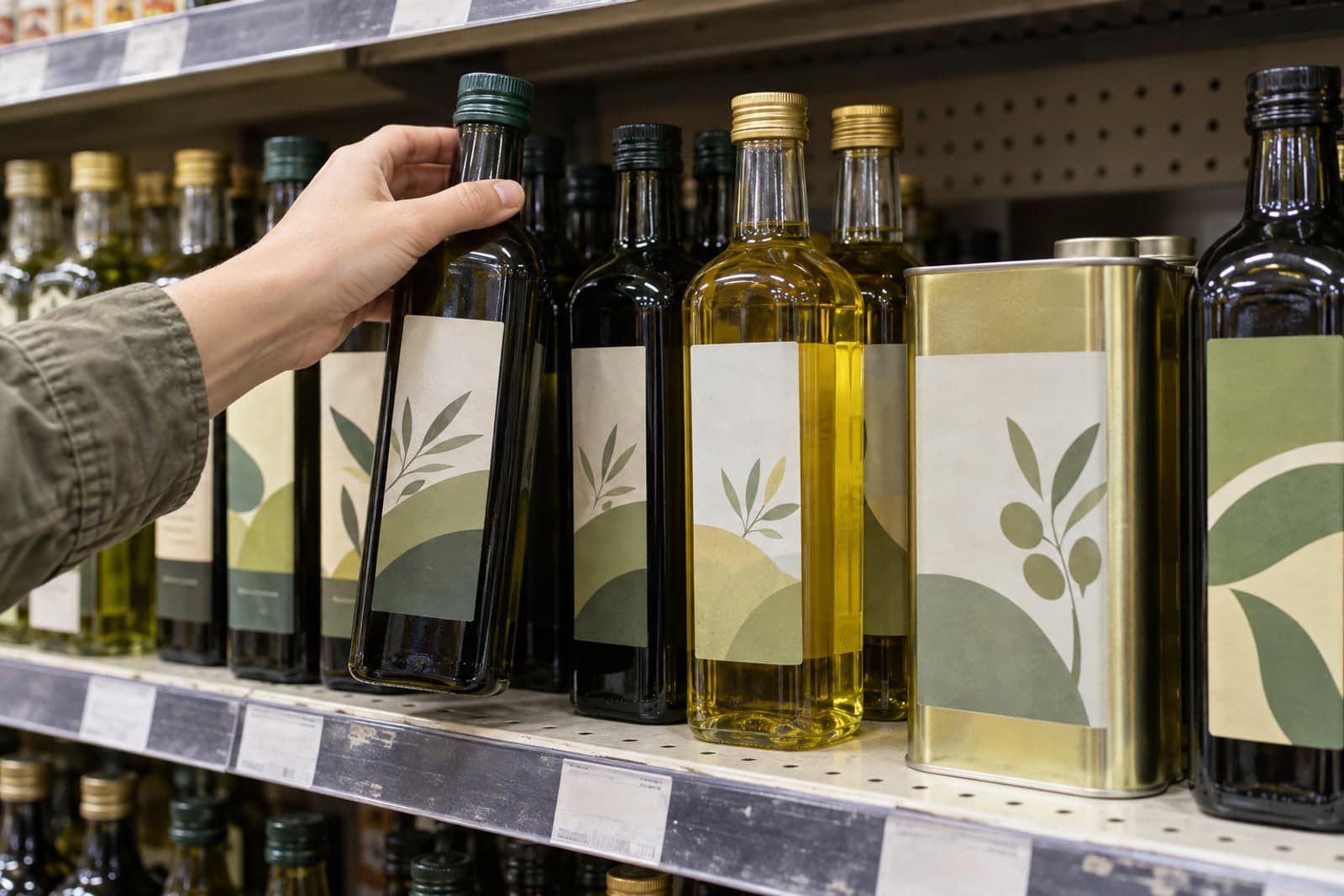
You're standing in front of six extra virgin olive oils, and every bottle is trying to look like the expensive one. None tells you the number you came for. Polyphenols in extra virgin olive oil can vary enormously between bottles, even when the grade on the label is the same. Price won't settle it. The most useful clues are the harvest date, the container and what happens at the back of your throat when you taste the oil. This guide explains what the compounds are, how storage and cooking change them, and how to choose a bottle without pretending the label knows more than it does.
What is actually in the oil
Three names are worth recognizing: oleocanthal, oleuropein and hydroxytyrosol. They're phenolic compounds found in extra virgin olive oil, and they're part of the reason a fresh oil can taste bitter, green and peppery instead of flat.
Oleocanthal creates the catch at the back of your throat. You may taste the oil, think it went down smoothly, then cough a moment later. That's the clue. Oleuropein contributes bitterness and is the compound removed when whole olives are cured to make them pleasant to eat. Hydroxytyrosol is a breakdown product of oleuropein and has little flavor on its own.
I don't expect anyone to recite the names in the aisle. Remember the sensations instead: bitterness on the tongue and a peppery catch in the throat. Those aren't signs that the bottle has gone wrong. In a fresh oil, they're rough markers of phenolic content.
The word "polyphenols" covers a family rather than one ingredient. A bottle can contain a different mix depending on the olive variety, harvest and handling. That's why one neat number never describes every extra virgin oil.
If you're looking for the Best polyphenols in extra virgin olive oil, start by looking for freshness rather than a compound list. The label rarely gives you the chemistry. Your job is to find the clues that survived onto the shelf.
| Compound | What you taste | What it is |
|---|---|---|
| Oleocanthal | The peppery catch at the back of the throat | The marker of a fresh, high-phenolic oil |
| Oleuropein | Bitterness | The compound cured olives are debittered of |
| Hydroxytyrosol | Little on its own | A breakdown product of oleuropein, present in fresh oil |
How much varies between bottles
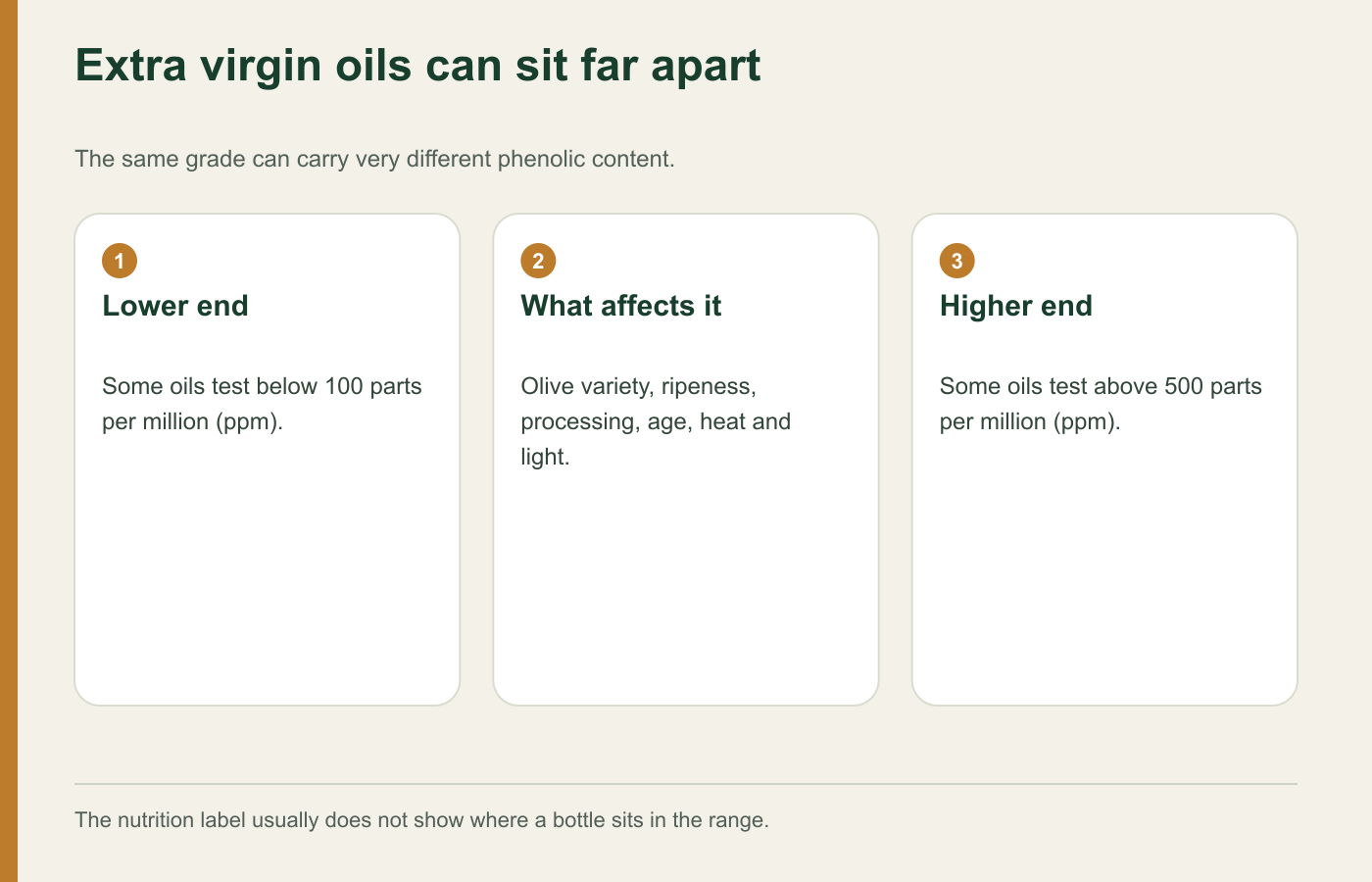
Lab reports usually express phenolic content in parts per million (ppm), and oils can range from under 100 to over 500 ppm. That's a wide spread hidden behind the same two words on the label: extra virgin. The bottle in your cart could sit near either end, and the nutrition panel usually won't tell you.
Olive variety matters. So do ripeness, growing conditions, extraction, time and storage. A test from one harvest doesn't permanently define a farm or brand. The next year's fruit and weather can produce a different oil.
This is why searches for the Olive oil brand with highest polyphenols rarely produce a lasting answer. A company may publish a strong result for one batch, then sell several lots from different regions or harvests. If the test isn't tied to the bottle in front of you, treat it as background rather than a guarantee.
The phrase Highest polyphenol olive oil 2026 has the same problem. A dated ranking may be useful for finding producers that test their oil, but stock moves. Check the batch, harvest and current certificate before paying a premium.
You may be wondering why the number isn't required on the label. Extra virgin is a production and chemistry grade, but it doesn't promise one phenolic count. Producers can volunteer current testing. Most don't.
I'd choose a fresh, well-protected bottle with no printed phenolic number over an old clear bottle leaning on last year's test. The range matters, but so does everything that happens after the oil leaves the mill.
What extra virgin means
Extra virgin isn't just a prettier marketing phrase. It's a grade defined by how the oil was produced and by chemical limits. The olives are processed without the heat or solvents used in refining, which helps leave flavor compounds and phenolics intact.
Refined olive oil has gone through processing that strips away most of those compounds. "Light" olive oil is also refined. Light describes its milder flavor, not fewer calories. If you're buying for polyphenols, neither is the direct comparison you want.
The comparison behind Polyphenols in extra virgin olive oil vs olive oil comes down partly to processing. Extra virgin retains the bitter and pungent compounds. A refined bottle is flatter because much of that chemistry has been removed.
The grade still doesn't guarantee a high count. An extra virgin oil can meet the standard and sit toward the lower end of the phenolic range. Age and storage can reduce the amount further after production.
This is where the expensive-looking label can fool you. Words such as "pure," "smooth" and "premium" don't tell you whether the oil is extra virgin or fresh. Read the actual grade. Then check for a harvest date and protective packaging.
If you want High polyphenols in extra virgin olive oil, extra virgin is the necessary starting point. Then freshness, protection and taste decide how much confidence you can have in the bottle you're carrying home.
What destroys phenolics
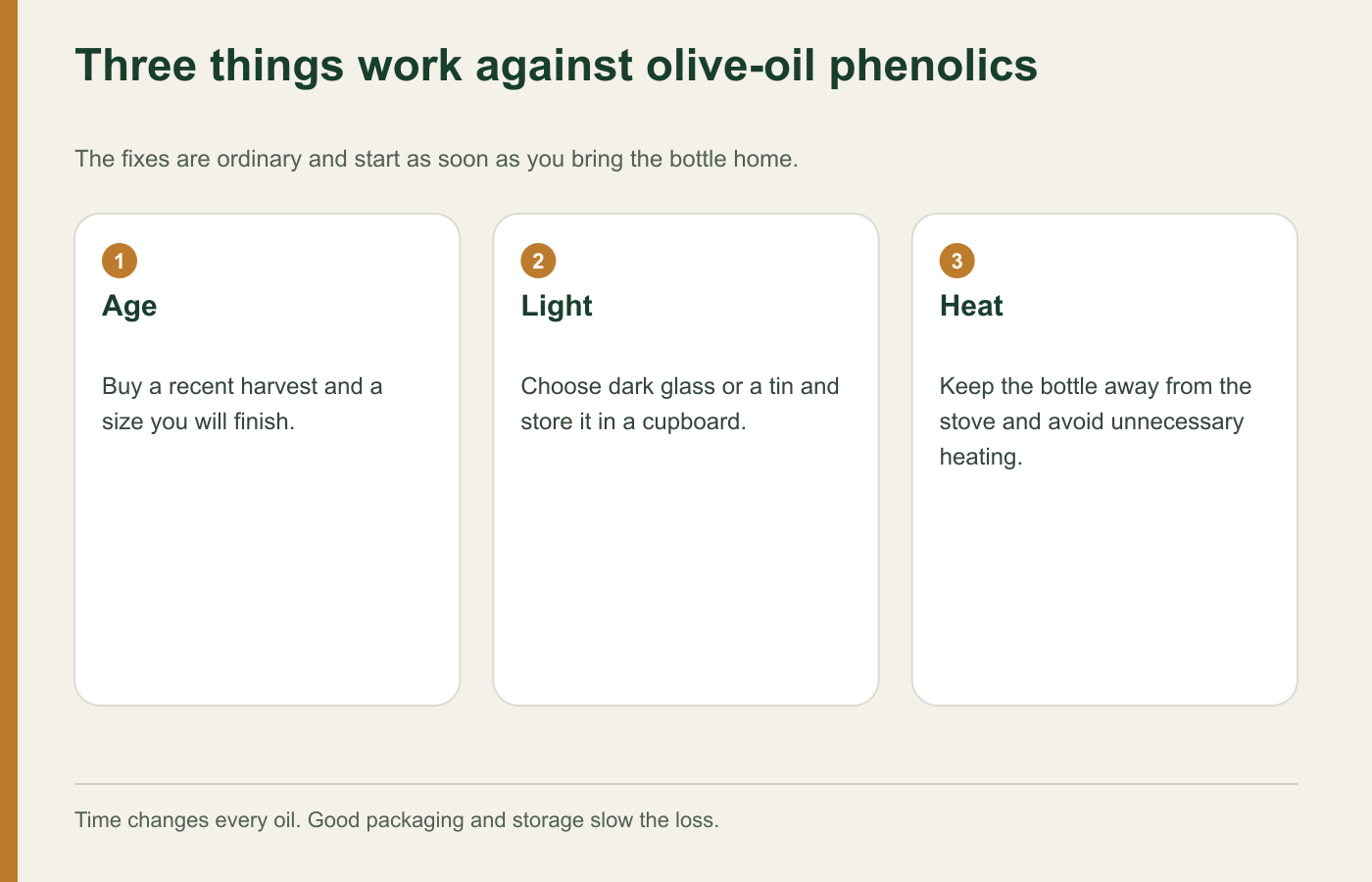
Time goes first. Phenolic content drops as oil ages, even in a sealed bottle. A recent harvest date gives you more useful information than a distant best-before date because it tells you when the olives started becoming oil.
Light comes next. Clear glass may show off the color, but it also exposes the oil. Dark glass and tins protect it better. In the store, I avoid a clear bottle that has spent months under bright shelving lights, however beautiful the oil looks.
Heat speeds the decline. The ledge beside the stove is a convenient place to keep a bottle and one of the worst places for it. Move the oil into a cupboard away from the oven. Keep the cap closed too, since oxygen contributes to degradation.
These losses don't happen all at once. A warm afternoon or one cooked meal doesn't turn extra virgin olive oil into refined oil. Repeated exposure chips away at what you bought.
The fixes are ordinary. Buy a size you'll finish while it's fresh. Choose dark glass or a tin. Store it in a cool, dark cupboard and close it after pouring. If you buy a large container, decant a smaller amount for daily use so the main supply spends less time open.
The Best polyphenols in extra virgin olive oil won't stay the best if the bottle sits in heat and light. Storage is part of the purchase.
The throat test
Pour a little oil onto a spoon or a piece of bread. Taste it, swallow and wait. A fresh, phenolic oil often leaves a peppery catch at the back of your throat. Oleocanthal is responsible for that sensation.
The catch can be gentle or strong enough to make you cough. Bitterness may show up first. Both are sensory markers, not defects. An oil that tastes completely neutral may still be usable, but it gives you less reason to think you're buying a high-phenolic bottle.
The throat catch is only a rough clue. Your own sensitivity varies, and other flavor compounds affect what you notice. Use it as one signal when the label stays silent.
How do you know if your olive oil is high in polyphenols? Current batch testing is the strongest answer. A recent harvest and protected bottle come next. Taste adds one more clue. Use all three rather than asking the throat catch to do everything.
I like this test because it turns an abstract label claim into something you can check at dinner. Drizzle the oil over warm beans or bread, then pay attention. If it tastes lively and catches, that burn is the point.
A sweet, smooth oil isn't automatically fake. It may come from a milder variety or sit lower in phenolics. Decide what you're buying it for.
Reading the label
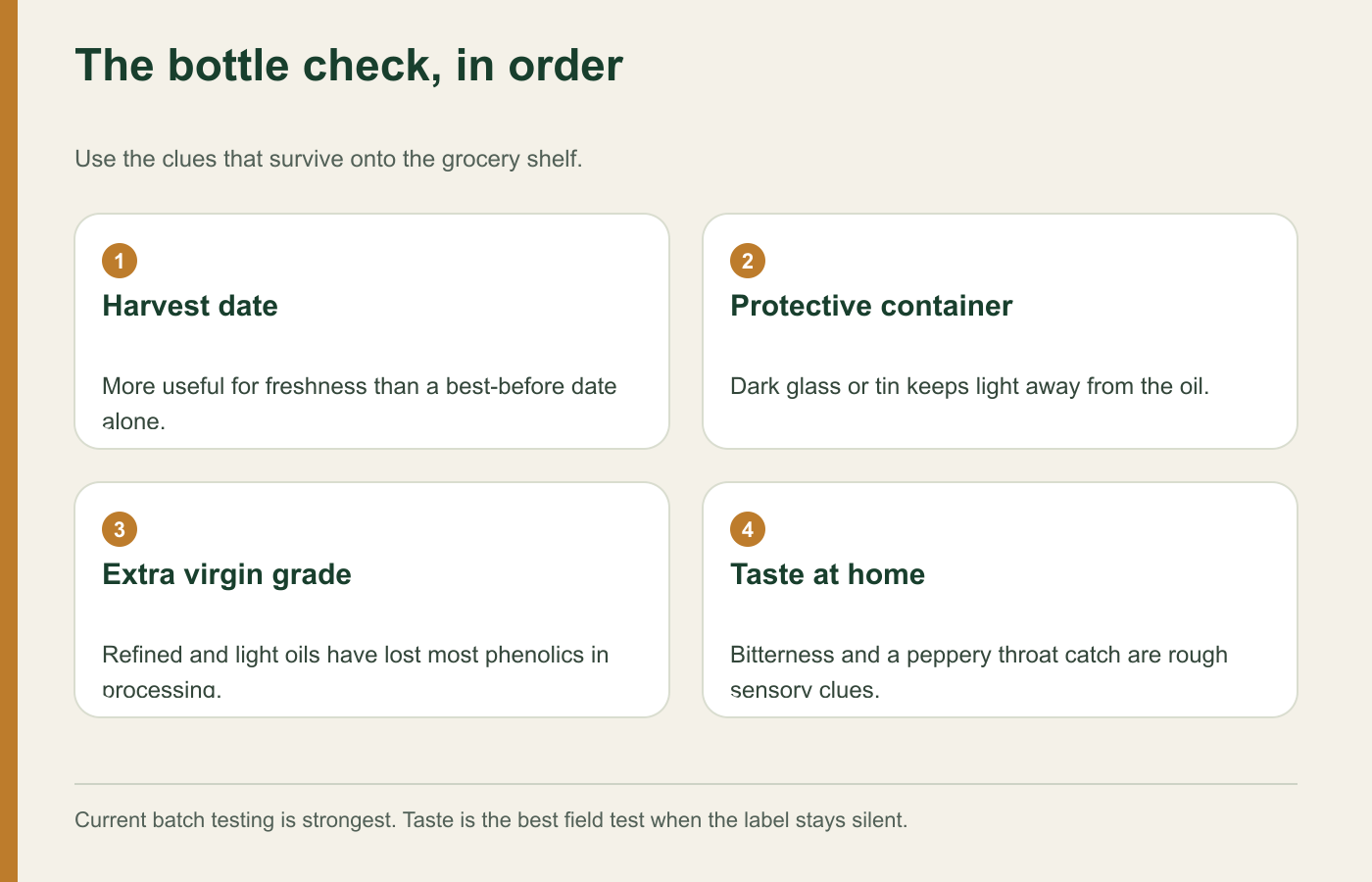
Check the harvest date first. If the bottle gives only a best-before date, you don't know how old the oil was when that countdown began. Freshness affects flavor and phenolic content, so the missing date is meaningful.
Check the container next. Dark glass and tins beat clear glass because they block light. Then confirm that the grade says extra virgin rather than pure, light or simply olive oil.
Country names and pastoral artwork come after those basics. They can tell a story about origin, but they don't replace a harvest date. Neither does a high price.
Which is the healthiest olive oil with the highest polyphenols? No label can answer that universal question. Look for current testing tied to the batch if you want a number. Otherwise use the practical stack: recent harvest, protected container, extra virgin grade and a bitter or peppery taste.
The Olive oil brand with highest polyphenols can change with the harvest, so I don't keep a permanent winner. I keep a short list of producers that date their bottles and share testing. That behavior is more valuable than one impressive result.
Questions about Polyphenols in extra virgin olive oil side effects shouldn't be hidden in a buying guide either. The brief doesn't provide a special side-effect rate for these compounds. You're buying a food, not a dose. Choose quality, then use it as part of meals. If you search polyphenols in extra virgin olive oil side effects, keep the answer attached to food use rather than supplement data.
Cooking with it
Heat lowers the phenolic content that reaches your plate. You can still cook with extra virgin olive oil and use a fresh pour when the flavor works. That way, the oil does both jobs.
Cook with it when it helps vegetables, beans or fish become dinner. Then add a small fresh pour after cooking when the flavor works. The finishing oil hasn't spent the same time over heat, so more of its bitter and peppery character remains.
I keep the good bottle for both jobs. Buying one oil to cook with and another to admire usually leaves the expensive one going stale. A bottle earns its place by being used.
Does cooking destroy olive oil polyphenols? It reduces them. "Destroy" makes the change sound absolute, and the brief doesn't support that. Temperature and time matter, as do the starting oil and cooking method.
The Polyphenols in extra virgin olive oil vs olive oil comparison also matters at the stove. Refined oil starts with fewer phenolics because processing removed most of them. Extra virgin begins with more, even though heat can lower what remains.
The practical move is simple: protect the bottle before cooking, don't heat it longer than the food needs and use some uncooked where you enjoy the taste. You're trying to preserve quality without turning dinner into a chemistry demonstration.
Does any of it matter?
The best human evidence comes from a 2018 trial that followed 7447 older adults at high cardiovascular risk. One group ate a Mediterranean diet supplied with extra virgin olive oil, another ate the pattern with nuts and a control group received advice to reduce fat. The Mediterranean groups had fewer major cardiovascular events.
The earlier trial report was retracted because of problems with group assignment. Researchers reanalyzed and republished it, and the conclusion remained the same. The corrected study still tested a whole eating pattern rather than one high-phenolic bottle.
The intervention was a whole diet. Extra virgin olive oil helped people cook and eat that pattern. The trial didn't compare one brand, one phenolic count or a spoonful taken alone. Claims about Polyphenols in extra virgin olive oil benefits should stay attached to that context.
Our guide to the Mediterranean diet trial covers the pattern in detail. The oil matters because it carries flavor and phenolics while replacing other fats. The vegetables, legumes, fish, grains and nuts still belong in the result.
This is also why polyphenol-rich foods make a better frame than isolated compounds. Digestion and gut bacteria change polyphenols before they circulate. The food and the way you eat it matter alongside the number.
Choose a fresh oil. Use it well. Just don't make one bottle carry the weight of an entire trial.
Common questions
Which olive oil has the highest polyphenol count?
No brand keeps that title permanently. Phenolic content changes with the olive variety, harvest, processing, age and storage. Look for current batch testing tied to the bottle. Without it, choose a recent harvest in dark glass or a tin, then taste for bitterness and a peppery throat catch.
How do you know if your olive oil is high in polyphenols?
A current laboratory result for the batch gives the clearest answer. Otherwise combine clues: a recent harvest date, extra virgin grade, dark glass or a tin, bitterness and a peppery catch after swallowing. The throat test is useful but rough, so don't treat it as an exact measurement.
Which supermarket olive oil is highest in polyphenols?
Supermarket stock changes too quickly for one permanent answer. Check bottles rather than relying on a brand ranking. Pick the newest harvest you can find, choose dark glass or a tin, confirm extra virgin on the label and avoid oil displayed in clear glass under strong light.
How much high polyphenol olive oil should I take per day?
The evidence in this brief doesn't establish a universal daily dose. Olive oil is a food and is energy dense. Use it across meals, preferably in place of another fat, rather than swallowing a fixed shot. The Mediterranean trial tested a whole eating pattern, not a daily high-polyphenol supplement.
Does cooking destroy olive oil polyphenols?
Cooking heat lowers phenolic content, but it doesn't make the oil worthless. Use extra virgin olive oil to cook foods you enjoy, avoid unnecessary heating and add a little fresh oil after cooking when the flavor fits. Storage away from heat and light also protects the bottle between meals.
How can you tell if olive oil is high in polyphenols?
Start with current batch testing if the producer provides it. Then look for a recent harvest date, extra virgin grade and a light-blocking container. At home, taste the oil. Bitterness and a peppery catch at the back of the throat are rough sensory clues that phenolics remain.
How to buy the next bottle
Check three things in order: harvest date, container, grade. Buy the freshest extra virgin oil you can find in dark glass or a tin. Then taste it. A bitter edge and peppery catch tell you more than the price tag, even if they can't give you a laboratory number. Searches for the Best polyphenols in extra virgin olive oil or Highest polyphenol olive oil 2026 can point you toward testing, but the bottle still has to be fresh when it reaches your kitchen.