
Polyphenols in Olive Oil: The Benefits, and the Trial Behind Them
Sep 9, 2026
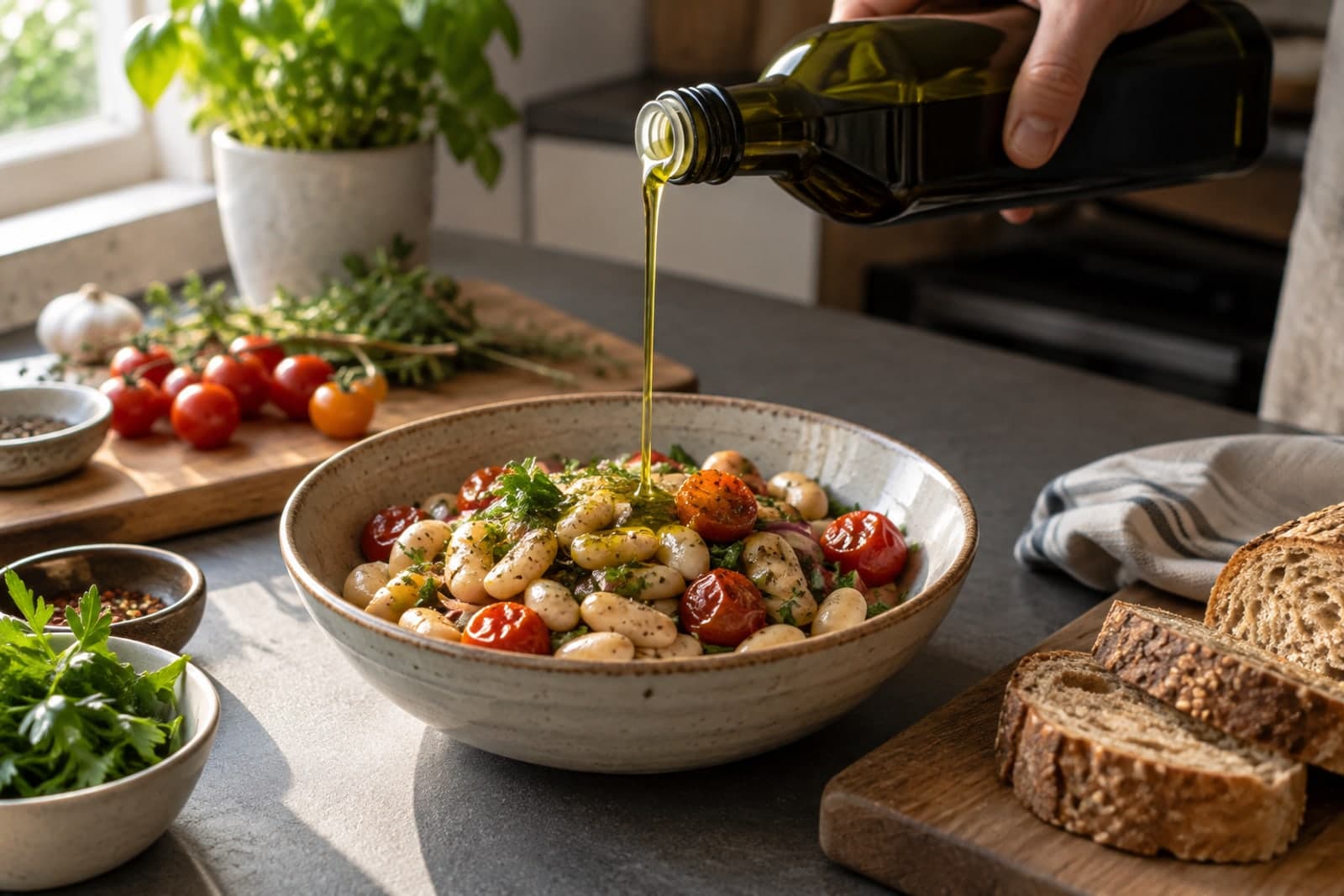
You've probably heard that olive oil is good for the heart, usually while someone pours a glossy green stream over a salad or takes a spoonful straight from the bottle. The polyphenols in olive oil benefits story has real human evidence behind it, but the famous trial didn't test olive oil by itself. It tested a Mediterranean diet with extra virgin olive oil as one of its centerpieces. That's a less convenient claim and a more useful one. We'll separate the oil from the diet, look at who was studied, then turn the findings into buying and cooking advice you can use.
The trial everyone cites
The study behind most of the confident olive-oil headlines is PREDIMED. In the 2018 New England Journal of Medicine report, researchers followed 7447 older adults at high cardiovascular risk. One group ate a Mediterranean diet and received extra virgin olive oil. Another followed the same pattern with nuts. A control group received advice to reduce dietary fat.
The two Mediterranean groups had fewer major cardiovascular events than the control group. That's a meaningful human outcome, not a change in a lab marker. It's also evidence for two Mediterranean patterns, since both the oil group and the nut group moved in the same direction.
The publication history needs a plain explanation. An earlier version of the trial report was retracted after problems were found in the way some participants had been assigned to groups. The researchers reanalyzed the data and republished it in 2018. The conclusion remained the same. You can read the retraction notice alongside the corrected paper.
I still use the trial, but I don't use it as a blank check for every claim about olive oil. The corrected analysis supports the dietary patterns tested in high-risk adults. It doesn't show that any random bottle, swallowed by the spoonful, produces the same result.
| Group | What they were asked to eat | Outcome |
|---|---|---|
| Mediterranean plus olive oil | Mediterranean diet with about a quart of extra virgin olive oil a week | Fewer major cardiovascular events |
| Mediterranean plus nuts | The same diet with nuts instead | Fewer major cardiovascular events |
| Control | Advice to reduce dietary fat | The comparison group |

What the trial actually tested
PREDIMED tested a whole Mediterranean diet. Participants in the oil group received roughly one liter, or about a quart, of extra virgin olive oil each week. They used it across meals and cooking. Nobody was asked to stand at the sink and drink it like a shot.
The rest of the plate matters. The pattern emphasized vegetables, fruit, beans, whole grains, fish and nuts while keeping red meat and added sugar lower. Olive oil made many of those foods easier to cook and eat. It replaced other fats and became part of the daily routine.
That design makes the result more realistic and harder to reduce to one ingredient. We can't pull the oil out of the pattern and claim it deserves all the credit. The nuts group also had fewer major cardiovascular events, which is another reason to resist a single-food explanation.
If you're reading about the Benefits of drinking olive oil in the morning, this is the missing context. The trial didn't compare a morning spoonful with a placebo. It compared dietary advice over time. The same goes for How much high polyphenol olive oil per day. The useful question isn't how much to swallow alone. It's how much fits into meals while moving the overall diet in the tested direction.
Our guide to the Mediterranean diet walks through that pattern. Think of the oil as a working ingredient, not a supplement. Dress the beans, cook the vegetables and finish the soup. That's much closer to the evidence.
Who it studied
The PREDIMED participants were older adults who already had high cardiovascular risk. That's an important strength because the trial studied people with a real reason to care about major cardiovascular events. It's also a limit when a healthy younger adult tries to predict what the same diet will do for them.
A trial result always belongs first to the people who produced it. Age, starting risk, medication use and baseline diet can all change what happens when a new eating pattern is introduced. We shouldn't assume that everyone will get the same size of benefit.
You may be thinking that this makes the study irrelevant unless you match the participants exactly. It doesn't. The pattern uses familiar foods and fits ordinary cooking. The study simply can't promise a personal result outside its population.
This matters for searches such as Olive oil benefits for male and Olive oil benefits for female. PREDIMED wasn't a trial of gender-specific oil effects. A marketing page that divides the same bottle into separate benefit lists for men and women is adding a conclusion the trial wasn't built to support.
The best reading is narrower. In older people at high cardiovascular risk, Mediterranean diets centered on extra virgin olive oil or nuts were associated with fewer major cardiovascular events than advice to reduce fat. That's a serious result. It supports the pattern without turning the oil into a personal guarantee.
The compounds in the oil
Extra virgin olive oil contains phenolic compounds including hydroxytyrosol, oleuropein and oleocanthal. You don't need to memorize all three to buy a decent bottle, but each helps explain the flavor that separates a fresh extra virgin oil from a flat refined one.
Oleocanthal is responsible for the peppery catch at the back of your throat. Oleuropein contributes bitterness. Hydroxytyrosol is another phenolic present in the oil. Bitterness and pungency aren't defects in a fresh bottle. They're rough sensory clues that the oil still carries the compounds you're paying for.
Lab reports usually express phenolic content in parts per million (ppm), and oils can range from under 100 to over 500 ppm. Age, heat and light reduce it. Two bottles labeled extra virgin can taste different and deliver different amounts even when both meet the grade.
This is where a query like Olive oil brand with highest polyphenols runs into trouble. Brands change harvests, farms and lots. One award or laboratory result can't promise that every bottle under the same name will match it. The harvest date and the way the bottle was stored may tell you more than the logo.
The named compounds give us a plausible reason to care about fresh, less-refined oil. They don't let us assign PREDIMED's result to oleocanthal alone. Participants ate the oil as part of a full diet, and the trial didn't isolate each phenolic.
What the lab work shows, and what it does not
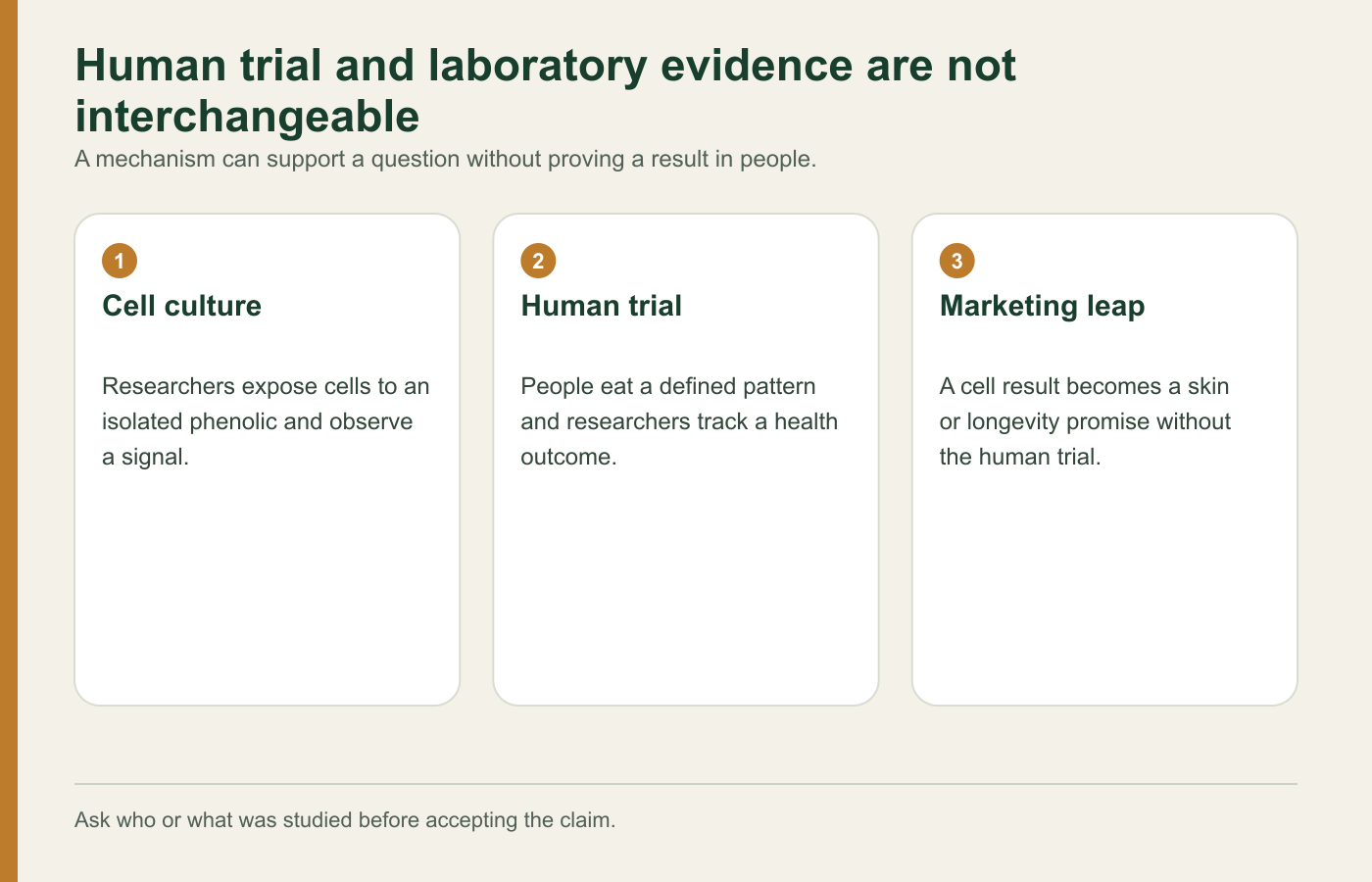
Much of the work on individual olive-oil phenolics has been done in cell culture. In a test tube, researchers can expose cells to oleocanthal, hydroxytyrosol or another compound and observe a pathway or signal. That can explain what might be happening. Human trials still have to show whether a spoonful of oil produces the same effect in a person.
The dose in the dish, the form of the compound and the absence of digestion all matter. Your body changes polyphenols before they reach the bloodstream, and gut bacteria change them again. What circulates after dinner isn't identical to what a researcher placed on cells.
This distinction gets lost in claims about High polyphenol olive oil benefits for skin. A cell response can become a skincare promise in a few lines of marketing copy. The human trial in this brief studied a dietary pattern and major cardiovascular events. It didn't establish a cosmetic effect from drinking oil or applying it to skin.
I don't dismiss the lab work. It helps researchers decide which questions deserve a human trial. I just keep it in its lane. If the claim is about how someone's skin looks or feels, the convincing evidence needs to measure that outcome in people.
The same rule applies to every mechanism-heavy headline. Ask whether the study involved cells or people, what amount was used and what was measured. Laboratory plausibility can support a hypothesis. It can't stand in for the outcome.
How much oil, and in what form
The olive-oil group received roughly one liter, or about a quart, of extra virgin olive oil each week. That's a substantial kitchen supply spread across meals. The study's own design points toward cooking, dressing and replacing other fats.
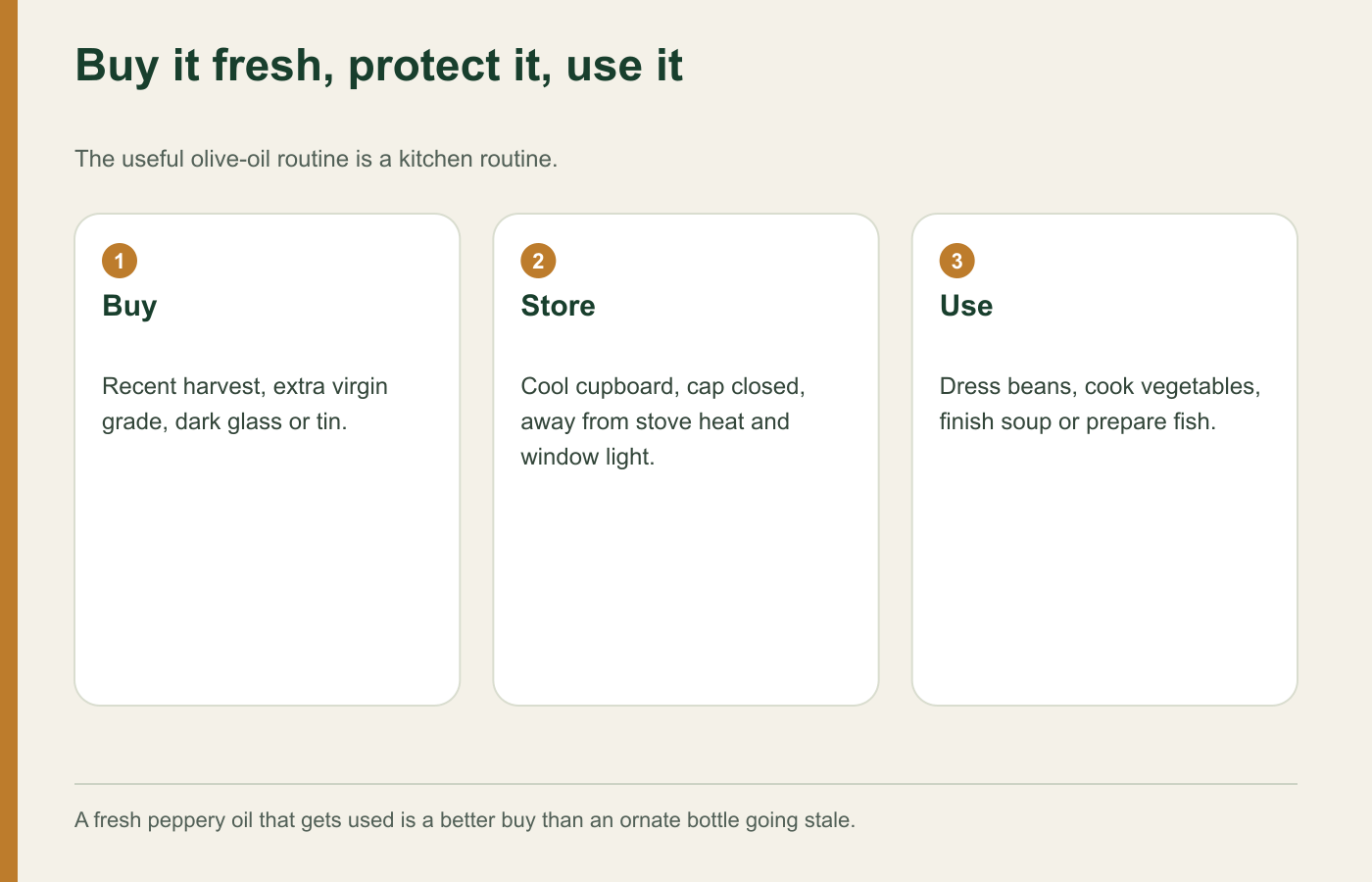
Olive oil is energy dense, so adding it on top of an unchanged diet misses part of the logic. Use it where another cooking fat or dressing would have gone. A slick of oil on roasted vegetables, a pour over beans and a pan for fish all fit the pattern. A spoonful before bed doesn't reproduce it.
How much high polyphenol olive oil per day is therefore a less useful question than it first appears. The brief gives a weekly trial amount, not a universal daily prescription. Your total diet and energy needs still matter, and the trial population may not resemble you.
Extra virgin is the relevant form because refining removes most of the phenolics. "Light" olive oil refers to flavor, not a lower-calorie version. If the compounds are part of why you're buying, choose extra virgin and use it while it's fresh.
I keep one bottle within reach of the counter, but not beside the stove. It goes back into a dark cupboard after cooking. That small habit protects it from the light and heat that gradually flatten both flavor and phenolic content.
Buying an oil that carries them
Start with the harvest date. A recent harvest gives the oil less time to lose phenolics before it reaches your plate. A best-before date is useful for stock rotation, but it doesn't tell you when the olives were picked.
Next, check the container. Dark glass and tins protect the oil better than clear bottles. Then look for the extra virgin grade. Refined or light oil has been processed in a way that removes most of the compounds this article is about.
How to check polyphenols in olive oil when the label gives no number? Taste it. Fresh bitterness and a peppery catch at the back of the throat are rough clues. A current laboratory certificate gives you an exact count; taste gives you a quick signal that the oil still has some life. The same practical approach helps when you're comparing other polyphenol-rich foods: use the information you can verify instead of trusting the loudest claim.
The Olive oil brand with highest polyphenols may change from one harvest to the next. I'd rather buy a recent bottle from a producer that lists the harvest and protects the oil than chase a permanent winner online. If a seller provides current batch testing, check the batch rather than assuming the whole brand is identical.
Price doesn't settle it. An expensive decorative bottle can sit under bright lights for months. A modest tin from a recent harvest may be the better buy. Turn the bottle around, find the date, then imagine where you'll store it at home.
What this does not mean
The trial doesn't support olive oil as a substitute for medical care. It also doesn't support drinking a spoonful at a special time of day, applying it to skin for a clinical result or adding unlimited oil to an otherwise unchanged diet.
Polyphenol-rich olive oil side effects is a search phrase that often leads to vague warnings or equally vague reassurance. The approved evidence here doesn't provide a side-effect rate for a high-phenolic bottle. A peppery fresh oil can taste strong. If a food causes symptoms for you, the label "high polyphenol" doesn't override that experience.
High polyphenol olive oil benefits for skin aren't established by PREDIMED either. The trial tracked major cardiovascular events in high-risk adults. It didn't measure wrinkles, hydration or another skin outcome. A lab mechanism can't fill that gap.
The NCCIH evidence review makes a related point: diets higher in fruit and vegetables are associated with better health patterns, while antioxidant supplements haven't reproduced the same broad benefit. Whole foods and dietary patterns do more than deliver one isolated compound.
Use olive oil because it helps you eat the pattern that was studied and because a fresh extra virgin oil carries phenolics. Don't turn it into medicine or a morning ritual you have to endure. The evidence is better, and more ordinary, than that.
Common questions
Which olive oil is highest in polyphenols?
Phenolic content varies by harvest, processing, age and storage, so one brand can't hold the title permanently. Look for a recent harvest date, extra virgin grade and dark glass or a tin. A bitter taste and peppery throat catch are rough clues that a fresh oil still carries phenolics.
What does a spoonful of olive oil before bed do?
The trial in this brief didn't test a bedtime spoonful. It supplied extra virgin olive oil for use across a Mediterranean diet, including cooking and dressing food. Taking oil alone adds energy but doesn't reproduce the intervention. Use it to replace another fat and make the rest of the pattern easier to eat.
What are the side effects of high polyphenol olive oil?
The approved evidence doesn't provide a specific side-effect rate. A fresh high-phenolic oil can taste bitter or catch in the throat. Polyphenol-rich olive oil side effects shouldn't be guessed from supplement data. Use the oil as food, account for it in the meal and pay attention to how you tolerate it.
How much polyphenol olive oil should you take a day?
The trial supplied roughly one liter, or about a quart, each week for cooking and meals. Your own needs may differ. Use extra virgin olive oil in place of another fat within a Mediterranean pattern, and skip the fixed daily shot.
Is olive oil good for your heart?
A large randomized trial found fewer major cardiovascular events in high-risk adults assigned to Mediterranean diets centered on extra virgin olive oil or nuts. The result supports the whole dietary pattern. It doesn't prove that olive oil alone produces the outcome or that every person will get the same benefit.
How much olive oil should you eat a day?
The brief supports a weekly trial supply, not one ideal daily amount for everyone. Use extra virgin olive oil across cooking and meals, preferably as a replacement for another fat. The right amount depends on the rest of your diet. More oil isn't automatically more beneficial.
What to take from it
Buy extra virgin olive oil from a recent harvest in dark glass or a tin. Taste for bitterness and that peppery catch, then use the oil on actual food. If a friend asks how to check polyphenols in olive oil, those are the checks I'd give them. The polyphenols in olive oil benefits story is strongest inside a Mediterranean pattern, not in a spoon swallowed alone. This week, use it to dress a bowl of beans or cook vegetables you already like.