
Are Polyphenols Better From Food or Supplements? What the Trials Say
Sep 11, 2026
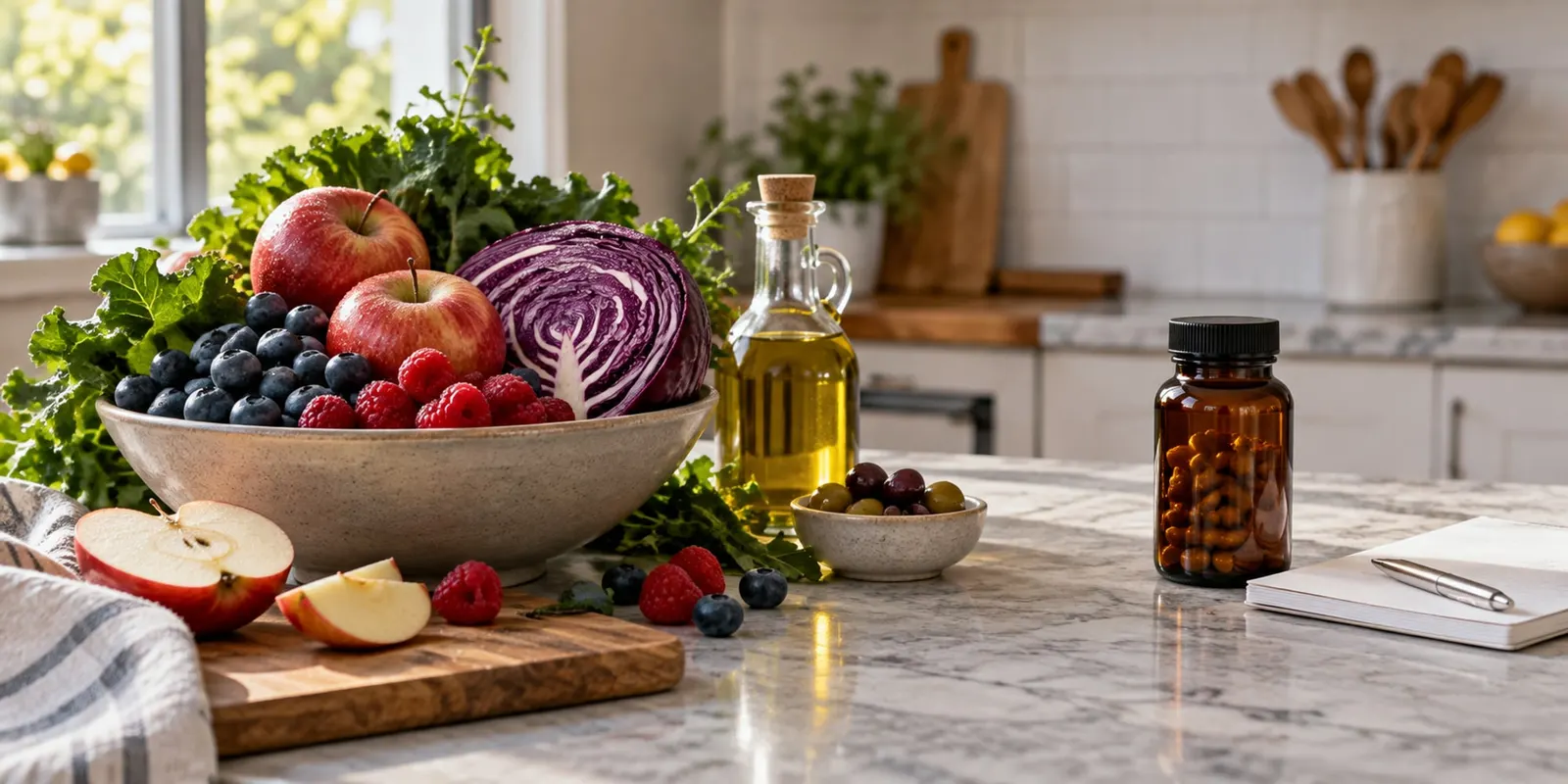
You're standing between the produce aisle and a shelf of capsules, trying to decide which one deserves the money. Are polyphenols better from food or supplements? Food is the stronger choice for most people, and this is one of the clearer answers in polyphenol research. Large supplement trials haven't produced the benefit promised by the category, while trials of whole eating patterns have found meaningful results. A capsule can still make sense when a clinician identifies a specific need. For general polyphenol intake, I'd put the bottle back and spend the money on food.
The short answer
Choose food. The evidence behind that answer comes from what researchers have tested, not from a belief that anything natural must be better. Large antioxidant supplement trials have found no gain in longevity, and some high-dose products have been linked to harm. A whole dietary pattern built around plant foods has a much more useful record.
Food also changes the dose. Fruits and vegetables deliver polyphenols with fiber, water and other nutrients, usually in amounts far below a concentrated capsule. You chew, digest and share those compounds with gut bacteria. A supplement isolates one ingredient and may raise it to a level no normal meal would supply.
That doesn't prove every polyphenol-rich food has a special effect. It tells us the interventions aren't interchangeable. The trials that found benefit from a dietary pattern tested foods eaten together. They didn't test an extract and then let us credit the entire plate.
People often ask Are polyphenol supplements good for you as though every bottle belongs to one category. Form, dose and reason for taking it all matter. Yet the broad comparison still favors food. If there's no documented deficiency or clinician-led reason for a supplement, the capsule is the weaker bet.
| What was tested | What was found | |
|---|---|---|
| Supplements | 78 randomized trials, over 250,000 people | No effect on how long participants lived |
| High-dose beta-carotene | Supplement trials in smokers | Linked to higher lung cancer risk |
| High-dose vitamin E | Supplement trials | Linked to higher bleeding risk |
| A whole dietary pattern | 7,447 adults at high cardiovascular risk | Fewer major cardiovascular events |
What the supplement trials found
The biggest useful summary is a 2012 Cochrane review. It pooled 78 randomized trials with more than 250,000 participants. Antioxidant supplements had no effect on how long people lived. That's a broad result from many products and many trials, not a verdict on every individual polyphenol capsule. It still gives the category a serious burden of proof.
The harm findings deserve equal space. The National Center for Complementary and Integrative Health reports that high-dose beta-carotene supplements have been linked to a higher lung cancer risk in smokers. High doses of vitamin E have been linked to a higher bleeding risk. Those findings come from other antioxidant supplements. They show why concentrated doses can't borrow the safety reputation of vegetables.
Start a supplement comparison with the outcome you want, then check whether a specific form and dose was studied in people like you. The largest number on the label can be a marketing advantage without being an evidence advantage. A long ingredient list isn't evidence.
Dietary supplements in the United States aren't reviewed for effectiveness before sale. The bottle can reach the shelf without proving it helps. That fact doesn't make every product bad. It means the buyer has to ask harder questions than the package does.
What the food evidence found
The clearest food example is the 2018 PREDIMED trial. Researchers followed 7,447 older adults at high cardiovascular risk. One group ate a Mediterranean pattern with extra virgin olive oil, another ate the same pattern with nuts, and a comparison group received advice to reduce fat. The two Mediterranean groups had fewer major cardiovascular events.
It's tempting to hand the result to olive oil, nuts or polyphenols. The trial doesn't let us do that. It tested a whole eating pattern with foods eaten together. The result belongs to the pattern, including the choices those foods replaced. That's less tidy than a capsule claim, though it's much closer to how people actually eat.
NCCIH also notes extensive evidence that people who eat more vegetables and fruits have lower rates of chronic disease. Antioxidant supplements haven't shown the same benefit. This difference is why lists of Polyphenols benefits need context. An association with a food pattern doesn't prove that extracting one compound will reproduce it.
If you're hoping for a List of 100 foods high in polyphenols, remember what a list can and can't do. It can widen your shopping options. It can't rank the real benefit of an entire diet from one laboratory number, especially when cultivar, ripeness, storage and processing change the amount in each food week to week.
Why the two disagree
A plate and a pill create different exposures. Whole foods bring polyphenols with fiber and other nutrients. They take up room, require digestion and deliver many compounds in relatively modest amounts. A capsule can isolate one compound and provide far more of it than you'd usually encounter at a meal.
Digestion changes the story further. Polyphenols don't simply pass from food into blood at the number printed in a database. Digestive processes and gut bacteria transform them. What circulates may be a metabolite rather than the original compound. That makes a large swallowed dose a poor stand-in for the chemistry of a whole food.
Food composition varies too. The polyphenol amount in a fruit or vegetable depends on the variety, ripeness, growing conditions, storage and processing. That variability frustrates anyone who wants an exact intake. It may also be part of why a food pattern can't be reduced to one ingredient on a supplement label.
You can see the basic mismatch without a biochemistry lecture. Eating a piece of fruit changes what replaces another snack, gives you fiber and takes time. Swallowing a capsule leaves the rest of the meal untouched. Even if both contain a compound with the same name, they aren't the same intervention.
The disagreement between trials becomes less surprising once you compare the interventions this way. One changes the diet. The other adds a concentrated ingredient to whatever diet was already there.
Dose, and why more is not better
NCCIH warns that large amounts of antioxidants may interfere with functions the body needs. The body uses oxidation as part of normal signaling and defense, so flooding a pathway with a concentrated compound isn't automatically helpful. The beta-carotene and vitamin E examples show how a plausible idea can perform badly at high supplemental doses.
How much polyphenols per day is a reasonable question, but the evidence here doesn't supply a universal target. Food content varies, digestion changes the compounds, and trials usually study particular products or whole patterns rather than one daily polyphenol total. A precise quota would look scientific without being well supported.
The same caution applies to Foods with polyphenols for weight loss. There's no established polyphenol dose that causes weight loss. Food choices can fit within a broader eating pattern, but adding up polyphenol milligrams isn't a proven way to predict the outcome.
Polyphenols side effects also depend on form and dose. Ordinary food exposure is buffered by bulk and appetite. A capsule makes it easy to take a much larger amount of one compound, day after day, without the limits built into eating. More concentration creates more need for evidence, not more certainty.
If you're comparing Best polyphenols supplements by the largest number on the label, stop there. A higher dose can be a marketing advantage while remaining an evidence disadvantage. Look for a reason to take the ingredient, a form tested in humans and a dose tied to that research.
What the capsule leaves out
Fiber is the most obvious missing piece. It travels with fruits and vegetables and reaches gut bacteria that help transform what you eat. A polyphenol capsule may provide an isolated compound, but it doesn't recreate the fiber or the food around it.
That matters because gut bacteria change polyphenols before they reach circulation. Two people can eat the same food and process parts of it differently. A label that lists the amount swallowed can't tell you exactly what metabolites will appear later or how much will circulate.
MCT is a type of fat, while polyphenols are plant compounds. Pairing an MCT product with a polyphenol food hasn't been shown here to improve absorption or create a special benefit, so evaluate the two purchases separately.
That point is worth repeating because Mct and polyphenols foods can look like a ready-made stack on a product page. It isn't one established by the evidence here. If both happen to fit foods you enjoy, fine. You don't need the combination to get polyphenols from a varied diet.
A capsule also leaves out substitution. When you put vegetables, fruit, nuts or olive oil into meals, they often take the place of something else. The PREDIMED result came from an eating pattern, so replacement and combination were part of the test. A pill added on top of the same diet can't claim that context.
When a supplement does make sense
There's a real exception: a clinician identifies a documented deficiency and recommends a supplement to address it. In that situation, the product has a clear job. The dose can be chosen for a reason and reviewed against your health history and medications.
That exception doesn't turn general polyphenol products into deficiency treatments. There isn't a standard polyphenol deficiency or a universal amount everyone needs. A vague goal such as "more antioxidants" isn't as specific as correcting a measured deficiency.
If you already take prescription medication, talk to your doctor or pharmacist before starting a new supplement. Plant-derived compounds can still interact with medication, and a concentrated dose changes the exposure. Bring the actual bottle or a photo of the label so the conversation covers the product you're considering.
You can review the supplements we have looked at, then ask three plain questions. What human outcome was studied? Which form and dose did the trial use? Does that reason apply to me? If the answers stay fuzzy, waiting is reasonable.
The personal part of a supplement decision depends on the product, dose, medications and health history. Evidence can tell you what happened in a study population. A doctor or pharmacist can help connect that evidence to the bottle you're holding.
That personal context changes the answer in practice.
What to buy instead
Move the supplement budget into the grocery cart. Start with vegetables and fruits you'll actually eat. Add nuts if they fit your meals, and choose extra virgin olive oil when you want it for cooking or dressing. Those choices resemble the foods and pattern tested in the stronger evidence.
I don't shop for the highest laboratory score. I look for enough variety that the same produce doesn't come home every week. One familiar fruit plus one vegetable you know you'll cook is more useful than an ambitious bag that wilts in the drawer.
A fixed top five promises more precision than the evidence can defend. Polyphenol content shifts with variety, ripeness and storage. A mix of polyphenol-rich foods gives you more practical range than five foods chosen from average laboratory values.
How much polyphenols per day still doesn't need a calculator. Put plant foods into meals regularly and let portions stay food-sized. If you want a concrete weekly rule, use the produce you've bought before buying another extract. It's mundane advice, and that's part of why it works.
Skip complicated stacks that combine unrelated ingredients without a studied reason. Your cart needs food that makes it onto the plate, and any supplement needs a specific job.
Common questions
What is the best form of polyphenol?
Whole food is the best-supported form for general intake. Fruits and vegetables bring polyphenols with fiber and other nutrients at food-sized doses. NCCIH notes that diets higher in produce are linked with lower chronic disease rates, while antioxidant supplements haven't shown the same benefit.
Can you get too many polyphenols from food?
Ordinary food exposure is unlikely to be the problem. Water, fiber and bulk limit how much you can eat, while supplements can isolate one compound at a dose far beyond a normal plate. Concentrated products deserve the closer safety and interaction review.
What supplement has the highest polyphenols?
A high label number doesn't make a supplement the best choice. The 2012 Cochrane review found no longevity benefit across 78 antioxidant trials. Compare evidence for a specific form and purpose rather than relying on the milligrams printed on the bottle.
What are the top 5 foods rich in polyphenols?
A fixed top five won't stay accurate because food content changes with variety, ripeness, storage and processing. Fruits, vegetables, nuts and extra virgin olive oil are practical places to start. Choose options you'll eat rather than treating a database ranking as a prescription.
Should I take a polyphenol supplement?
Most people should start with food. The large antioxidant review found no longevity benefit, and concentrated doses can raise safety questions. A supplement may make sense for a clinician-identified need. Talk to your doctor or pharmacist first if you take prescription medication.
Can you get enough polyphenols from food alone?
Yes, food can supply polyphenols without a capsule. There isn't a universal daily target to hit. Eat a varied pattern of fruits and vegetables, with nuts and extra virgin olive oil if they fit. The dietary-pattern evidence is stronger than the broad supplement evidence.
What belongs in the cart
Buy vegetables for two dinners, fruit for breakfast or snacks, nuts and a bottle of extra virgin olive oil you'll use. Food is the foundation for general intake. A standardized supplement can be useful when a specific human trial matches your goal and dose, which is a different decision from buying a broad antioxidant blend. Talk to a doctor or pharmacist before adding one if you take medication.