
Which Fruits Are Highest in Polyphenols?
Sep 10, 2026
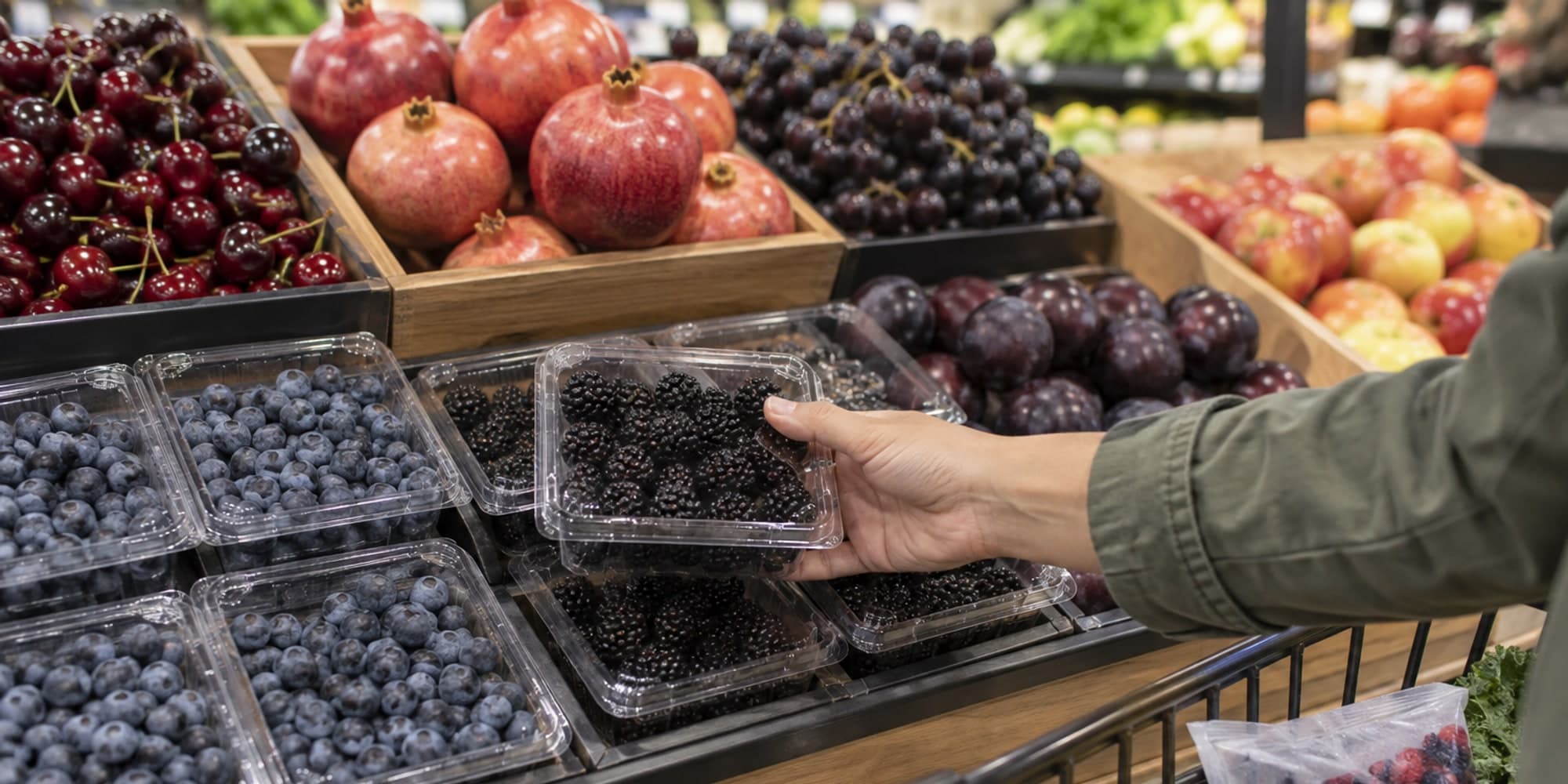
At the fruit shelf, berries are the easiest answer. Blackberries, blueberries, blackcurrants, and elderberries sit near the top, followed by strong non-berry choices such as pomegranate, cherries, plums, black grapes, and apples with the skin on. That's which fruits are highest in polyphenols in practical terms. Fresh is lovely in season. Frozen berries are usually cheaper, don't go fuzzy by Thursday, and still belong in the cart. Buy two colors and rotate them next week. A varied bowl beats a permanent loyalty to one database winner. It tastes better too.
The short list
Blackberries lead the useful shortlist, with blueberries close enough that price and availability can decide. Blackcurrants are exceptionally high by standardized weight, though they're less common in U.S. produce sections. Pomegranate, cherries, and apples give you options when a berry-only plan gets expensive or monotonous.
| Fruit | Why it ranks | Best form to buy |
|---|---|---|
| Blackberries | Among the highest of any fruit | Fresh in season, frozen otherwise |
| Blueberries | High anthocyanin content, easy to eat daily | Frozen is fine and cheaper |
| Blackcurrants | Very high per 100 grams | Frozen, or cooked into things |
| Pomegranate | High among non-berry fruit | Fresh arils rather than juice |
| Cherries | Strong anthocyanin content | Fresh or frozen |
| Apples | Apple polyphenols in a realistic portion | Fresh, unpeeled |
Plums and black grapes belong in the same general group as the listed non-berry choices. Elderberries rank highly too, though they're normally cooked and sold in forms that make direct comparisons harder. For the other half of the produce aisle, see the vegetable ranking.
I usually leave the store with frozen blueberries and whichever dark fresh fruit is on sale. That's less romantic than hunting blackcurrants, though it works. Polyphenol content varies with cultivar, ripeness, growing conditions, storage, and processing. A precise number from one sample isn't a promise about the punnet you're holding. Price gets a vote.
Why berries win
Dark berries carry anthocyanins, the pigments behind much of their blue, purple, red, and nearly black color. Anthocyanins are polyphenols. That makes the visual clue unusually direct: the color you see is connected to the compounds that put berries near the top of these lists.
Blackberries, blueberries, blackcurrants, and elderberries all contain substantial anthocyanin mixtures. They don't contain the same mixture, and color alone won't tell you an exact total. Even two cartons of blueberries can differ by variety, ripeness, season, and storage. Still, a dark berry is a sensible pick when you want a fruit that ranks well without reading a paper in the aisle.
Berries also fit ordinary portions. Half a cup disappears into oatmeal or yogurt. A handful works as a snack. Frozen berries can be poured straight from the bag, so they don't depend on a narrow fresh season. That repeatability matters more than winning a per-weight contest once.
The fruit comes as a package. Fiber and other nutrients arrive with the polyphenols, and digestion plus gut bacteria change the compounds before they circulate. The amount measured in raw fruit isn't the amount your bloodstream sees. The ranking points you toward a good group, then the body makes the chemistry much less tidy. That's normal digestion, and it applies to every fruit here.
How these rankings are built
Researchers analyze samples of raw fruit and report individual compounds or a total. Databases standardize those figures to 3.5 ounces so fruits can be compared by equal weight. That common denominator makes tables possible. It doesn't make every fruit sample identical.
Cultivar matters. So do ripeness, growing conditions, storage, and processing. A blackberry grown in one place and tested shortly after harvest can differ from a berry that traveled farther and sat under store lights. Labs can use different methods to extract and count compounds too. Read the value as an average from a measured sample. It doesn't certify every fruit of that name.
The raw-food basis adds another limitation. You may cook blackcurrants, freeze cherries, peel an apple, or buy pomegranate arils separated from the rind. Each choice changes the material being compared. Later, digestion, absorption, and gut microbes transform the polyphenols again.
Rankings are still useful. They show that berries generally lead and that pomegranate, cherries, plums, black grapes, and unpeeled apples are credible alternatives. Just stop reading before the decimal places persuade you that fruit is standardized lab equipment. The broad order travels better than the exact total.
How much polyphenols per day should come from these foods? No universal target has been established. A fruit chart can't supply one, and the body doesn't absorb every measured compound unchanged.
Why per 100 grams misleads
A 3.5-ounce serving is plausible for blueberries or apple slices. It's less plausible for dried currants and doesn't capture how people drink juice. Equal weight can hide big differences in water, fiber, concentration, and the portion you actually serve.
Take dried fruit. Removing water concentrates everything left behind per ounce. A standardized 3.5-ounce entry can look impressive, but a normal handful is much smaller and far denser in calories than the same weight of fresh fruit. Pomegranate has the opposite inconvenience: the purchased fruit includes peel and membrane you won't eat, while a tub of arils is entirely edible.
Apples illustrate why a realistic portion can matter more than rank. One whole apple is easy to buy, store, and eat. Much of its polyphenol content sits in and just under the skin, so peeling changes the serving. Read why apple skin matters before automatically removing it.
If you're saving a "Foods high in polyphenols PDF," check the basis of the list. A "Foods high in polyphenols PDF" that uses equal raw weights can help compare samples, though it can't tell you what you'll eat or absorb. Portion and routine belong beside the number. Add a note about fresh, frozen, dried, or juiced form. Those labels explain more than another decimal place. That note makes the table more honest.
Dried fruit and juice
Dried fruit often ranks well by weight because the water has been removed. That doesn't create new polyphenols. It makes the remaining fruit more concentrated in a smaller package. A modest portion of dried cherries or currants can fit into oatmeal or a trail mix, but treating 3.5 ounces as a routine serving distorts the comparison.
Check added sugar and the form of the fruit. Some dried cranberries and cherries are sweetened heavily because the unsweetened fruit is tart. The polyphenols haven't canceled the sugar. Choose a portion that makes sense for the meal and let dried fruit add flavor rather than carry the whole fruit intake.
Clarified juice has a different problem. Processing removes much of the fiber and many polyphenols. Pomegranate arils, black grapes, cherries, and berries keep the solid parts you'd lose in a clear bottle. Whole fruit also slows you down. Drinking the juice from several pieces of fruit takes far less time than eating them.
Cloudy or pulpy juice may retain more of the fruit material than a clarified product, yet it still won't be identical to whole fruit. If your goal is the fruit itself, buy the fruit. Juice can be something you enjoy, though its front label shouldn't borrow the ranking earned by an unprocessed sample. The processing method belongs in any fair comparison.
Fresh, frozen and stored
Frozen berries are usually picked and frozen quickly, so they aren't automatically worse than fresh. Fresh fruit keeps changing during shipping, display, and refrigerator storage. Time and light can lower polyphenol content between harvest and your bowl. A frozen bag pauses more of that clock and cuts waste.
Fresh still wins on texture when the fruit is ripe and local. Blackberries in season are hard to beat. Three days later, the forgotten carton may be leaking in the produce drawer. Frozen blueberries can wait until the morning you need them. Let the calendar decide instead of assuming one format always has higher quality.
Store fresh berries dry and cold, and wash them just before eating. Keep apples away from heat and direct light. Buy cherries when you'll use them soon or freeze extras. If blackcurrants aren't sold nearby, frozen fruit or a cooked unsweetened product is more realistic than ordering fresh berries across the country.
Polyphenol-rich fruits and vegetables don't need to be fresh to count. A freezer stocked with berries and spinach may support more varied meals than a refrigerator packed with ambitious produce. You know which version of that story happens in your kitchen. Frozen fruit also removes the pressure to finish a full carton quickly. That convenience can keep berries in breakfast through the whole month.
Color as a rule you can use
Deep color is the best quick filter. Blueberries, blackberries, dark cherries, black grapes, plums, and pomegranate arils all advertise plant pigments. Many of those pigments are polyphenols. Pale fruit can still contain polyphenols, and an unassuming apple deserves a place because its skin carries a meaningful share.
The rule has limits. Color won't tell you the cultivar, storage history, or exact compound mix. It also won't tell you whether you'll enjoy the fruit. A dark berry that sits untouched is a bad purchase. A red apple eaten most afternoons contributes more often.
Use color to create variety. Pick one blue or purple fruit and one red fruit, then change the pair next week. That might be blueberries with cherries, blackberries with red apples, or black grapes with pomegranate. Eating a range covers more classes of polyphenols than buying a huge amount of one winner.
The phrase "Polyphenol-rich fruits and vegetables" is useful because it keeps the full produce aisle in view. Polyphenol-rich fruits and vegetables bring different compounds, textures, and meal roles. No color needs to become a prescription.
Is green tea high in polyphenols? Yes, tea belongs among common dietary sources, though it isn't fruit. Are beets high in polyphenols? They can join the varied produce pattern, though they're vegetables and don't alter this fruit ranking.
How to shop from this
Buy one fresh fruit for immediate eating, one durable fruit, and one frozen option. For example: blackberries for the next two breakfasts, apples for the week, and frozen blueberries for backup. In cherry season, swap cherries for the fresh berry. When pomegranates are good, use the arils in yogurt, salads, or grain bowls.
Price can make the decision. Frozen berries often cost less per usable serving because you don't discard moldy fruit. Apples and black grapes usually give you more days to finish them. Blackcurrants may rank impressively, though availability in the U.S. makes them a specialty rather than the foundation of a normal cart.
Are pomegranates high in polyphenols? Yes, they're one of the stronger non-berry choices. Buy arils when convenience means you'll eat them, since clarified juice loses much of the fiber and many polyphenols found in the whole fruit.
Whole fruit brings fiber and can fit a filling snack or meal, but no berry guarantees weight loss. Body weight depends on the full eating pattern, portions, activity, sleep, medications and health.
You may also see "Vegetables high in polyphenols" treated as a competing list. Vegetables high in polyphenols belong beside fruit. Put berries or cherries in breakfast, an apple in a snack, and colorful vegetables in lunch or dinner. Variety is the shopping habit worth keeping.
Common questions
What are the top 5 foods rich in polyphenols?
Within fruit, blackberries, blueberries, blackcurrants, elderberries, and pomegranate make a strong top five. Cherries, plums, black grapes, and unpeeled apples also rank well. Exact order changes with the sample and database, so buy a mix you can find and afford instead of treating the fifth spot as fixed.
Can you get too many polyphenols from food?
Whole fruit supplies polyphenols with fiber and other nutrients in amounts far below concentrated capsules. Eating a range of fruit is a more sensible goal than pushing one food to an extreme. If a food causes symptoms or conflicts with advice you've received for a medical condition, follow your clinician's guidance.
What drink has the most polyphenols?
Coffee and tea are major everyday contributors because people drink them frequently. Among fruit choices, whole dark berries make more sense than clarified juice, which loses much of its fiber and many polyphenols during processing. Deeply colored fruit tends to carry more polyphenols than pale fruit, though no drink replaces a varied diet.
Can you give me a list of 100 foods high in polyphenols?
A 100-food list would include berries, pomegranate, cherries, plums, black grapes, apples, colorful vegetables, nuts, legumes, whole grains, herbs, spices, coffee, and tea. For the fruit shelf, start with the dark berries and rotate through non-berry options. A shorter list you eat is more useful than a long one you save.
What fruit has the most antioxidants?
Berries usually lead antioxidant and polyphenol rankings, with blackberries, blueberries, blackcurrants, and elderberries among the strongest. Anthocyanins give many berries their dark color and are themselves polyphenols. "Antioxidant" covers more than polyphenols, so the exact winner depends on what a test measures and how it reports the result.
Are frozen berries as good as fresh?
Frozen berries are a sound choice. They're often frozen quickly after picking, while fresh berries can spend days in storage and light before you eat them. The exact content varies in both forms. Choose fresh for texture when they're in season and frozen for price, convenience, and less waste.
The list to shop from
Photograph this: blackberries, blueberries, blackcurrants when available, pomegranate, cherries, apples, plums, and black grapes. Buy one fresh fruit for now, one sturdy fruit for later, and frozen berries for backup. Choose two colors and rotate next week. Frozen is fine. Variety matters more than the top decimal place when you're deciding which fruits are highest in polyphenols.
NCCIH's review of antioxidants puts the broader evidence in perspective: eating more fruit and vegetables has stronger support than trying to copy the pattern with antioxidant supplements.
Food is the foundation here: fresh, sturdy and frozen fruit each solve a different part of the week. A standardized fruit extract may be useful when a specific human study supports its dose and purpose, but it shouldn't replace the fruit, fiber and ordinary meals doing the broader work.