
Polyphenols in Apples: What the Skin Actually Carries
Sep 12, 2026
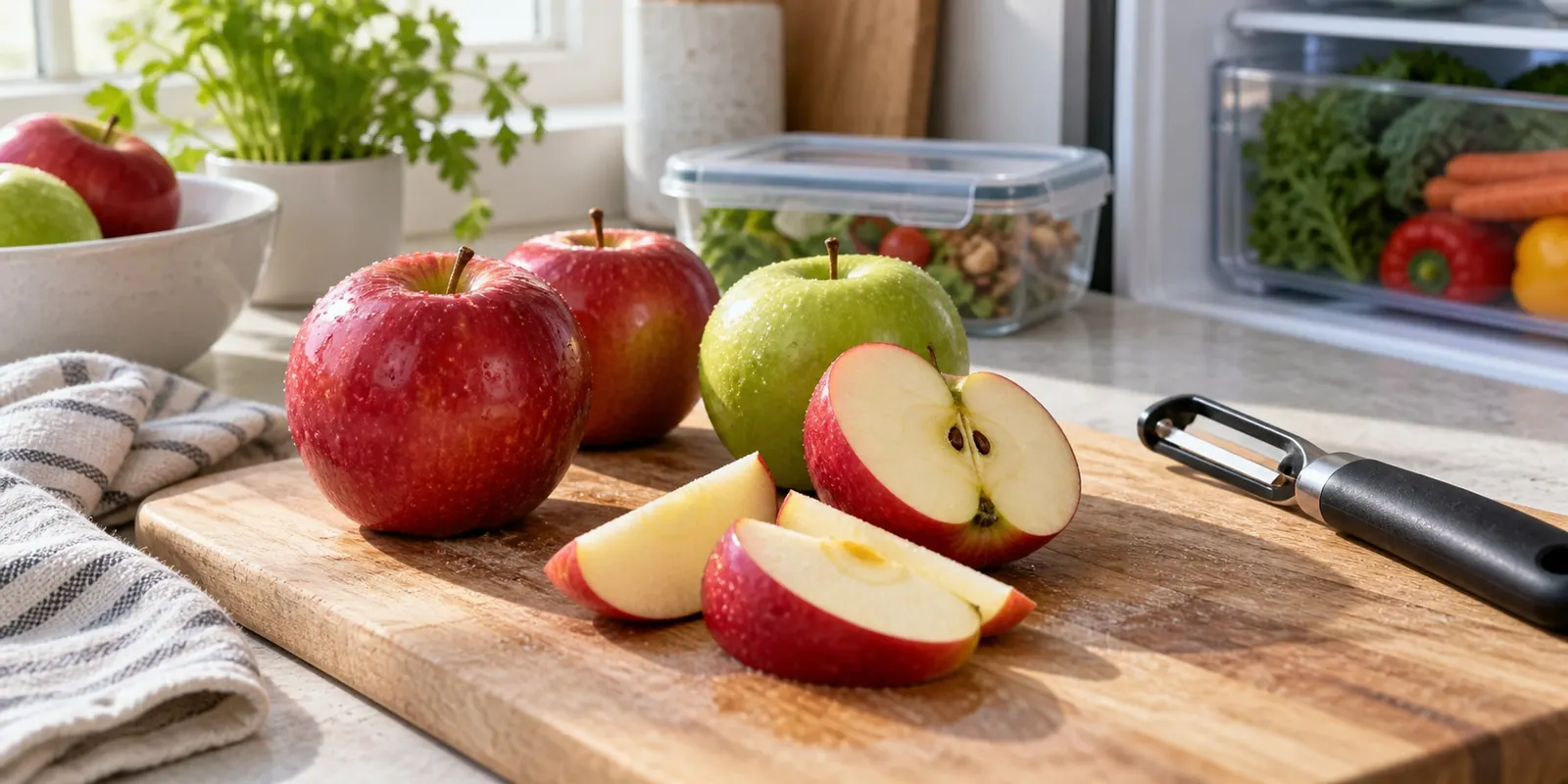
You've got an apple in one hand and a peeler in the other. If your question is about polyphenols in apples benefits, the decision that matters is whether you keep the skin. Most of the apple's polyphenols sit in the skin and the layer just beneath it, along with much of its fiber. Washing won't remove those compounds. Peeling will. You don't need to hunt down a rare variety or buy an Apple polyphenols supplement. Eat the ordinary apple whole, and you've handled the useful part. It's pleasantly simple advice.
Where the polyphenols are
An apple isn't chemically uniform. The skin and the tissue just beneath it carry most of the polyphenols, while the pale flesh carries less per bite. Among the compounds found in apples are quercetin, catechins and chlorogenic acid. They don't all sit in exactly the same place or survive processing in the same way.
The easiest demonstration happens on your cutting board. Slice an apple and leave it exposed to air. The cut surface turns brown because an enzyme meets oxygen and reacts with the apple's polyphenols. That familiar browning demonstrates the chemistry without proving a health outcome. You're watching a polyphenol reaction in your kitchen.
The skin also carries much of the apple's fiber. Eating both together is the practical advantage of whole fruit. Digestion, absorption and gut bacteria change polyphenols before they reach the bloodstream, so the amount measured in an apple isn't the amount that circulates unchanged. The food matrix still gives you the compounds alongside fiber and other nutrients.
Apple peel holds much of the fruit's polyphenols and fiber. That fact doesn't promise a cosmetic result for human skin. Red color alone doesn't settle the health value either because varieties differ, and storage, ripeness and growing conditions shift the content within a variety.
| Part | What it carries | What happens if you remove it |
|---|---|---|
| Skin | The bulk of the polyphenols, plus much of the fiber | Peeling removes most of both |
| Just under the skin | A meaningful share | Thick peeling removes this too |
| Flesh | Some, but much less per gram | Left behind when you peel |
| Clarified juice | Most polyphenols and fiber were removed | Processing has already removed them |
If you're comparing 1 apple benefits with a juice label, that table explains the meaningful difference. The whole apple keeps the skin, the layer beneath it and the fiber. Clear juice has already lost most of that structure through processing.
What peeling costs you
Peeling removes a large share of the apple's polyphenol content. A thin peel takes the skin. A thick peel takes the skin and some of the compound-rich tissue beneath it. Either way, the pale flesh left behind contains less per gram than the part you discarded.
It also removes much of the fiber. That's why the whole fruit makes more sense than clear juice if you're choosing between the two. You get the apple's compounds and fiber in the same bite, without concentrating the fruit into a drink. Washing the skin doesn't wash away its polyphenols, so a rinse is compatible with keeping the useful layer.
Some people peel apples because they prefer the texture, especially when the skin is thick or the apple has been stored for a while. I wouldn't turn this into a purity test. An apple you enjoy peeled is still an apple. The point is simply that peeling changes the polyphenol answer, and it changes it more than most other kitchen choices.
Apples contain polyphenols and fiber, and diets with more fruit and vegetables are associated with better health patterns. NCCIH notes that produce-rich diets have stronger support than broad antioxidant supplements. That evidence supports eating the fruit without inventing ten separate guarantees.
The same restraint applies to Apple benefits for women and Apple benefits for men. Nothing in the apple facts here supports dividing the fruit into gendered benefit lists. The useful advice stays the same: keep the skin when you can, eat the whole fruit, and treat variety as a bonus rather than a competition.
Which varieties carry more
Apple varieties differ substantially in polyphenol content. That sounds like it should produce one winning apple, but a fixed ranking would pretend away too much variation. Cultivar matters, then ripeness, growing conditions, storage and processing move the number again. A database value is an average, not a lab result for the apple in your hand.
Color can offer a visible clue that plant pigments are present, but it doesn't settle the whole profile. A red peel and a green peel may contain different mixes of compounds. The useful comparison is whole versus peeled, because that decision consistently removes the part where most of the polyphenols sit.
I use the same rule in the produce aisle that I use at home: buy apples you'll finish before they become soft at the back of the drawer. Storage lowers polyphenol content. A supposedly superior variety that sits untouched for weeks isn't an obvious upgrade over a fresh apple you actually like.
Queries for Apple benefits for women often lead to variety rankings dressed as personal health advice. Apple benefits for men pages do the same thing. The apple's sex-specific promise isn't established here. Its ordinary value is less dramatic and more credible: whole fruit brings polyphenols and fiber together.
The phrase Benefits of eating apple at night has a similar problem. Nighttime hasn't been shown to change the apple's polyphenols. If an evening apple fits your routine, fine. The Benefits of eating apple at night come from eating the whole fruit. Timing adds no established special effect here.
And those 1 apple benefits? They depend partly on the apple. Variety and freshness move the polyphenol content, while digestion changes what your body encounters. Keeping the skin is the clearest lever you control.
Juice, cooking and storage
Clear apple juice has had most of the polyphenols and fiber removed during processing. It may start with apples, but it doesn't preserve the same package as the whole fruit. If your goal is polyphenol-rich foods, polyphenol-rich foods with their structure intact are the more straightforward choice.
Cooking changes an apple's polyphenol content. Keeping the skin on limits the loss, so sliced apples baked with their peel are a practical compromise. You don't need to eat every apple raw. Just avoid peeling by habit when the skin would work perfectly well in the dish.
Storage matters too. Apples kept for a long time carry less than fresh ones. You usually can't know the harvest and storage history from a supermarket bin, which is one reason exact content tables can promise more precision than your kitchen supports. Buy a quantity you'll eat, then use it while the texture is still good.
An Apple polyphenols supplement concentrates a different product into a capsule. Whole foods provide compounds in far smaller amounts alongside fiber and other nutrients. The broader evidence favors eating vegetables and fruits over expecting antioxidant supplements to reproduce the same benefit. An Apple polyphenols supplement may sound more targeted, but targeted isn't the same as better established.
Long benefit lists outrun the evidence. The useful facts are simpler: apples contain several polyphenols, much of the content sits near the surface, and peeling, clarification and long storage reduce what remains.
The whole fruit keeps its useful structure together. That practical difference matters.
Common questions
Which apple is highest in polyphenols?
There isn't one dependable winner for every store and season. Polyphenol content varies substantially among varieties, and it also shifts with ripeness, growing conditions and storage. Whichever variety you choose, eat the skin if you can. That's where most of the polyphenols sit.
Is 1 apple a day too much sugar?
No personal sugar limit follows from polyphenol data. A whole apple still differs from clear juice because it keeps fiber, much of it in the skin, alongside its polyphenols. If sugar intake is a medical concern for you, ask your doctor about your full diet rather than treating one fruit as the answer.
What organ is apple healthy for?
This evidence doesn't assign apples to one organ. NCCIH notes that people who eat more fruits and vegetables have lower rates of chronic disease, while antioxidant supplements haven't delivered the same result. A whole apple contributes fruit, polyphenols and fiber to that broader eating pattern.
Which fruit is the highest in polyphenols?
A single highest fruit can't be named from these facts because variety, ripeness, storage and processing all change polyphenol content. Apples are useful because they're familiar and the decision is easy: keep the skin. A ranking won't measure the exact fruit on your plate.
Should you eat apple skin?
Yes, if you enjoy it and can eat it comfortably. Most of an apple's polyphenols sit in and just under the skin, and the skin carries much of its fiber. Washing won't remove those compounds. Peeling removes the part you were trying to keep.
Do apples lose nutrients when cooked?
Cooking changes an apple's polyphenol content. Keeping the skin on limits the loss, so cooking doesn't require peeling. Wash the apple, leave the peel in the dish when the texture works, and remember that peeling makes the larger difference for these compounds.
So, peel or not?
Keep the peel. That's the one habit worth remembering. Buy an apple variety you like, wash it, eat it before long storage takes its toll, and leave the skin on for raw or cooked dishes when the texture works. The remaining claims, from Apple benefits for skin to elaborate variety rankings, matter less than that ordinary choice. Most people need no finer optimization.
Food is the foundation, and an apple with the peel is an easy part of it. A standardized apple extract may be useful when a human study supports a specific dose and goal, but the capsule doesn't bring the fruit's fiber or solve the rest of the meal.