Quercetin vs Luteolin: A Practical Comparison
Oct 16, 2026
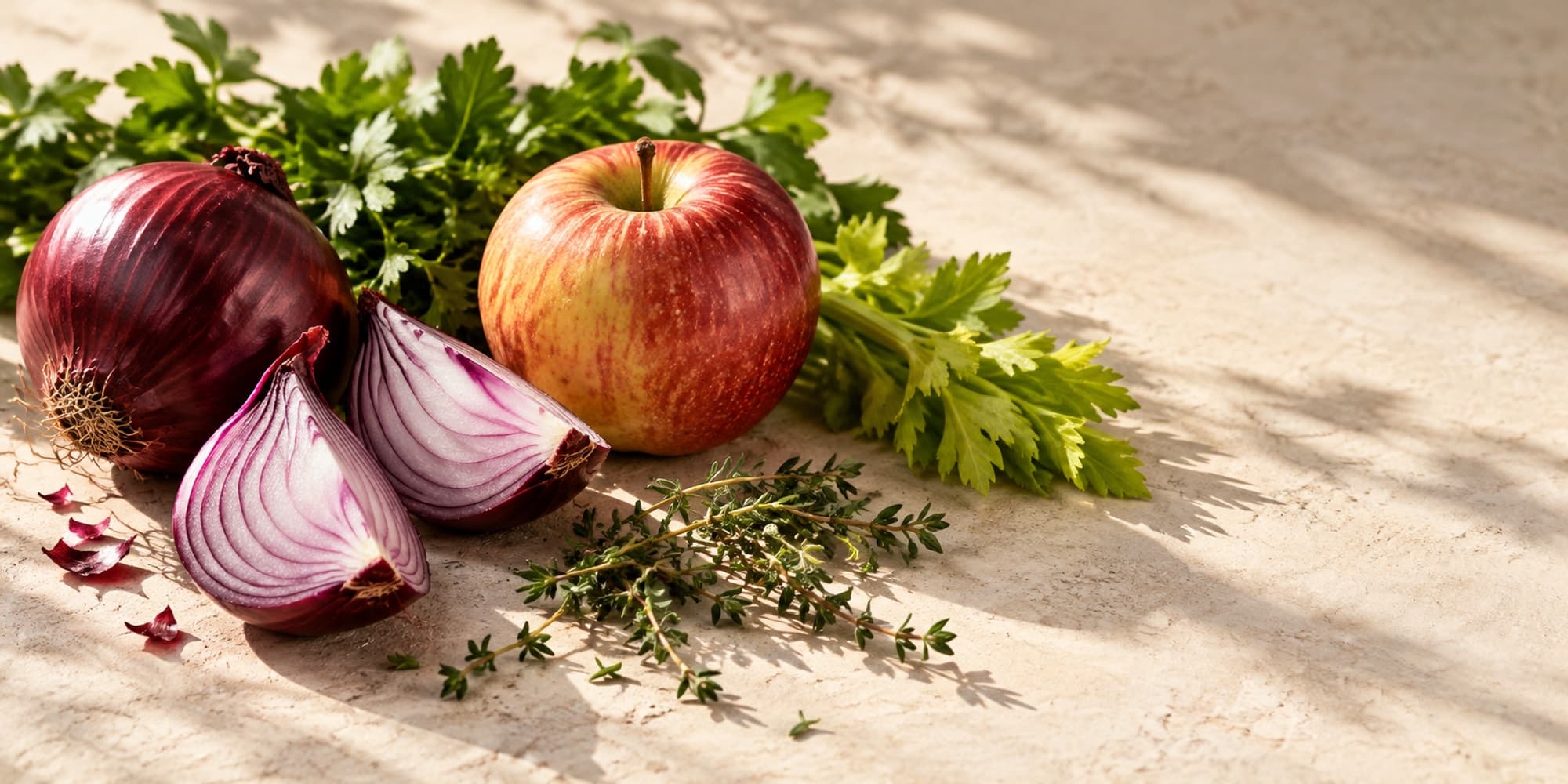
Quercetin and luteolin are two related plant compounds with names that look like a typo of each other. Quercetin is a flavonol found in foods such as onions, apples, and tea. Luteolin is a flavone found in parsley, celery, and thyme.
The family resemblance doesn't make them interchangeable. They occur in different amounts, show up in different products, and have very different amounts of human research behind them. If you're choosing food, there is no contest to settle. If you're choosing a supplement, the exact label matters more than which name sounds better.
Two related flavonoids
Flavonoids are a large family of plant compounds. Quercetin sits in the flavonol branch; luteolin sits in the flavone branch. That one-letter difference in the branch names reflects a real structural difference.
Here is the grocery-store translation: the sharp red onion on your cutting board is a familiar quercetin source, while the parsley sitting beside it can contribute luteolin. A meal can contain both without asking either one to win.
One naming trap is worth slowing down for. Lutein isn't luteolin. Lutein is a yellow carotenoid found in foods such as egg yolks and leafy greens. Luteolin is the flavonoid discussed here. If a product page drops the final syllable, you may end up reading evidence about the wrong compound.
Related doesn't mean interchangeable
A flavonol found in onions, apples, tea, and other foods.
A flavone found in parsley, celery, thyme, and other plants.
Depends on the actual product and the human evidence.
Where food supplies each one
Quercetin shows up across a fairly broad group of foods, including onions, capers, apples, tea, and some leafy vegetables. Luteolin is associated with parsley, celery, thyme, peppers, and a smaller mix of herbs and vegetables. The exact amounts change with the plant variety, growing conditions, storage, and preparation.
That variability makes food-composition tables useful maps, not precise prescriptions. A database value for raw onion doesn't guarantee the amount in the onion you sautéed for dinner. Chopping, cooking, and discarding cooking water can all change what remains.
Food also delivers mixtures. The apple doesn't hand you quercetin by itself, and parsley isn't a luteolin capsule with leaves attached. You get fiber, water, and many other compounds at the same time. That's a different exposure from taking hundreds of milligrams of one isolated ingredient.
| Question | What the evidence says | Practical meaning |
|---|---|---|
| Compound family | Quercetin and luteolin are flavonoids | Related compounds aren't interchangeable |
| Food sources | Quercetin occurs in onions, apples, tea, and leafy greens | Food amounts and supplement doses are different propositions |
| Supplement evidence | Human evidence depends on the exact form and dose tested | Compare labels before comparing benefit claims |
What the absorption claims mean
Absorption describes how much of a compound gets from the gut into circulation. It's one step, not the finish line. A manufacturer can show that a carrier or altered particle size raises blood levels without showing that the product changes a symptom or health outcome.
Quercetin in food is often attached to sugars. A supplement may use quercetin aglycone, a phytosome, or another formulation. Luteolin products vary too. If one label says "enhanced," look for the ingredient it was compared with and the size of the difference. Without that information, the word is decoration.
Follow the claim all the way through
Name the compound and any delivery system.
Check whether the product changes blood levels.
Look for a result that matters to people.
Compare the human evidence
Quercetin has the larger human research record. That doesn't make it the automatic winner. Trials use different forms, doses, populations, and outcomes, and the results don't add up to one broad recommendation.
Luteolin claims rely more heavily on cell and animal work. Those studies can suggest mechanisms and help researchers decide what to test next. They can't tell you that a luteolin supplement will help a person with allergies, mast-cell symptoms, or another medical problem.
The fairest comparison may end with neither capsule. Match the form, daily amount, study population, and outcome to the bottle in your hand. If the label hides the form or individual amount, put it back. You can't make an evidence match from a proprietary blend and a front-label promise.
If you use medication, have a health condition, or plan to take either compound regularly, ask a doctor or pharmacist to review the exact product. Concentrated supplements raise questions that a serving of onions or parsley doesn't.
Common questions
Is luteolin the same as quercetin?
No. Luteolin is a flavone and quercetin is a flavonol. Their structures, food sources, metabolism, and evidence differ, even though both belong to the flavonoid family.
Which foods contain quercetin and luteolin?
Quercetin occurs in onions, apples, tea, capers, and leafy greens. Luteolin occurs in parsley, celery, thyme, peppers, and other plants. Real foods contain mixtures, so the lists overlap without providing equal amounts.
Which compound has better human evidence?
Quercetin has more human research, but that doesn't make it a universal winner. Evidence for both compounds depends on the exact form, dose, population, and outcome. Cell and animal studies can't settle a supplement choice for a person.
Can quercetin and luteolin be taken together?
They appear together in some products, but sharing a capsule doesn't prove extra benefit or safety. If you use medication, have a health condition, or plan regular use, ask a doctor or pharmacist to review the exact forms and doses.
The practical takeaway
For food, skip the bracket. Eat onions, apples, herbs, vegetables, and tea as part of a varied diet. For supplements, compare a defined form and dose against human evidence for your actual goal. More concentrated isn't automatically more useful.
The broader guide to flavonoid-rich foods makes the food side easier. If you're considering a capsule, read the food and supplement tradeoffs and remember that food exposure isn't the same as a high-dose supplement.