Flavonoid Rich Foods: Six Groups, Not One Thing
Sep 17, 2026

Flavonoid rich foods show up in several parts of the grocery store: blueberries in produce, onions beside the potatoes, citrus in the fruit display, tea in its own aisle, and cocoa near the baking supplies. They don't all provide the same compounds. Flavonoid is a family name, so the useful shopping question is which parts of that family your usual cart covers.
A flavonoid is a family, not a compound
Flavonoids are a large group within the polyphenols found in plants. Researchers sort them into subclasses according to chemical structure. Those subclasses include flavonols such as quercetin, flavones such as luteolin, flavanones found mainly in citrus, flavanols associated with tea and cocoa, and the anthocyanidins that give dark fruit much of its color. Polyphenol is the broader family name, so the two words aren't interchangeable.
A blueberry isn't a flavonoid. It is a food that contains flavonoids, including anthocyanidins, and it may contain several plant compounds in different amounts. The same distinction applies to an onion or cup of tea. That matters when a flavonoid foods list ranks everything in one column. The list may be comparing different subclasses as though they were one ingredient. It may also compare dried herbs by weight with fruit eaten by the handful or tea poured by the mug.
The family name is useful. The single ranking usually isn't.
The six groups and where they live
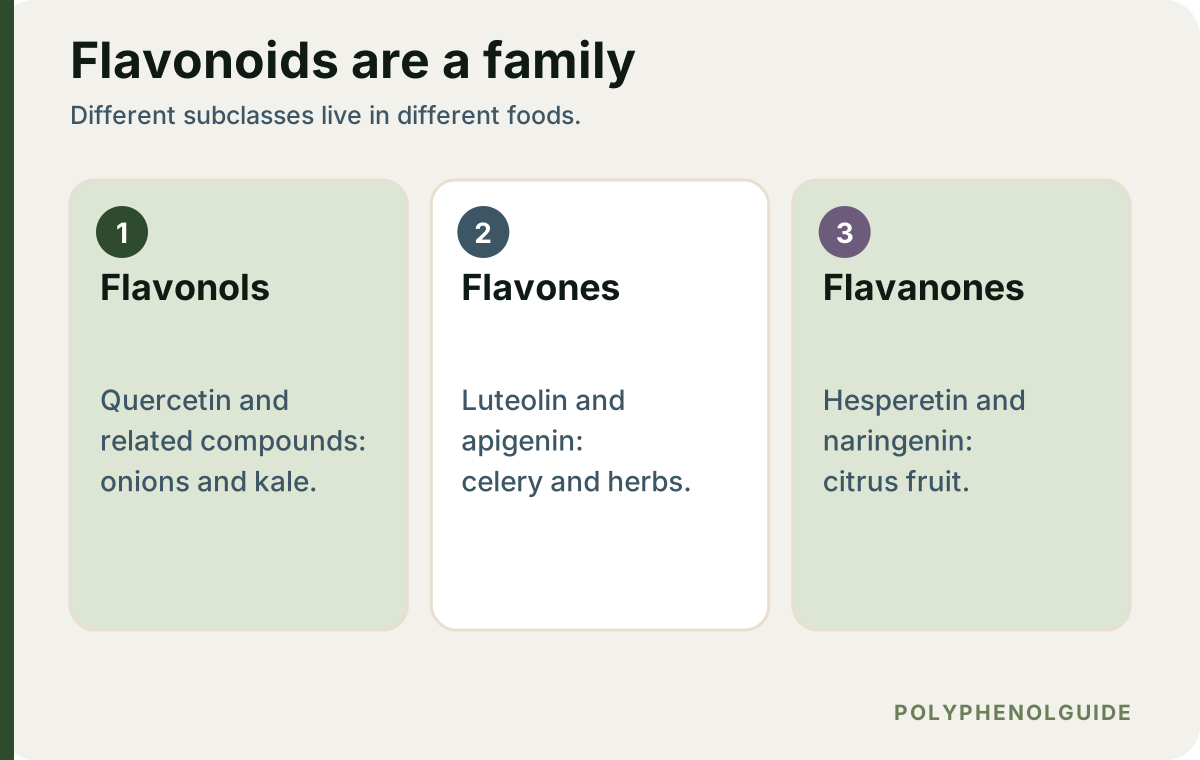
The labels get easier once each compound stays attached to its food. Quercetin belongs with the flavonols found in onions, kale, and broccoli. Luteolin and apigenin are flavones, with thyme and parsley as concentrated herb sources. Citrus supplies flavanones. Tea and cocoa supply flavanols. Blueberries and other dark fruit carry anthocyanidins. Most foods contain more than one subclass, just in different amounts. That is why you may see a familiar ingredient appear in more than one database column.
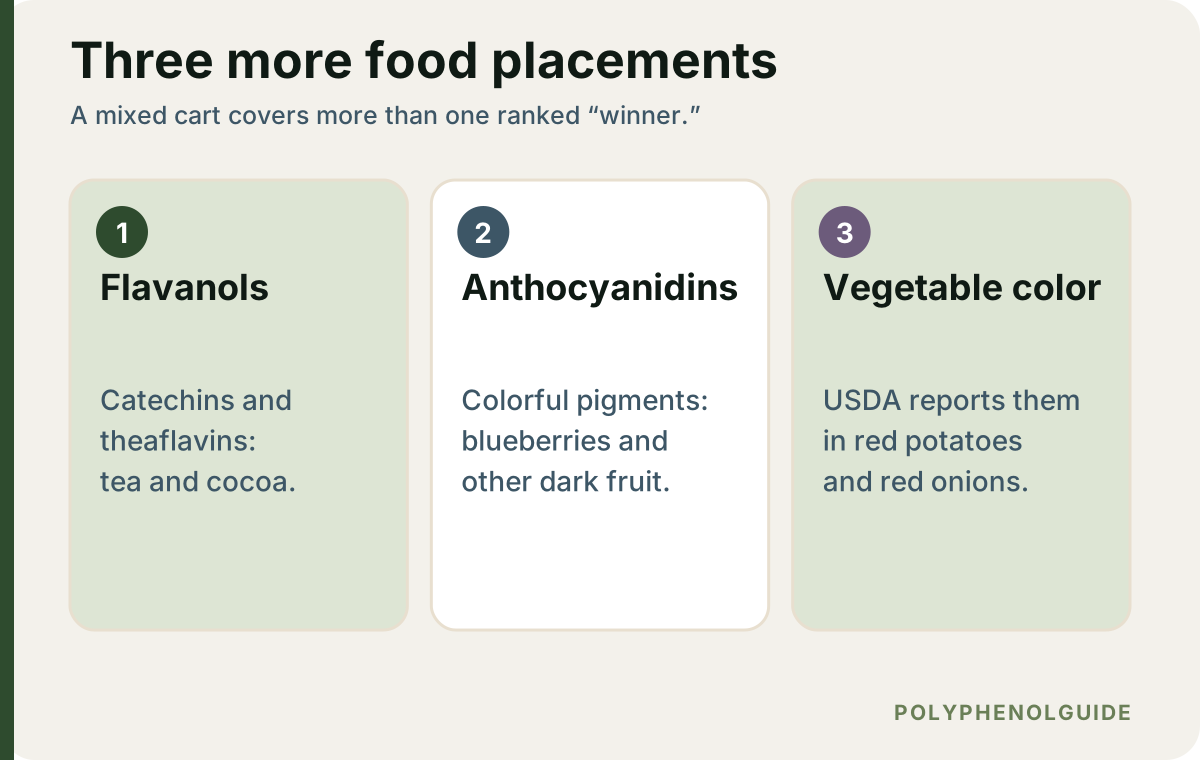
The table separates anthocyanidins in fruit from their much narrower showing in the USDA vegetable data. Chemically, those are the same subclass, so this is a practical food split, not a sixth distinct chemical family. Think of it as six useful shopping placements. Onions cover the flavonols, herbs cover the flavones, tea carries catechins in the flavanol group, and dark fruit supplies the colorful anthocyanidins. That aisle-level view is more useful than memorizing every compound name.
| Subclass | Best known members | Where it sits | Notes |
|---|---|---|---|
| Flavonols | Quercetin, kaempferol, myricetin, isorhamnetin | Onions, kale, broccoli | Named by the USDA as particularly good vegetable sources |
| Flavones | Apigenin, luteolin | Parsley, thyme, celery | Parsley is the apigenin one, thyme the luteolin one |
| Flavanones | Hesperetin, naringenin, eriodictyol | Citrus fruit | The main dietary source of this group |
| Flavanols | Catechins, epicatechins, theaflavins, thearubigins | Tea and cocoa | Legumes are the only vegetables the USDA reports them in |
| Anthocyanidins | Cyanidin, delphinidin, malvidin, pelargonidin | Blueberries and dark fruit | The pigments that make fruit blue and purple |
| Anthocyanidins in vegetables | Cyanidin and relatives | Red potatoes, red onions | The only two vegetables the USDA reports them in |
What the data does not cover
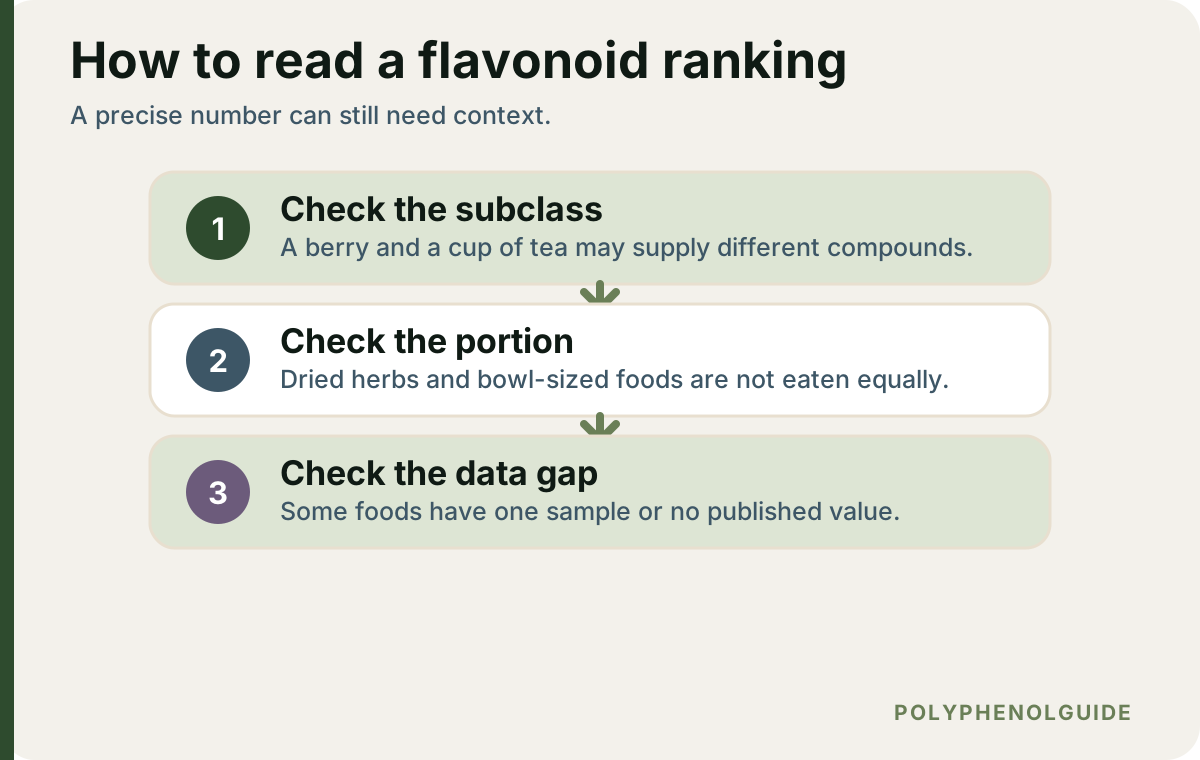
A food database can only report foods that someone sampled and analyzed. The USDA's flavonoid material notes that published values are missing for many common vegetables. Some entries rest on a single reported value, while some samples were purchased outside the United States. Variety, growing conditions, storage, and preparation can add more variation before food reaches your plate.
That doesn't make the database useless. It means a difference between two numbers may reflect the samples and methods as well as the foods themselves. A tidy ranking can hide those qualifications. It can also put a dried herb at the top even though you use a pinch, then place a berry farther down even though you eat half a bowl.
Use the data to identify patterns: onions and leafy vegetables for flavonols, herbs for flavones, citrus for flavanones, tea and cocoa for flavanols, and dark fruit for anthocyanidins. Treat small numerical gaps as estimates, not a reason to rebuild dinner.
How to cover all six
Food is the foundation, and variety does more work here than chasing one supposed winner.
- Choose blueberries or another dark fruit in produce, then refrigerate them dry and wash a serving just before eating.
- Put yellow or red onions in the cart, and keep them in a cool, dry cabinet instead of a sealed plastic bag.
- Buy oranges or another citrus fruit you can peel for breakfast or pack without extra prep.
- Keep tea where you can see it by the kettle, and note the package opening date if a box tends to linger.
- Add kale or broccoli to a dinner you already make instead of planning around a new recipe every week.
- Use parsley or thyme for flavor, then close the jar or herb container promptly so the leaves don't go stale.
A standardized flavonoid supplement may be useful for a targeted goal when its form and dose have supportive human evidence. It will usually focus on one compound or subclass, not reproduce the mix in a varied cart.
What we still don't know
Most foods contain several flavonoid subclasses at once, which makes it difficult to credit one compound for an effect of the whole diet. Published values also vary between databases and between samples of the same food. How much of the difference comes from the plant variety, the farm, time in storage, cooking, or the way the sample was measured?
Common questions about flavonoid rich foods
Are blueberries a flavonoid?
No. A blueberry is a food containing flavonoids, especially the anthocyanidins responsible for its dark blue and purple color. It may carry several plant compounds at once. Calling the berry a flavonoid is like calling an orange vitamin C: the food contains the compound, but it isn't the compound.
Are bananas high in flavonoids?
Bananas aren't identified as a leading source in the USDA material used for this guide. For anthocyanidins, blueberries and other dark fruit are the clearer choice. That doesn't make a banana a poor food; it means a ranked flavonoid claim needs to name the subclass being measured.
What is the best flavonoid supplement?
There isn't one supplement that neatly covers the flavonoid family. Products usually concentrate a particular compound or subclass. Food remains the foundation, while a standardized supplement may help with a targeted goal when its form and dose have good human evidence. Review that choice with your doctor or pharmacist.
Do flavonoids have side effects?
Flavonoids eaten in ordinary servings of fruit, vegetables, tea, herbs, and cocoa come packaged as food, not isolated high doses. Concentrated products are a separate safety question because the dose can be much higher and interactions may matter. Discuss a supplement with your doctor or pharmacist, especially if you take medication.
Which foods have the most different flavonoids?
Most plant foods contain several subclasses, but the available data don't support one universal winner. A better pattern combines dark fruit, onions or leafy vegetables, citrus, tea or cocoa, and herbs. That grocery mix covers the main groups without asking one food to supply every flavonoid.
What are the top 10 flavonoid foods?
A single top-ten ranking mixes different subclasses and serving sizes. Use practical everyday food leaders by group instead: onions, kale, and broccoli for flavonols; parsley and thyme for flavones; citrus for flavanones; tea and cocoa for flavanols; and blueberries or other dark fruit for anthocyanidins.
Which fruits are highest in flavonoids?
Dark fruit such as blueberries stands out for anthocyanidins, while citrus is the main source of flavanones. Those are different compounds, not higher and lower amounts of one thing. Pick fruit across both groups for variety, and keep serving size in mind when comparing a database.