
Benefits of Olive Leaf Extract Supplements: Evidence
Oct 23, 2026
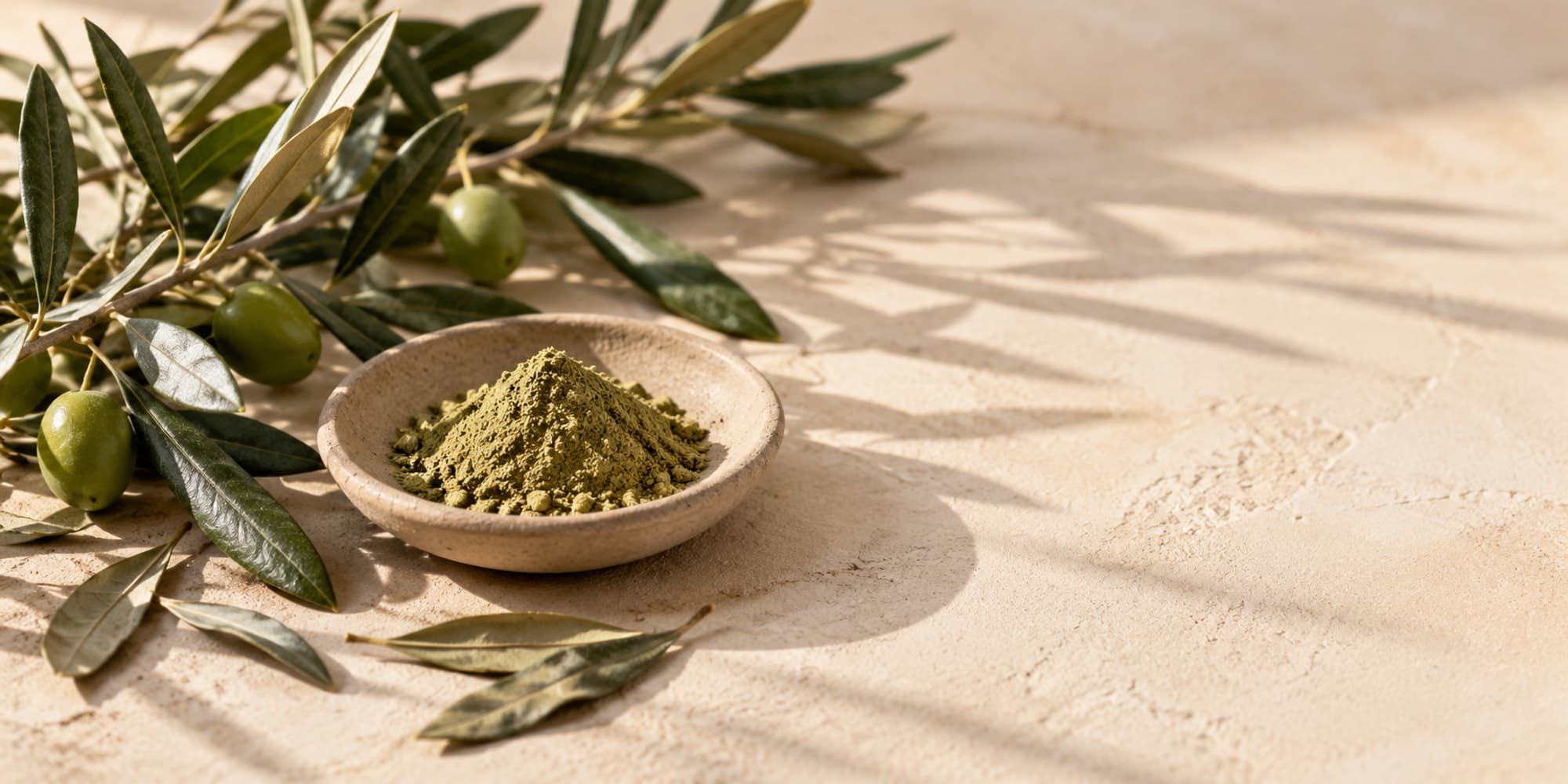
Olive leaf extract isn't olive oil squeezed harder. It comes from the leaves of the olive tree and is usually sold around one marker compound, oleuropein. Small human trials have tested it, but they used different extracts, doses, people, and outcomes. That makes a clean list of proven benefits impossible.
The most useful thing you can do in the supplement aisle is turn the bottle around. If the label doesn't tell you the extract amount and oleuropein standardization, you can't tell whether it resembles the product used in a study.
What olive leaf extract contains
Olive leaves contain oleuropein and other phenolic compounds. An extract concentrates some of that mixture. The finished product isn't the same as eating olives or using extra virgin olive oil, and evidence for the Mediterranean diet can't simply be transferred to a leaf capsule.
Labels usually give one or two numbers. The first is total extract weight. The second may be an oleuropein percentage. If a serving contains 500 milligrams of extract standardized to 20 percent oleuropein, simple label math gives 100 milligrams of oleuropein per serving.
That calculation tells you what the manufacturer claims is in the capsule. It doesn't prove the capsule will help. Standardization is a quality and comparison tool, not a clinical result.
Three numbers that shouldn't be confused
The total leaf extract in one serving.
The stated percentage of a marker such as oleuropein.
The quantity you can calculate when both inputs are disclosed.
What human trials have tested
A systematic review found a small, varied group of randomized adult trials. Some reported changes in selected markers, but the studies used different products, daily amounts, study lengths, participant groups, and outcomes. The review doesn't give us one general benefit or one standard dose.
This is where a headline such as "olive leaf lowers X" becomes much more confident than the evidence. A marker changing in one selected group doesn't mean every person will feel better, and it doesn't validate every bottle that says olive leaf on the front.
To see whether a trial applies, compare five things: leaf material, oleuropein or other marker, daily amount, study length, and participant group. Then check the outcome. A short trial in adults selected for one risk factor can't establish a general wellness benefit for everybody else.
| Question | What the evidence says | Practical meaning |
|---|---|---|
| Source | Olive leaf extract comes from the leaves rather than olive oil | Food and supplement forms aren't interchangeable |
| Marker compound | Products may standardize to oleuropein | Extract weight alone doesn't state oleuropein per serving |
| Evidence | Human trials use defined products, doses, and populations | One trial can't validate every retail extract |
Why products are hard to compare
Two bottles can both say "olive leaf extract" and contain very different products. The plant material, extraction method, concentration ratio, oleuropein percentage, serving size, and other ingredients can all differ. A proprietary blend can hide the amount entirely.
Front-label arithmetic also plays games. A bottle may advertise 1,000 milligrams while the serving is two capsules, or it may use the weight of the raw plant equivalent instead of the standardized extract. Read the Supplement Facts panel before you compare prices.
A study only travels so far
Has a defined composition, dose, and schedule.
Belong to a specific population with a measured outcome.
May not match either part of the trial.
How to read the label
Look for the leaf as the source, extract amount per serving, oleuropein standardization, serving size, and complete other-ingredient list. A concentration ratio can describe processing, but it doesn't replace a measured marker amount.
Independent testing should cover identity and contaminants. If the company offers a certificate of analysis, make sure it matches the lot number on the bottle. A polished badge on the product page isn't the same as a batch-specific result.
Don't buy six months at once. Keep the bottle, note the serving and start date, and watch for unwanted effects. A photo of both label panels will help a pharmacist much more than the marketing copy on the front.
If the marker amount or testing is hidden, choose a clearer label. You shouldn't need detective work to identify the basic contents.
Olive leaf extract may be relevant to medication use, planned procedures, pregnancy, breastfeeding, and chronic conditions. Talk to a doctor or pharmacist before taking it in those situations or using it for a medical outcome.
Common questions
What does an oleuropein percentage mean?
It states how much of the extract is standardized to oleuropein, a marker compound in olive leaves. You still need the extract amount per serving to calculate what the percentage represents. Standardization makes products easier to compare; it doesn't prove a health outcome.
What should an olive leaf extract label disclose?
It should disclose the leaf source, extract amount per serving, any oleuropein standardization, serving size, other ingredients, and quality testing. Those details make comparison possible without promising an outcome.
What side effects have been reported with olive leaf extract?
Human studies and product reports include digestive symptoms and other tolerability problems, although the evidence isn't complete. Medication interactions also matter. Check the exact extract and dose, and stop using it if you develop a concerning reaction.
Who should talk to a doctor before taking olive leaf extract?
Anyone using medication, managing a health condition, preparing for surgery, pregnant or breastfeeding, or considering it for a medical purpose should talk to a doctor or pharmacist first.
The practical takeaway
Olive leaf extract has interesting compounds and some human research. It doesn't have one established general benefit or dose. Buy it only if the label lets you match the product to relevant evidence, and include medication review in the decision.
Olives and olive oil still belong on the food side of the conversation. A leaf capsule is a separate product, not a stronger Mediterranean diet. The guide to food and supplement tradeoffs explains that split, and this natural antioxidant supplement guide applies the same label test elsewhere.