Natural Antioxidant Supplements: Natural Isn't the Safety Claim
Sep 17, 2026

Natural antioxidant supplements aren't automatically safer than synthetic ones. The word “natural” on a bottle describes where an ingredient came from, not how much is in the capsule or how your body responds. Beta-carotene makes the point clearly: it occurs naturally in carrots and leafy greens, yet high-dose beta-carotene supplements carry a serious risk signal for some people. Turn the package around and read the compound, dose, form, and serving size.
What natural means on this label
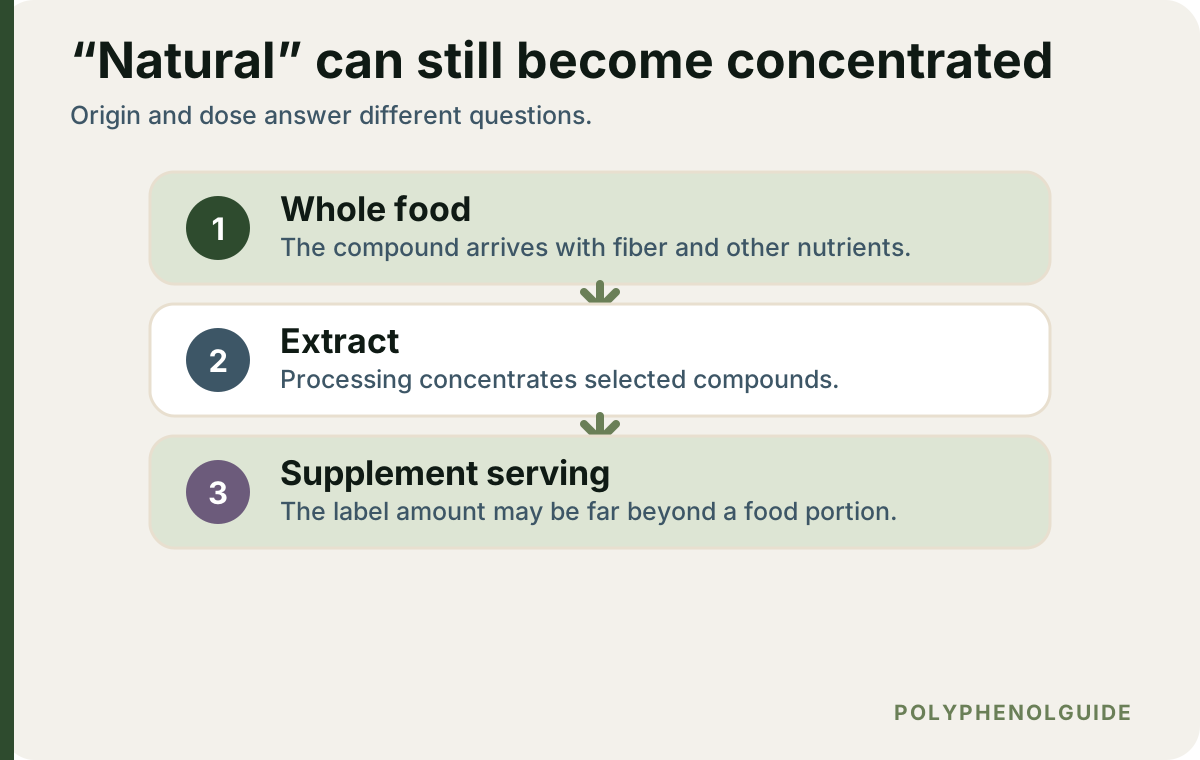
On a supplement label, natural usually describes origin. It doesn't define a safe dose, prove gentle effects, or show that the finished product works. A plant extract can begin in a leaf, seed, or root and end up highly concentrated in a capsule. Along the way, it leaves behind the fiber, minerals, and other compounds that came with the original food.
That difference is easy to miss in the supplement aisle. A green leaf on the front and the words “from whole foods” may sit above a Supplement Facts panel listing concentrated extracts by the hundreds of milligrams. Read the amount in a full serving; the one-capsule line may differ. Check whether several bottles in your cabinet repeat the same antioxidant. U.S. dietary supplements aren't approved by the Food and Drug Administration before sale; the manufacturer is responsible for safety and labeling. Concentration changes the dose even when the ingredient starts as food.
What the evidence says about the natural ones
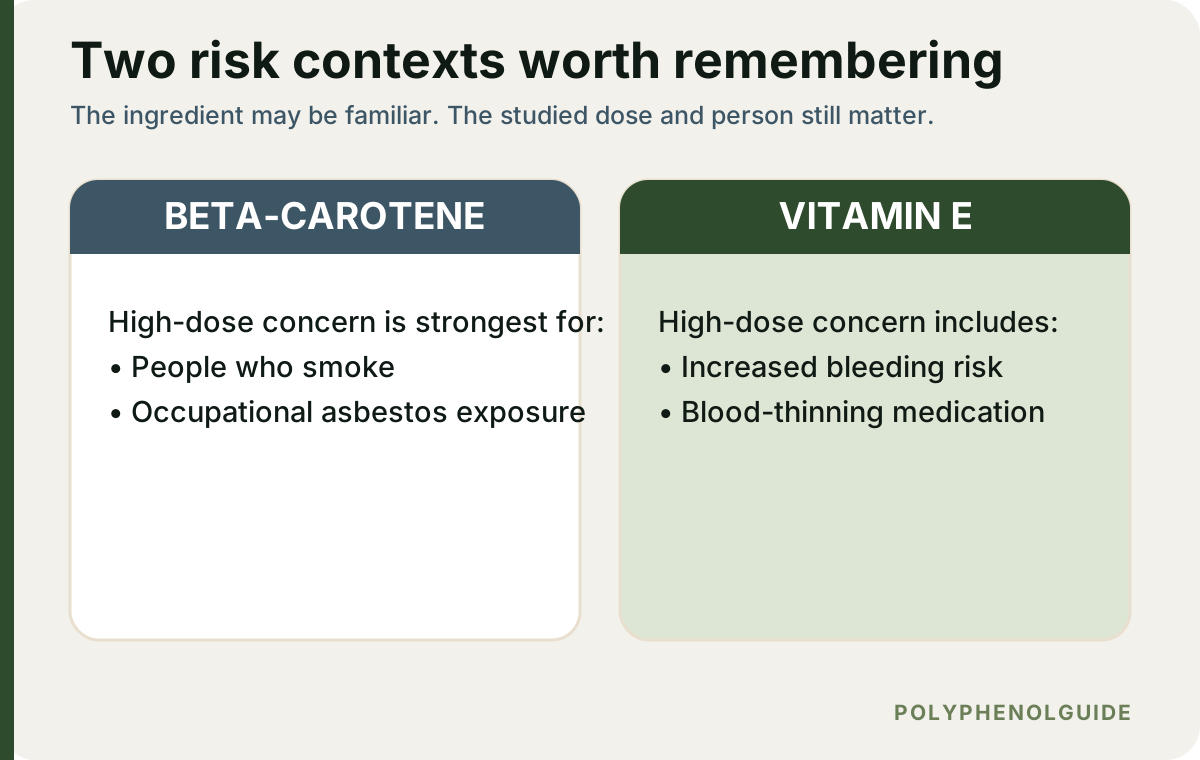
The National Center for Complementary and Integrative Health reports that high-dose beta-carotene supplements have been linked to higher lung cancer risk. The strongest evidence concerns smokers and people with occupational asbestos exposure. NCCIH also links high-dose vitamin E with a greater risk of bleeding because vitamin E reduces the blood's ability to form clots. Those details belong in the buying decision.
A 2012 Cochrane review pooled 78 randomized trials with more than a quarter million participants. It found no significant mortality benefit from antioxidant supplements overall, and beta-carotene and vitamin E appeared to increase mortality. Both compounds occur naturally. The concern comes from the studied supplemental dose and context, not from whether the ingredient began in a plant. This is why a familiar nutrient name on the front of the bottle still needs a dose check on the back. Read the wider human evidence carefully before choosing by origin alone.
| Compound | Occurs naturally in | What the reviews report | Who should be most careful |
|---|---|---|---|
| Beta-carotene | Carrots, sweet potato, dark leafy greens | NCCIH links high doses to a higher risk of lung cancer; Cochrane found it appeared to increase mortality | Smokers and people with asbestos exposure |
| Vitamin E | Nuts, seeds, and vegetable oils | NCCIH links high doses to a higher risk of bleeding; Cochrane found it appeared to increase mortality | Anyone on blood-thinning medication |
| Vitamin C | Citrus, peppers, and berries | Widely sold; the food sources are abundant | Anyone assuming more is better |
| Selenium | Brazil nuts, fish, and eggs | Sold as a natural antioxidant mineral | Anyone taking several products at once |
| Green tea extract | Green tea | A concentrated form of an ordinary drink | Anyone taking it alongside other extracts |
| Grape seed extract | Grapes | A concentrated form of a food compound | Anyone on medication, per the doctor conversation |
The natural route that actually has evidence
Food is the foundation. NCCIH notes extensive evidence that people who eat more fruits and vegetables have lower rates of chronic disease, while antioxidant supplements haven't produced a comparable result. That evidence is observational, so it doesn't prove that one compound deserves all the credit. It does support building a varied grocery routine around the foods themselves.
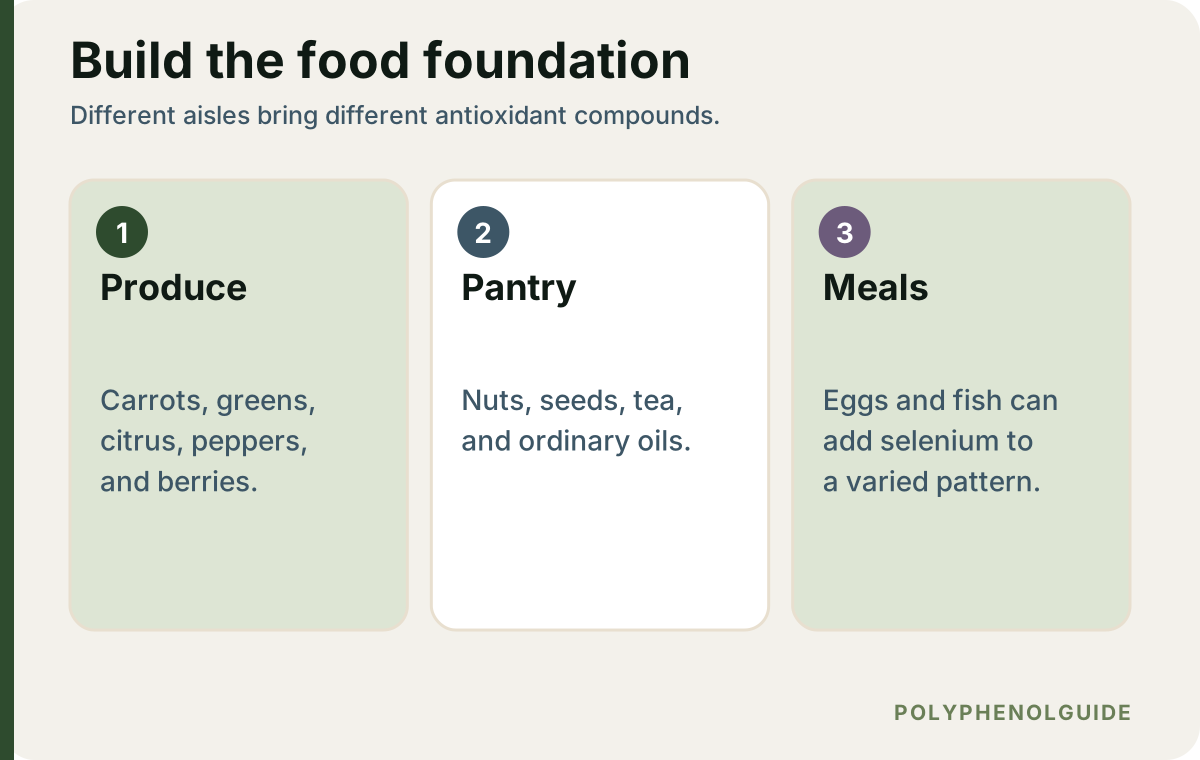
Put carrots or sweet potato in the produce basket for beta-carotene. Keep nuts or seeds in the pantry for vitamin E. Choose citrus, peppers, or frozen berries for vitamin C. Eggs and fish provide selenium, while a Brazil nut contains it in a very concentrated food. These foods deliver antioxidant compounds alongside other nutrients and, for plant foods, fiber. A varied cart also spreads your choices across several compounds instead of chasing the food at the top of one ranking. A specific standardized supplement may still make sense for a documented gap or targeted goal when its form and dose have supportive human evidence.
Before you start one
Talk to a doctor or pharmacist before starting a natural antioxidant supplement if you take prescription medication, are pregnant, or are being treated for a health condition. Dose and interactions matter, and the word natural tells you nothing about either one.
Bring the complete bottle or clear photos of the label. Check the serving size, since two capsules may count as one serving, and list any overlapping products from your cabinet. Pay particular attention to beta-carotene if you smoke or have occupational asbestos exposure. Ask about vitamin E if you use blood-thinning medication or have a bleeding concern. Include drinks, powders, and multivitamins on that cabinet list. A standardized supplement can be useful when it addresses a real need with an evidence-matched form and dose. That fair use case is much narrower than “natural antioxidant support,” which can cover a long blend without explaining what any ingredient is meant to do.
What we still don't know
Food patterns and supplement trials point in different directions, and researchers haven't fully separated the effects of fiber, nutrient combinations, dose, and the habits of people who eat more produce. Even the food evidence is mostly observational. Which parts of the whole diet create the association, and which isolated compounds can reproduce a useful result at a safe dose?
Common questions about natural antioxidant supplements
What is the most powerful natural antioxidant?
Evidence doesn't support ranking one natural antioxidant as the most powerful for general health. Laboratory scores don't establish a better result in people, and larger doses can add risk. Cover several food sources instead: colorful vegetables, fruit, nuts, seeds, eggs, fish, tea, and other ordinary staples.
What is the best natural antioxidant?
Reviews don't identify one best natural antioxidant for general health. The stronger practical route is a varied diet with fruits, vegetables, nuts, seeds, eggs, or fish. If you need a supplement for a defined goal, judge the exact ingredient, form, dose, evidence, and interaction risk.
What is the best supplement for antioxidants?
The pooled trials don't identify one best antioxidant supplement. The 2012 Cochrane review found no significant mortality benefit overall, while beta-carotene and vitamin E raised concerns. A targeted product may be useful for a supported need, but the word “natural” alone doesn't establish benefit or safety.
How can I get antioxidants naturally?
Build them into food you already buy. Choose carrots or sweet potato, nuts or seeds, citrus or peppers, berries, eggs, fish, and tea across the week. Start by using what is already stocked in your refrigerator or freezer, then replace produce as you finish it.
Are natural antioxidant supplements safer than synthetic ones?
Natural origin doesn't guarantee a safer supplement. Beta-carotene is a natural plant pigment, yet high-dose supplements carry a lung cancer risk signal for smokers and people with asbestos exposure. Compare the ingredient, dose, form, evidence, and your own medications instead of relying on the front-label word.
What food is highest in antioxidants?
No single food wins every antioxidant comparison. Carrots and sweet potato provide beta-carotene; nuts and seeds provide vitamin E; citrus, peppers, and berries provide vitamin C. NCCIH finds stronger support for fruit-and-vegetable eating patterns than for broad antioxidant supplements, so variety is more useful than one ranking.