
Nano Curcumin: A Word With No Agreed Meaning
Oct 2, 2026
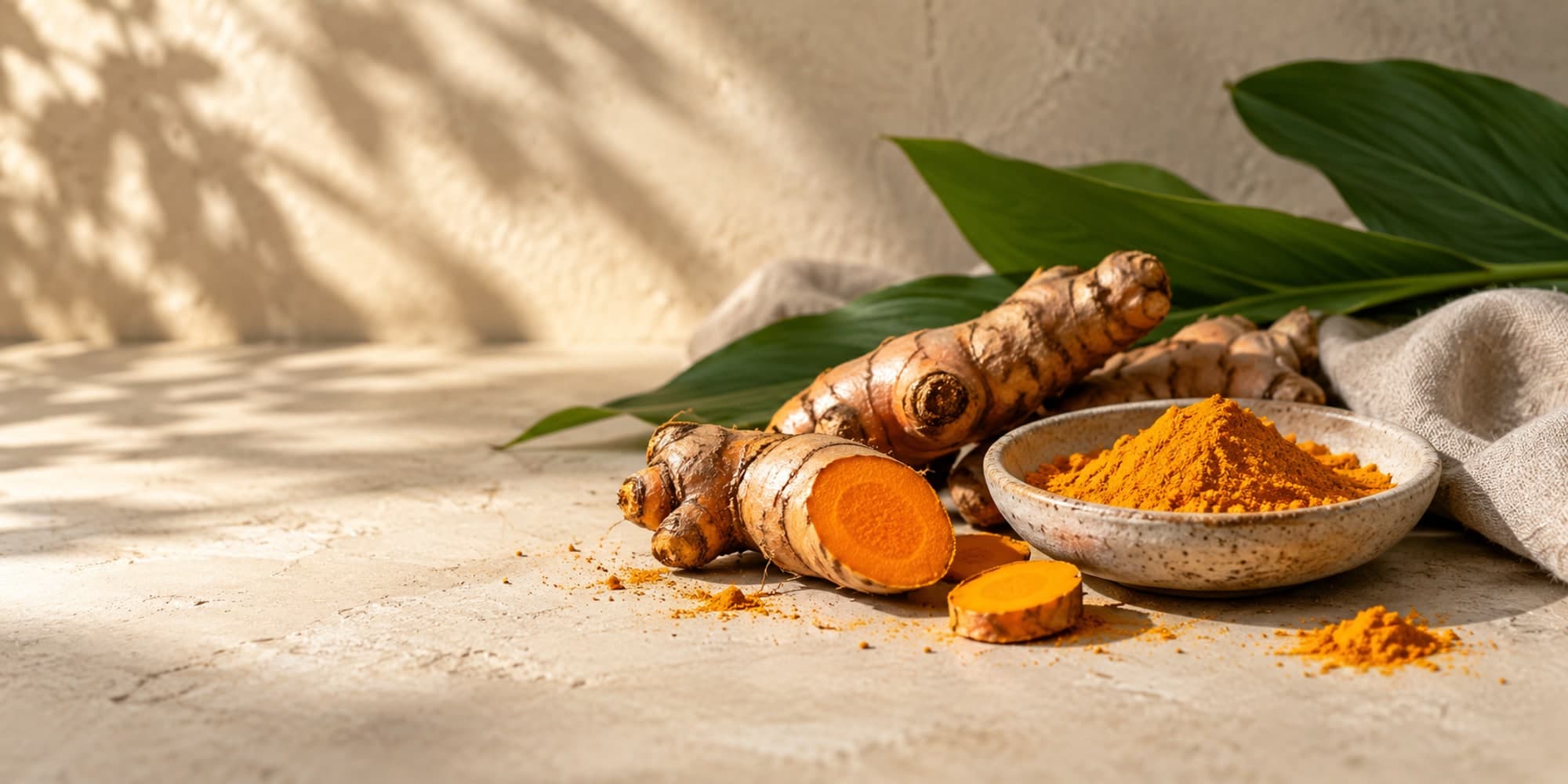
Nano curcumin looks precise on a label, but it doesn't name one standard ingredient. It can describe different particles, emulsions and carrier systems, each with its own dose and evidence. Two products using the term may have little else in common.
Food is the starting point, and cooking with turmeric doesn't require a supplement calculation. A standardized supplement can be useful when a clinician recommends a defined formulation for a specific reason. Start with the disclosed milligrams of curcuminoids and the standardization percentage, then identify the carrier or delivery system. Those details let you compare products; nano by itself doesn't.
Why the shelf is full of absorption words
Curcumin is one of the curcuminoids found in turmeric. It's also the ingredient supplement makers usually want you to notice. The formulation problem is that ordinary curcumin has low water solubility and is rapidly metabolized after you swallow it. That's why the shelf is crowded with phrases about absorption.
Different products approach that problem in different ways. Piperine is an extract from black pepper that can change how the body handles curcumin. A phytosome complexes curcumin with phospholipids. Liposomal products place it in lipid-based carriers. Nano formulations are a broader family that may use particles, emulsions, polymers or other delivery systems. A systematic review of advanced oral curcumin delivery systems included 48 studies, but only three were randomized clinical trials; most were animal studies. That evidence can support a claim about absorption. It can't, by itself, prove a better health result.
In a nano-curcumin vs curcumin claim, the formulation may change how the compound travels through the body. The label still needs to name that formulation and its amount. Our guide to what a polyphenol is puts curcumin in the larger compound family.
Three different claims can sit under the word "nano"
How the curcumin is packaged.
Whether the format changes exposure in blood.
Whether a person actually benefits. This needs its own human evidence.
What you can actually compare
Turn the bottle around. The Supplement Facts panel is more useful than the front label because it can separate the amount of extract from the amount of curcuminoids. A product might list a large amount of turmeric material but a much smaller standardized amount. Another might state the curcuminoid amount directly. Those aren't the same disclosure.
The standardization percentage answers a different question from the milligram figure. "Standardized to 95 percent curcuminoids" describes the concentration of the extract. The milligrams tell you how much of that material is in a serving. You need both figures before the price comparison means much.
| What is printed on the bottle | Is it defined? | How to use it |
|---|---|---|
| Milligrams of curcuminoids | Yes. It states an amount. | Compare the amount per serving, not just per capsule. |
| Standardized to 95 percent curcuminoids | Yes. It states the extract's concentration. | Read it alongside the milligram amount. |
| With piperine | Yes. It names a black pepper extract. | Treat it as part of the delivery system, not extra curcuminoid. |
| Phytosome or liposomal | Partly. It names a carrier approach. | Look for human data on that exact formulation. |
| Nano | Not by itself. | Find the particle, carrier and curcuminoid details elsewhere on the label. |
| Supports antioxidant health | It's a structure/function claim. | Don't mistake it for a tested clinical outcome. |
Nano curcumin brands sometimes describe proprietary systems on a separate website or technical sheet. That information can help, but only if it identifies the ingredient used in the bottle and links to a human study of the same formulation. A study of one nanocarrier doesn't validate every product using the word. This is also why rankings of nano curcumin brands based only on front-label language are weak comparisons.
The same rule applies to nano curcumin drops. A liquid format tells you how the product is dispensed, not how much curcuminoid reaches the bloodstream. Read the serving size, concentration and carrier. Our separate guide looks at the delivery claim examined in more detail.
The regulatory reality
Dietary supplements in the United States don't go through the same premarket approval process as drugs. The manufacturer is responsible for making sure its product is safe and its labeling is truthful. The FDA can act against an adulterated or misbranded product after it reaches the market, but the bottle isn't an FDA endorsement.
Structure/function claims add another layer of confusion. Phrases such as "supports antioxidant health" can describe an intended effect on normal body structure or function. The manufacturer must have substantiation, notify the FDA and carry the required disclaimer, but the FDA doesn't preapprove the claim. The phrase isn't proof that the product improved a disease or symptom in a clinical trial.
Some of these claims may be well supported, but the useful question is "What exactly was tested?" A relevant citation names the formulation, dose, participants, comparison and outcome. A lab experiment showing that particles dissolve differently isn't the same thing as a trial showing that people felt or functioned better.
Match the bottle to the study before trusting the claim
The carrier and curcuminoid amount should match.
Animal absorption data answer a narrower question.
Blood levels aren't automatically a health benefit.
What to do instead
Compare milligrams of curcuminoids per serving, then the standardization percentage. After that, identify the carrier and decide whether research on that exact product supports the premium. Undefined words such as "advanced," "high potency" and "nano" come last.
Don't try to infer a nano curcumin dosage from the word nano. A trial dose tells you what researchers tested under specific conditions. It's not a general daily recommendation, and there is no dietary reference intake for curcumin that turns one bottle into the correct choice for everyone.
Safety belongs in the comparison too. The National Center for Complementary and Integrative Health notes that curcumin products vary in composition and that highly bioavailable formulations may harm the liver. Digestive symptoms can occur, and piperine may matter when other medicines are involved. Talk to a doctor or pharmacist before starting a concentrated product if you take prescription medication, are pregnant or breastfeeding, or are being treated for a health condition.
Cooking with turmeric is a different decision. A spice used in food doesn't deliver the concentrated amount found in a capsule, and ordinary culinary use doesn't need to be reverse-engineered into a supplement dose. If your goal is simply to eat more turmeric, cook with it. For the broader tradeoff, see food against supplements and our guide to how much is too much.
Common questions
What is nano curcumin good for?
Nano describes a delivery format, not a proven use. Claims about nano-curcumin benefits need human evidence on the exact formulation and outcome. The label can tell you the curcuminoid amount and carrier; it can't establish that the product will improve your health.
What is the difference between curcumin and nano curcumin?
The active compound is still curcumin. "Nano" says that a product uses a small-particle delivery approach, but it doesn't identify one universal formulation. A fair nano-curcumin vs curcumin comparison therefore needs the carrier, particle details, dose and human evidence.
What are the potential side effects of taking nano curcumin?
Curcumin supplements can cause digestive symptoms, and highly bioavailable formulations have raised liver-safety concerns. Anyone taking medication should have a doctor or pharmacist check the product first. The delivery system may change exposure, so "better absorbed" isn't automatically safer.
Who should not take curcumin?
People who take prescription medicines, are pregnant or breastfeeding, or are being treated for a health condition should ask a clinician before using a concentrated curcumin supplement. That's especially important when the product includes piperine or another absorption-enhancing carrier.
Is nano curcumin better absorbed than regular curcumin?
Some nanocarrier systems have increased curcumin exposure in studies, but "nano curcumin" isn't one standardized formulation. Most studies in a major review used animals, and only a few were randomized human trials. Better absorption also doesn't prove a better health result.
How much curcumin is in nano curcumin?
Only the Supplement Facts panel can answer that. Find the milligrams of curcuminoids per serving, then read the standardization percentage. The word nano doesn't state an amount, and the total weight of a turmeric blend may include material other than curcuminoids.
Two figures, then everything else
The curcuminoid amount and standardization percentage do most of the useful work. The delivery system comes next. If two nano curcumin supplements disclose the same amount and one charges more for an undefined word, that word isn't a reason to pay the difference.