
Does Red Wine Have Polyphenols? Yes, With a Catch
Oct 6, 2026
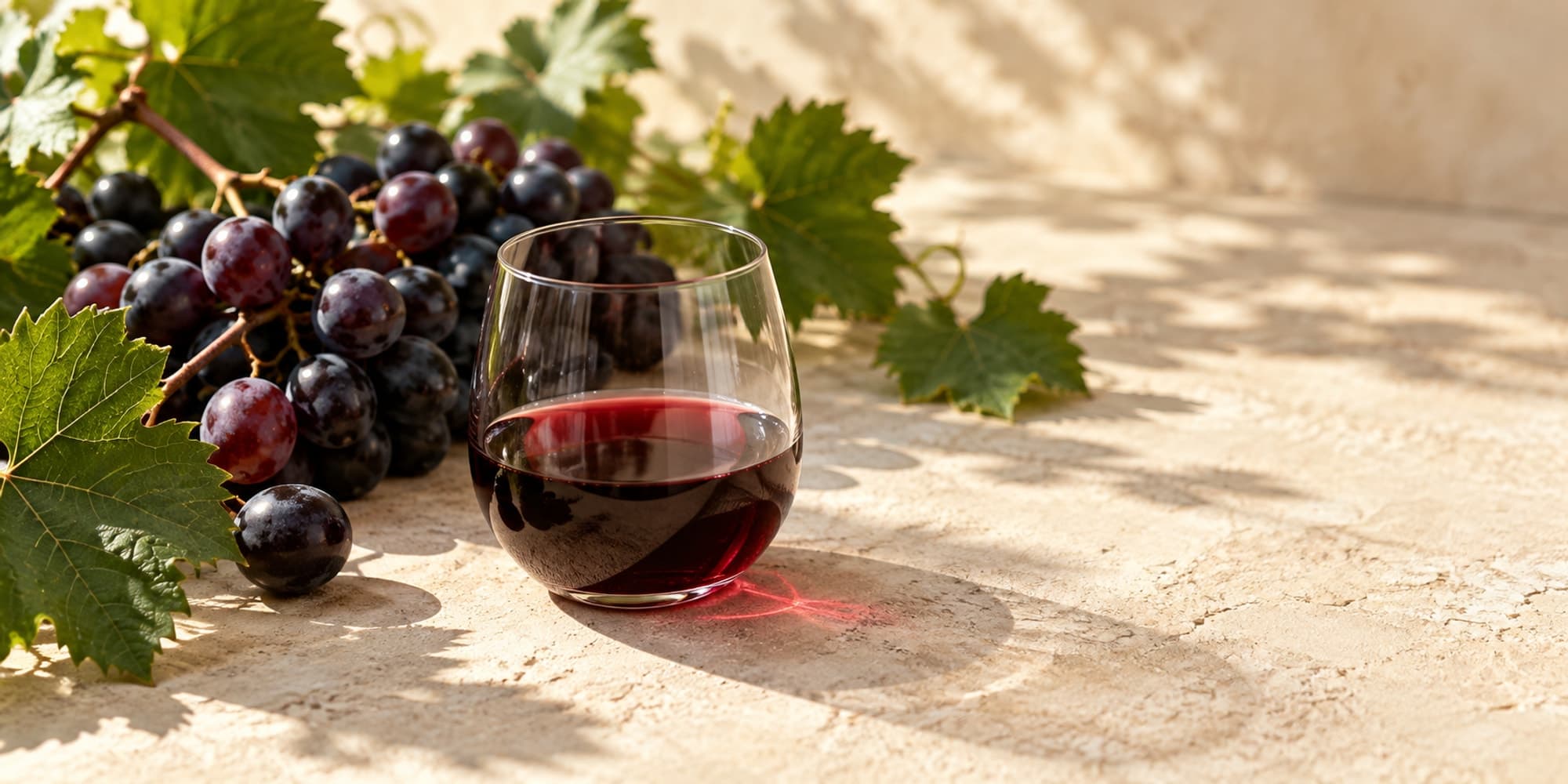
Red wine does contain polyphenols. They come mainly from the grape skins and seeds that soak with the juice during winemaking. At the dinner table, anthocyanins help make a cabernet red, tannins create that dry feeling along your gums, and resveratrol is the famous one that gets pulled onto a supplement label.
That chemistry is real. It still doesn't make wine a health food. A glass also contains alcohol, and the grape compounds don't cancel alcohol's risks. If you don't drink, polyphenols aren't a reason to start.
Yes, red wine contains polyphenols
Red wine gets its polyphenols from grape juice, skins, and seeds. The juice usually stays in contact with the skins during fermentation, which pulls color, flavor, and astringent compounds into the wine. White wine is generally made with much less skin contact, so its phenolic profile is different.
Resveratrol gets most of the press, but it's a small part of the picture. Red wine can also contain anthocyanins, flavanols, flavonols, phenolic acids, and tannins. You can taste some of that chemistry: tannins are part of the reason a young red can make your mouth feel dry.
Grape compounds and alcohol arrive together
Supply several polyphenol families during fermentation.
Changes how much of each compound reaches the bottle.
Adds risk that those compounds don't erase.
Which compounds are present
Anthocyanins contribute red and purple color. Flavanols and their larger relatives help shape bitterness and astringency. Stilbenes include resveratrol. The exact mixture changes from bottle to bottle, and most labels don't tell you how much of any one compound is present.
A laboratory can measure total phenolics or antioxidant activity, but those numbers aren't health scores. An assay tells you how a sample behaved in that test. It doesn't tell you what drinking a glass will do in a person after digestion, metabolism, and alcohol exposure enter the picture.
Why wine types differ
Grape variety matters, but so do the growing season, ripeness, fermentation, skin-contact time, aging, and storage. Two pinot noirs can differ substantially. A deep color or expensive bottle isn't a dependable shortcut to more resveratrol.
Even the broad color categories hide a lot. Rosé gets some skin contact. Orange wine is made from white grapes with extended skin contact. Dealcoholized wine starts as wine and then has most of the alcohol removed. Those names describe processes, not standardized polyphenol doses.
| Question | What the evidence says | Practical meaning |
|---|---|---|
| Red wine | Contains polyphenols from grape skins and seeds | Alcohol harms aren't canceled by the polyphenols |
| White wine | Usually has less skin contact and a different polyphenol profile | Color alone doesn't make either wine a health recommendation |
| Alcohol-free sources | Grapes, peanuts, and some berries contain relevant polyphenols | A non-drinker doesn't need to start drinking wine |
Polyphenols do not erase alcohol
This is the part that wine marketing tends to blur. Alcohol can cause harm, and adding resveratrol to the story doesn't neutralize it. The World Health Organization states that alcohol-related risk starts with the first drink and rises with greater exposure.
That doesn't mean every adult who enjoys a glass needs a lecture. It means the honest reason to drink wine is that you like wine, not that you're dosing yourself with antioxidants. "Moderate" is a limit used in guidance, not a guarantee that a given amount is safe for every person.
Don't use wine as a supplement
Don't start for resveratrol or antioxidants.
Pay attention to the pour, frequency, and your own risk.
Choose foods and drinks that don't contain alcohol.
Wine versus grapes and berries
Whole grapes and berries give you water, fiber, and plant compounds without ethanol. Peanuts contain small amounts of resveratrol too. Tea, cocoa, herbs, and olives add different polyphenol families. They don't need to copy wine molecule for molecule to make wine unnecessary as a source.
Picture the decision at dinner. A bowl of berries or a handful of grapes is food. A glass of wine is an alcoholic drink. Both may contain plant compounds, but only one changes your blood alcohol level. For more ordinary options, use a practical polyphenol grocery list or these ways to add more polyphenol foods.
What observational studies can show
Some population studies find that light or moderate wine drinkers have different health outcomes than non-drinkers or heavier drinkers. That can be worth investigating, but it doesn't prove wine caused the difference. Wine drinkers may differ in income, diet, exercise, smoking, and access to healthcare.
The comparison group can be messy too. "Non-drinkers" sometimes include former drinkers who stopped because they were ill. Researchers can adjust for known differences, but they can't turn an observational study into a randomized trial after the fact.
The practical answer
If you don't drink, don't start for polyphenols. If you already drink, don't increase the amount because a bottle mentions antioxidants. Keep the pour and frequency visible, and make room for alcohol-free days.
A standard pour is smaller than many home wine glasses make it look. Measure your usual pour once. That mundane little check tells you more about your alcohol exposure than the grape variety or the color of the wine.
What the evidence can actually claim
The evidence supports a narrow, accurate statement: red wine contains several grape polyphenols, and winemaking changes their amounts. It also supports caution around alcohol. It doesn't support calling red wine a treatment, a longevity drink, or a way to cancel the risks of ethanol.
The same restraint applies to resveratrol supplements. A capsule provides a defined, concentrated exposure that's nothing like a glass of wine, and the human trial record is mixed. Read the food and supplement tradeoffs before treating either one as medicine.
Safety and uncertainty
Alcohol can impair judgment, sleep, and driving. It can interact with medications, and it isn't appropriate during pregnancy or for anyone who has trouble controlling alcohol. Personal risk also changes with age, health history, and how much and how quickly you drink.
If alcohol interacts with a condition, medication, pregnancy, or recovery, ask a clinician about your situation. Polyphenol content shouldn't pull that conversation toward drinking.
The decision rule
Keep the two questions separate. Does red wine contain polyphenols? Yes. Should you drink it to get them? No.
Adults who choose to drink wine can enjoy it as wine. People looking for polyphenols have plenty of alcohol-free choices. That's less romantic than the French-paradox story, but it fits the evidence much better.
Common questions
Does red wine contain more polyphenols than white wine?
Usually, yes. Red wine generally spends more time in contact with grape skins and seeds, so it ends up with a different and often larger polyphenol mixture. That difference doesn't make red wine a health recommendation. Both drinks still contain alcohol.
Should a non-drinker start drinking red wine for polyphenols?
No. A non-drinker doesn't need wine to obtain polyphenols. Grapes, berries, peanuts, tea, cocoa, herbs, and olives offer alcohol-free options.
Where can you get grape polyphenols without alcohol?
Whole grapes, berries, and some grape products provide overlapping compounds without ethanol. Whole fruit also supplies fiber. You don't need to reproduce wine molecule for molecule; you need a varied diet with plant foods you actually enjoy.
The practical takeaway
Red wine has polyphenols, and it has alcohol. Keep both facts in the same frame. Don't begin or increase drinking for resveratrol. If you want more plant compounds in your day, start with the produce, tea, coffee, cocoa, herbs, and nuts already available without a corkscrew.