
Does Cocoa Powder Have Polyphenols? Yes
Oct 2, 2026
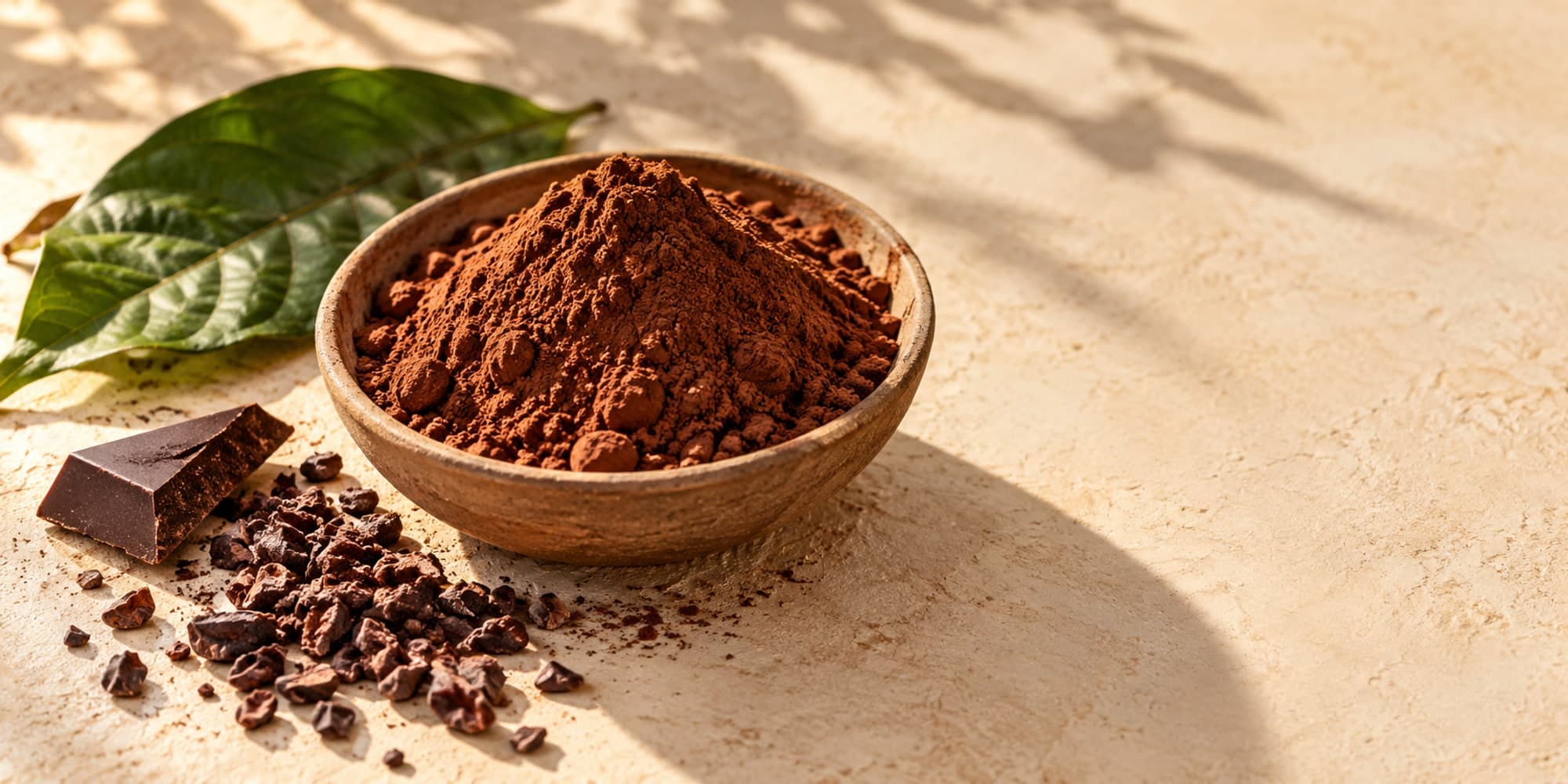
Does cocoa powder have polyphenols? Yes, mostly a group called flavanols. The catch is that cocoa powder isn't one standardized substance. Fermentation, roasting, and alkalization can change how many flavanols remain, so two tins labeled "100% cocoa" may not be chemically equivalent.
Food is the foundation here. For an ordinary breakfast bowl or baking recipe, unsweetened cocoa adds a lot of flavor without turning the meal into a dosing exercise. If you're specifically shopping for flavanols, though, the processing method and a measured amount per serving tell you much more than a dark color or an antioxidant claim. A standardized extract may be useful when you want the measured dose used in a human study, but it isn't interchangeable with baking cocoa.
Yes, cocoa contains flavanols
Flavanols are one branch of the flavonoid family, which belongs to the larger polyphenol family. Put more simply, they're plant compounds found in cocoa, tea, apples, grapes, and several other foods. Cocoa's better-known flavanols include catechins and longer compounds called procyanidins.
That chemistry is real, but the word "antioxidant" tends to run ahead of the evidence. A laboratory test can show how a cocoa sample behaves in a test tube. It can't tell you that a spoonful of the same powder will produce a specific result in a person. The human studies that matter here tested defined foods or standardized preparations, not cocoa powder as a single interchangeable category.
Cocoa percentage isn't a flavanol measurement
The cocoa material that gives a product its flavor and color.
One group of compounds found within those cocoa solids.
Measured flavanols per serving, when a producer actually provides it.
Why processing changes the answer
Cocoa starts as a seed inside a fruit. Before it becomes powder, it may be fermented, dried, roasted, ground, pressed, and alkalized. Those steps build the flavor we recognize as chocolate. They also change the mixture of compounds in the original seed.
This is why one database value can't stand in for every powder at the grocery store. Bean variety, fermentation, roasting, and storage all matter. Alkalization matters especially because it can reduce flavanol content while making cocoa darker, smoother, and less acidic. Darker cocoa may look more intense while containing fewer flavanols.
Processing isn't a defect. Dutch-process cocoa works beautifully in recipes that need its mellow flavor and lower acidity. It just answers a culinary question, not a potency question. If your goal is to eat a wider range of plant compounds, cocoa can sit alongside the foods in this practical polyphenol grocery list. It doesn't need to win a ranking.
Natural versus alkalized cocoa
Natural cocoa powder hasn't received the alkaline treatment used for Dutch-process cocoa. It usually tastes sharper and looks lighter. Because alkalization can lower flavanols, natural cocoa is a sensible default when retaining those compounds is your main concern.
Still, "natural" isn't a certificate of flavanol content. A lightly roasted natural powder and a heavily processed natural powder can differ. So can products made from different beans. If a company wants you to buy a product for a specific flavanol amount, it should give you that amount per serving.
| Label or form | What it tells you | What it doesn't tell you |
|---|---|---|
| Natural cocoa | The powder wasn't alkalized | The exact flavanol amount |
| Dutch-process cocoa | The cocoa was treated to reduce acidity | How many flavanols remain |
| 100% cocoa | The product is cocoa rather than a sweetened mix | That it's a high-flavanol product |
| Measured high-flavanol product | A stated flavanol amount per serving | That the product will improve a particular health outcome |
What the human research actually tested
The distinction between ordinary cocoa and standardized preparations isn't nitpicking. Human trials often use products made to deliver a known flavanol amount. A spoonful from an unlabeled baking tin can't be assumed to match them.
The large COSMOS randomized trial, for example, tested a cocoa extract supplement. It didn't find a statistically significant reduction in its prespecified primary composite cardiovascular outcome. Some secondary findings drew interest, but they don't turn every cocoa food into the product studied or replace the primary result.
The FDA's qualified health claim is narrow for the same reason. It applies to cocoa flavanols in high-flavanol cocoa powder under specific conditions. The agency describes the supporting evidence as very limited. The claim doesn't extend to ordinary cocoa powder, chocolate bars, or hot cocoa as a category.
Read cocoa claims from strongest to weakest
A per-serving amount gives you a concrete number to compare.
Natural or alkalized tells you how the powder was treated.
A broad marketing term identifies neither a dose nor a human outcome.
How to choose a useful cocoa powder
Start with what you're making. For oatmeal, yogurt, smoothies, or baking, unsweetened cocoa lets you control the sugar in the finished food. Choose natural cocoa if flavanol retention matters more to you than the mellow taste and dark color of Dutch-process cocoa.
Then read the serving size. A teaspoon and a tablespoon aren't equivalent, and a sweetened drink mix is a different food from plain cocoa powder. Cocoa also contains methylxanthines, including caffeine and theobromine, so more isn't automatically more comfortable.
If you're considering a concentrated product, look for flavanols per serving rather than cocoa extract weight alone. Third-party testing can help confirm identity or screen for contaminants, but it can't prove a health benefit. Compare the role of a measured extract with ordinary food in this guide to food and supplement tradeoffs.
Common questions
Does alkalized cocoa have fewer flavanols?
Often, yes. Alkalization can reduce cocoa flavanols while making the powder darker and less acidic. The size of that reduction depends on the process, so the words "Dutch-process" still don't give you an exact number. A measured flavanol amount per serving is more informative.
Is 100% cocoa powder the same as high-flavanol cocoa?
No. "100% cocoa" tells you that the product isn't a sweetened cocoa mix. It doesn't say how many flavanols survived fermentation, roasting, or other processing. High-flavanol products used in research are standardized or measured in a way ordinary baking cocoa usually isn't.
What should a cocoa powder label tell you?
For ordinary cocoa, check the ingredient list, serving size, added sugar, and whether the powder was alkalized. If the package makes a flavanol claim, look for a measured amount per serving. Cocoa percentage, dark color, and the word "antioxidant" aren't substitutes for that number.
Is there an established daily amount of cocoa powder for health?
No general daily amount of ordinary cocoa powder has been established for a health outcome. Human studies use different cocoa forms and measured flavanol doses, so their results can't be converted into a universal spoonful recommendation. Use culinary cocoa as food and judge it in the context of the whole recipe.
The practical takeaway
Cocoa powder contains polyphenols. What you can't learn from the front of most packages is exactly how many remain. For everyday food, choose the cocoa that fits your recipe, with natural unsweetened powder as a reasonable flavanol-conscious default. For a targeted flavanol product, insist on a measured amount per serving. If you simply want more plant foods in the week, these practical ways to add polyphenols matter more than finding a perfect tin.