
Bromelain and Curcumin: Evidence and Safety
Oct 30, 2026
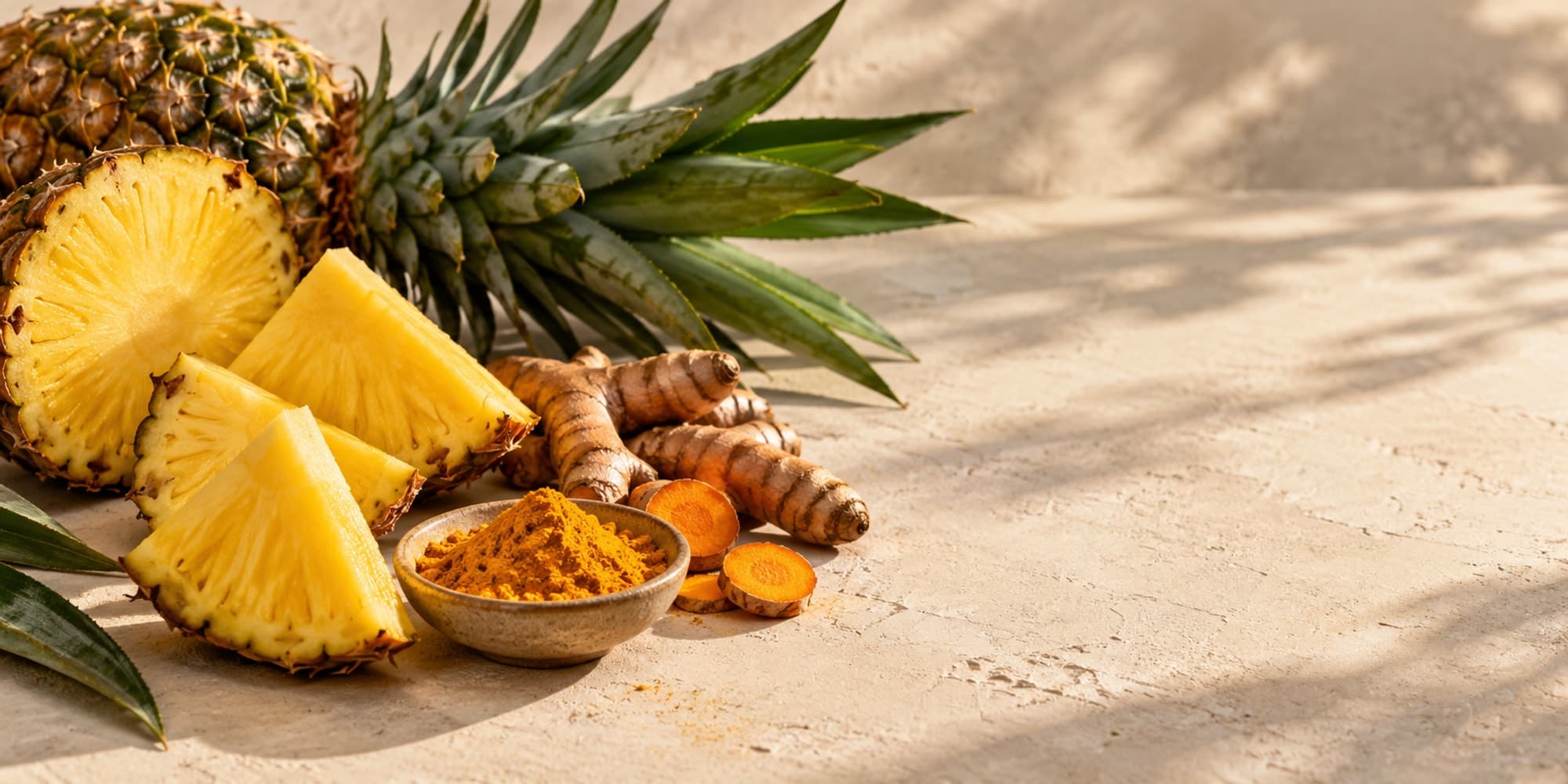
Bromelain is a group of protein-digesting enzymes from pineapple. Curcumin is one of the yellow compounds concentrated from turmeric. Supplement companies put them together because both are marketed around inflammation, soreness, and recovery. The pairing is easy to sell. Direct human evidence for the pair is much thinner.
A study of curcumin alone can't tell you what happens when bromelain is added. The reverse is true too. Once two ingredients share a capsule, the combination needs evidence of its own.
Why the pair appears together
The label usually tells a tidy story: curcumin supplies the plant compound, bromelain helps with inflammation or digestion, and sometimes black pepper improves absorption. Biology rarely organizes itself around a marketing paragraph.
Each ingredient comes in different forms and doses. Bromelain products can differ in enzyme activity. Curcumin products can use plain extracts, phospholipid complexes, oils, nanoparticles, or piperine. Add more botanicals to the blend and it becomes harder to know which ingredient contributed to a result or side effect.
A combination may still be reasonable when a human trial supports that exact formula for a defined purpose. Most bottles don't make that match easy. Treat the formula as one new product rather than as a bundle of every positive claim ever made about its parts.
Three claims that aren't interchangeable
Tests one enzyme preparation under defined conditions.
Tests one curcumin formulation and dose.
Needs direct testing to support an added claim.
Two ingredients, two roles
Bromelain comes from pineapple stem or fruit, but a capsule isn't the same as a serving of pineapple. Supplement labels may list milligrams and enzyme-activity units because weight alone doesn't fully describe an enzyme preparation.
Curcumin is one part of turmeric. A spoonful of turmeric in dinner contains a mixture of curcuminoids in culinary amounts. A supplement may provide a concentrated standardized extract and a delivery system meant to raise exposure.
That's the plain-English difference: pineapple and turmeric are foods; bromelain and curcumin capsules are engineered doses. You don't need to avoid the foods because supplement interactions exist, and you shouldn't assume the capsules are safer because their ingredients began as plants.
| Question | What the evidence says | Practical meaning |
|---|---|---|
| Bromelain | A mixture of protein-digesting enzymes from pineapple stem or fruit | Human evidence is limited and product-specific |
| Curcumin | A curcuminoid supplied through concentrated turmeric extracts | The formulation affects the absorption claim |
| Combination | Multi-ingredient evidence can't isolate either ingredient's contribution | Check both doses, other ingredients, and medication cautions |
What combination evidence exists
Direct, high-quality human evidence for bromelain and curcumin together is limited. Some studies test multi-ingredient products, which creates an attribution problem. A positive result may support the tested blend under those conditions, but it can't show that bromelain added something to curcumin or that another retail formula will behave the same way.
Cell and animal studies can identify mechanisms worth studying. They can't establish pain relief, recovery, or treatment in people. For a human trial, check the randomization, formula, dose, participant group, comparison, study length, and outcome.
The Supplement Facts panel should let you inspect both halves. For bromelain, look for the amount and activity units. For curcumin, distinguish turmeric powder from a standardized curcuminoid extract and note any carrier or absorption enhancer. A single front-label total isn't enough.
Piperine deserves its own line in the comparison. It's added because it can change how the body handles curcumin and potentially other substances. A bottle with bromelain, concentrated curcumin, and piperine is a different exposure from eating pineapple with a turmeric-seasoned meal.
A combination needs two transparent doses
Enzyme activity can matter more than weight alone.
Extract and delivery system shape the comparison.
Other actives and hidden blends can muddy attribution.
Interactions and side effects
Oral bromelain can cause stomach upset or diarrhea. Concentrated curcumin can cause digestive effects too. The combination may also be relevant to bleeding risk, medication use, and planned surgery.
If you take prescriptions, are pregnant or breastfeeding, have a health condition, or have surgery coming up, talk to a doctor or pharmacist before using the pair. Bring the whole label. The product name leaves out the forms, activity units, and extra ingredients that may matter.
If you try it after that review, keep the experiment boring. Write down the exact formula, serving, start date, and one outcome you can observe. Don't add three other supplements the same week. Otherwise, you won't know what caused a change or an unwanted effect.
I would skip a proprietary blend that hides either dose. The manufacturer is asking you to trust a combination while withholding the information needed to compare it with research.
Common questions
Has the bromelain and curcumin combination been tested directly?
Direct evidence is limited and product-specific. Multi-ingredient studies can't isolate either contribution, and one formula doesn't validate another. Look for a trial on the same composition and dose.
What does each ingredient contribute?
Bromelain supplies a mixture of pineapple enzymes, while curcumin supplies a concentrated turmeric compound. Those descriptions explain what is in the capsule, not whether the pair improves an outcome. Each ingredient needs a transparent dose and relevant evidence.
Can bromelain and curcumin be taken together?
They appear together in retail formulas, but that doesn't establish extra benefit or make the combination appropriate for everyone. Medication use, bleeding risk, surgery, pregnancy, and digestive tolerance all deserve review with a doctor or pharmacist.
What should a combination supplement label disclose?
It should state each ingredient's form and amount, bromelain activity units, curcumin standardization, serving size, all other active ingredients, and quality testing. Avoid blends that hide individual doses.
The practical takeaway
Don't buy the partnership story without partnership evidence. A useful label shows both doses, bromelain activity, the curcumin form, and every added active. A useful study tests a close match for a defined purpose. If either side is missing, you're paying for a tidy story rather than a solid comparison.
Read the food and supplement tradeoffs before treating a concentrated blend like pineapple and turmeric in capsule form. The guide to food and high-dose exposure explains why the safety rules differ.