Luteolin Foods: And Why Half the Lists Mean Lutein
Sep 17, 2026

The most useful luteolin foods are celery, chili peppers, sweet peppers, lettuce, spinach, Brussels sprouts, and small amounts of thyme. Luteolin and lutein sound almost identical, but they are different plant compounds. If the package in your hand promises eye support and mentions the macula, it means lutein. If a food list talks about flavones, celery, or thyme, it probably means luteolin.
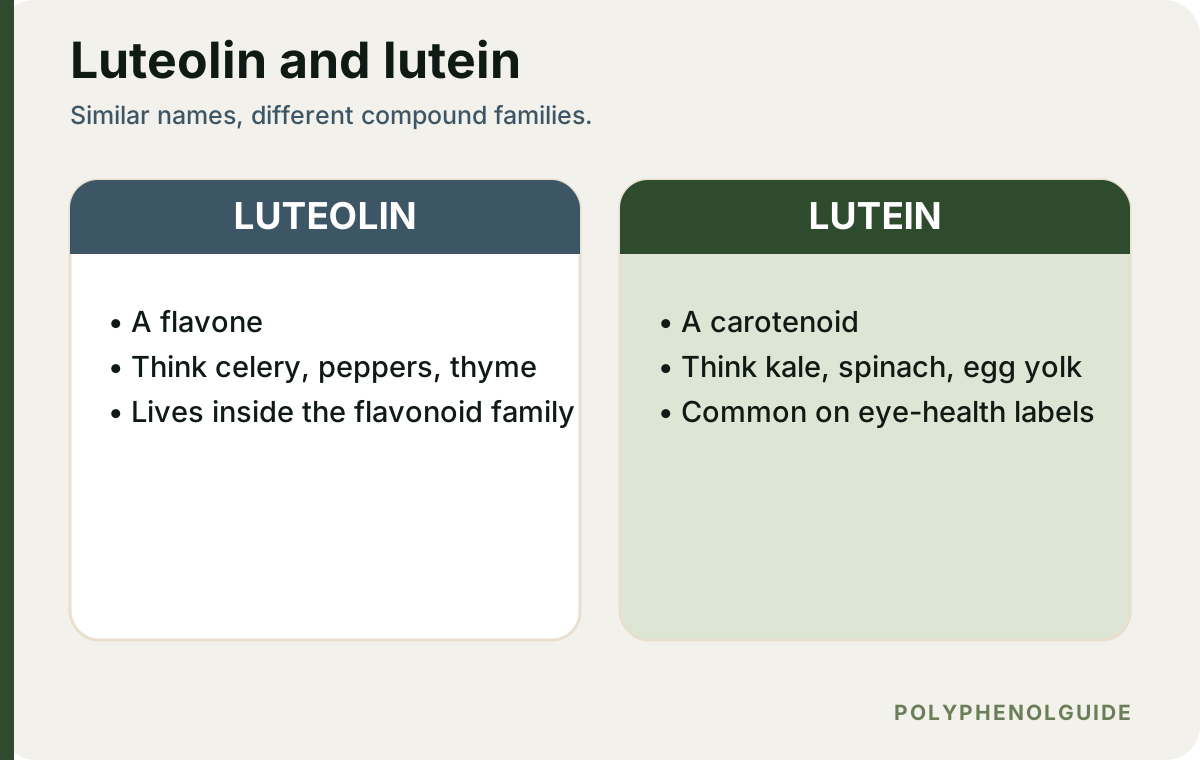
Luteolin is not lutein
Luteolin is a flavone, one subgroup of the flavonoids inside the larger polyphenol family. Lutein is a carotenoid, a fat-soluble plant pigment. Lutein concentrates in the macula of the eye and appears on eye-health supplement boxes. Kale, spinach, and egg yolk are well-known food sources of lutein.
Here is the memory trick that survives closing the page: eye labels and egg yolks point to lutein; celery and the “flavone” label point to luteolin. Spinach can contain both, which explains some of the confusion. When a list seems wrong, scan its introduction for the words carotenoid, macula, or eye health. Those words signal lutein. Flavone, celery, thyme, and apigenin signal luteolin. The Supplement Facts panel can settle which name the bottle actually uses. Quercetin belongs to another flavonoid group called the flavonols. Check the final syllable before comparing two packages. The similar names are an easy mix-up, even in otherwise useful lists.
Where luteolin actually is
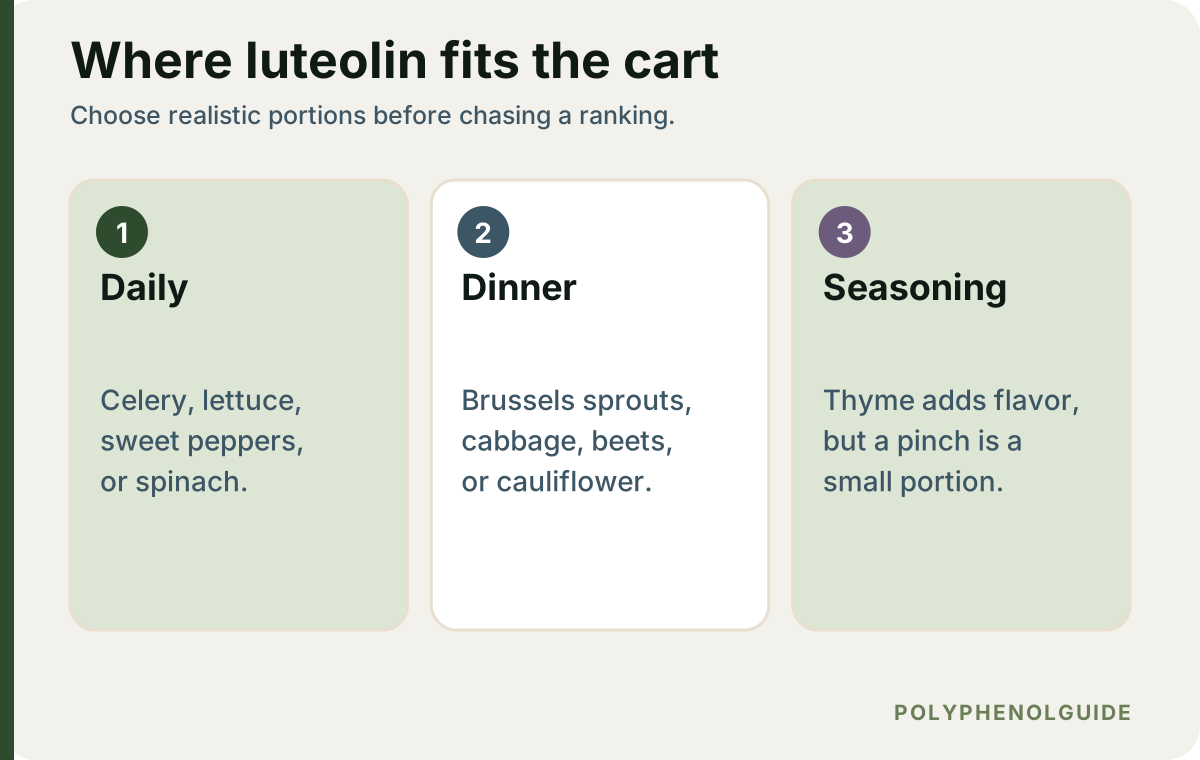
The USDA flavonoid data names celery, chili peppers, sweet peppers, lettuce, and spinach as major contributors of luteolin in the American diet. It also reports luteolin in beets, Brussels sprouts, cabbage, and cauliflower. These vegetables matter because people eat them by the stalk, leaf, pepper, or bowl, not by a laboratory-sized comparison.
Thyme ranks very high by weight, but a pinch of dried thyme contributes less food than a serving of celery or lettuce. Parsley creates a separate trap. It is especially high in apigenin, another flavone, and often lands on luteolin lists because the two compounds occur together in plants. Chamomile also provides flavones as an infusion. A produce bag, spice jar, and brewed mug are three very different serving sizes, even when a chart uses the same weight for all of them. Keep apigenin and luteolin clearly separate when you compare everyday food lists and actual supplement labels.
| Food | What the USDA says about it | Also carries | How it is eaten |
|---|---|---|---|
| Celery | Named a major dietary contributor of luteolin | Apigenin | In ordinary portions |
| Chili peppers | Named a major dietary contributor of luteolin | Other flavonoids | In small amounts, often daily |
| Sweet pepper | Named a major dietary contributor of luteolin | Other flavonoids | In ordinary portions |
| Lettuce | Named a major dietary contributor of luteolin | Apigenin | In ordinary portions |
| Spinach | Named a major dietary contributor of luteolin | Lutein, a different compound | In ordinary portions |
| Thyme | Described as very high in luteolin | Other flavonoids | By the pinch, dried |
| Brussels sprouts | Reported to contain luteolin | Other flavonoids | In ordinary portions |
| Beets, cabbage, cauliflower | Reported to contain luteolin | Other flavonoids | In ordinary portions |
| Parsley | Especially high in apigenin; luteolin is not its standout flavone | Apigenin | In garnish quantities, a handful |
Why dried herbs top every ranking
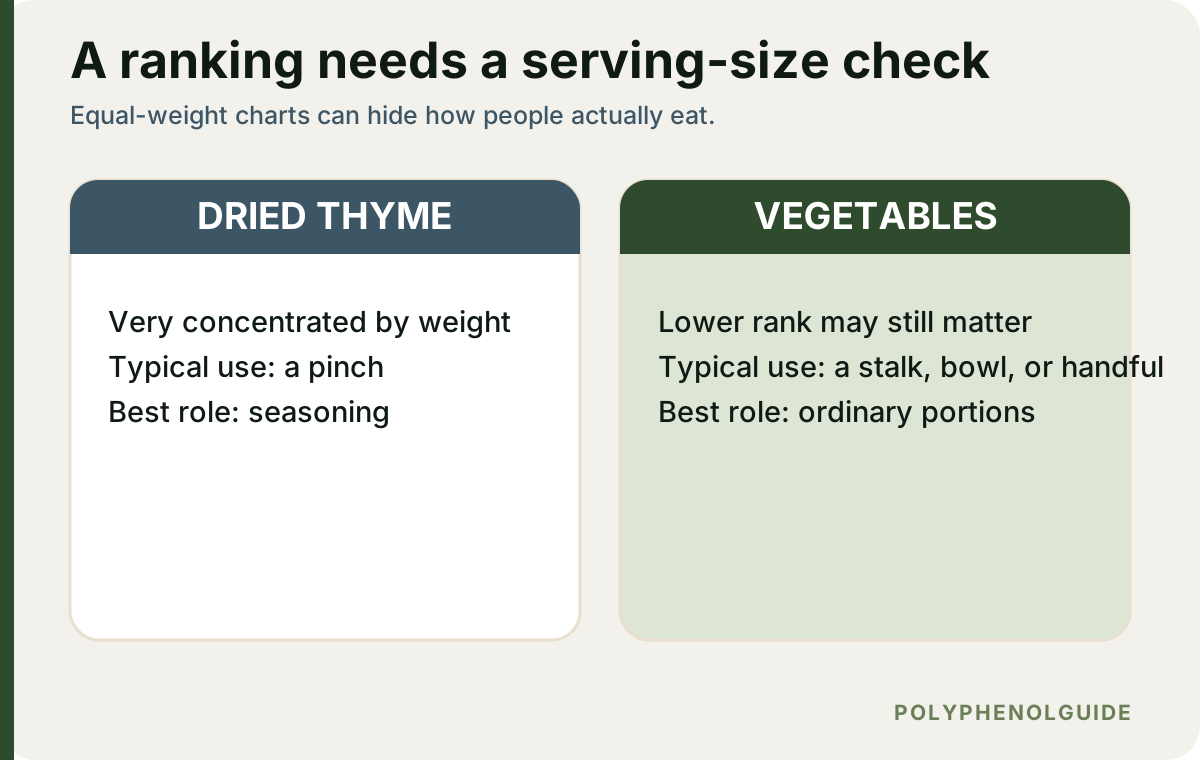
Drying removes water, so the remaining plant material and its compounds become more concentrated by weight. A database that sorts foods by the amount in a fixed weight will naturally push dried thyme toward the top. The ranking can be measured correctly and still be awkward for planning dinner.
A pinch of thyme and a salad bowl full of lettuce aren't comparable portions. You may use a few shakes from the spice jar but eat several celery stalks, a whole sweet pepper, or a generous handful of spinach. Serving size changes which food contributes more to your week. Parsley complicates the lists again because its standout flavone is apigenin. Luteolin and apigenin often travel together, and a summary can collapse them into one loose “flavone” category. Dried herbs are useful flavor, but they aren't a substitute for vegetables. Build the grocery cart around realistic weekly portions you will actually eat.
What to put in the cart
Food is the foundation for getting luteolin in ordinary dietary amounts.
- Pick up a bunch of celery in the produce aisle and cut the stalks for lunches or soup.
- Choose sweet peppers you will eat raw or cook before they soften in the refrigerator drawer.
- Buy lettuce for a bowl-sized serving instead of treating a thyme ranking as a shopping list.
- Add spinach to eggs, soup, or a weeknight pan where a full handful will wilt quickly.
- Choose Brussels sprouts, cabbage, cauliflower, or beets when one already fits your dinner plan.
- Keep thyme in the spice aisle as a useful seasoning, and close the jar tightly after each pinch.
A standardized luteolin supplement may be useful for a targeted goal if human evidence supports its form and dose. Concentrated capsules create different safety and interaction questions, so discuss them with a doctor or pharmacist.
What we still don't know
The USDA notes gaps in published values for common vegetables. Some foods have one reported measurement, and some samples were bought outside the United States. Luteolin also appears beside apigenin and other compounds, which makes it hard to isolate in an ordinary diet. How much do variety, growing conditions, storage, and preparation change what reaches a normal serving?
Common questions about luteolin foods
What food has the highest lutein?
Kale, spinach, and egg yolk are rich food sources of lutein, the carotenoid associated with the eye's macula. If you meant luteolin, look instead at celery, chili peppers, sweet peppers, lettuce, spinach, and thyme. The names are similar, but the compounds belong to different families.
Which is better, luteolin or quercetin?
Luteolin and quercetin can't be ranked as one better choice from these food data. Luteolin is a flavone found in celery, peppers, lettuce, spinach, and thyme. Quercetin is a flavonol associated with onions, kale, and broccoli. A varied weekly produce basket can easily include both.
What is the best form of luteolin to take?
For food, choose ordinary servings of celery, peppers, lettuce, spinach, or Brussels sprouts, with thyme as seasoning and chamomile as an infusion. A concentrated supplement is a different dose question entirely. Talk to a doctor or pharmacist before using one, especially alongside medication or treatment.
Who should not take luteolin?
That question applies mainly to concentrated luteolin supplements, not normal servings of celery, peppers, lettuce, or spinach. The approved food data don't establish a universal supplement-safety rule. If you take medication, are pregnant, or have a health condition, discuss a luteolin product with your doctor or pharmacist.
How much luteolin is in celery?
Published figures vary between databases and between samples of the same food, so one fixed number can suggest more precision than the evidence allows. The USDA identifies celery, chili peppers, sweet peppers, lettuce, and spinach as major contributors to luteolin intake in the American diet.
What foods have both quercetin and luteolin?
Quercetin is a flavonol and luteolin is a flavone, and plants can carry several subclasses together. Celery, peppers, lettuce, and spinach are useful luteolin foods. Onions, kale, and broccoli are good flavonol sources. A mixed produce basket can cover both. Exact amounts vary by food sample and database.