Do Polyphenols Survive Cooking? What the Kitchen Actually Costs You
Sep 12, 2026
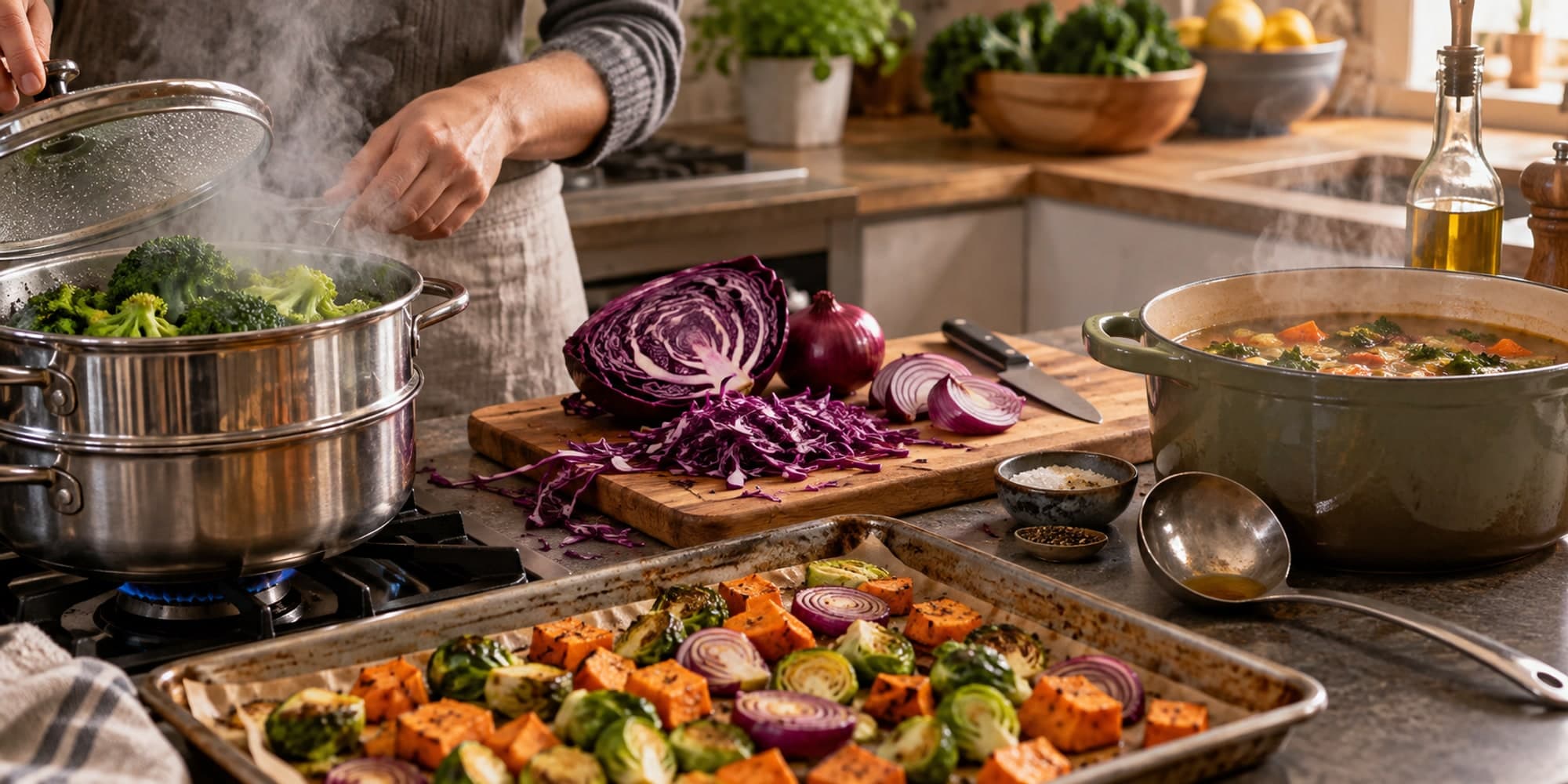
The pan is hot, the broccoli is cut, and now you're wondering whether cooking will undo the reason you bought the vegetable. Do polyphenols survive cooking? Yes, plenty do, though the amount can fall. Water usually matters more than heat alone because some compounds leave the food and end up in the cooking liquid. Steaming and microwaving generally retain more than boiling, while soup keeps much of what leaches out. Use that information to make a few easy choices. You don't need another pan or a new way of eating.
The short answer
Polyphenols survive ordinary cooking, but the amount on your plate won't match the amount in the raw ingredient. Some compounds break down or leave the food, and the size of that change depends on the specific compound, vegetable and cooking method. There's no universal percentage you can apply to dinner.
Boiling tends to create the largest losses because the food sits in water. Water-soluble compounds can move out of the vegetable and stay in the pot after you drain it. Steaming and microwaving use less water and usually less contact time, so they tend to retain more.
Heat isn't always a simple loss. Cooking softens plant cell walls, which can make some compounds easier to absorb even when the total amount falls. The number in the food may go down while access to part of what remains goes up. That's why "raw is always best" doesn't survive close inspection.
If you found a Do polyphenols survive cooking Reddit discussion, you've probably seen confident rules going in opposite directions. The studies don't support one rule for every plant. The practical answer is easier: use less water when it suits the dish, keep cooking liquid when you can and eat the vegetable in the form you enjoy.
That last part matters. A perfectly optimized vegetable left in the refrigerator contributes nothing to dinner. A cooked vegetable you want to eat is the useful one.
Where the losses actually go
Think about the color that leaves vegetables during boiling. The cooking water changes because compounds have moved out of the food. Polyphenols that dissolve in water can take the same route. When you tip the pot into the sink, some of the original polyphenol content goes with it.
Leaching explains why water contact often matters more than the word "heat." A vegetable sitting in a pot of water has far more opportunity to lose soluble compounds than one held above the water in steam. A microwave with little added water also limits that escape route.
Cutting and time affect the same process. Smaller pieces expose more surface to water and heat. Longer contact gives compounds more time to move into the liquid. You don't need to cook everything whole, though chunky pieces can reduce exposure when the recipe allows.
You'll sometimes see the question Does cooking berries destroy nutrients treated as a single yes-or-no problem. Nutrients behave differently. For polyphenols, the amount lost depends on the berry, compound and method. Cooking berries in their own juices also differs from boiling them and discarding the liquid.
Does cooking berries destroy fiber is another separate question. Whole foods bring fiber along with polyphenols, but the cooking studies cited here don't measure fiber loss. Don't use a polyphenol result to make a precise claim about fiber. Keep the question tied to the evidence it needs.
In the kitchen, watch where the liquid goes. If it stays in the dish, much of what leached out stays available to eat. If it goes down the drain, the escaped compounds leave with it.
Which methods keep the most
A 2010 study compared boiling, microwaving and steaming in brassica vegetables and measured changes in their phytochemical content. The pattern supports a simple kitchen rule: methods with less water contact generally retain more than boiling.
A separate 2014 study looked at domestic processing of leeks. Boiling lowered total phenolic content in both the white shaft and green leaves. The result doesn't give every vegetable the same loss. It does show what can happen when plant tissue sits in water and the water is discarded.
Steaming keeps the food out of the water. Microwaving can use very little added water and a short cooking time. Both generally retain more than boiling. Frying avoids water, yet its higher heat lowers phenolic content in both the food and the oil.
Heat lowers phenolics in olive oil, but that finding doesn't justify banning it from the skillet. Use the amount of heat and time the food needs, and save your best-tasting oil for finishing when you want to preserve more of its flavor and phenolics.
| Method | Water contact | General effect on polyphenol content |
|---|---|---|
| Boiling | High, food sits in water | Largest losses, much of it leached into the water |
| Steaming | Low water without immersion | Retains more than boiling |
| Microwaving | Low, little added water | Retains more than boiling |
| Frying | None, but high heat | Lowers content in both the food and the oil |
| Soups and stews | High, but the liquid is eaten | Losses stay in the bowl rather than the sink |
Polyphenol retention is only one factor in choosing a cooking oil. The studies cited here compare broad methods rather than brands or grades. Use an oil you enjoy and avoid more heat and time than the food needs.
Why cutting size matters
Cut a vegetable in half and you've exposed a new surface. Dice it into small pieces and you've exposed much more. Water and heat can reach those surfaces directly, so smaller cuts create more opportunity for compounds to leave the food.
You can picture the difference with a leek. A long section has a relatively small cut face. Thin rings put a cut edge around every piece. In a sauté, that may be exactly what you want for texture and flavor. In a large pot of water, it also gives soluble compounds more routes into the liquid.
This doesn't mean you need to serve vegetables in inconvenient slabs. Match the cut to the dish. Leave pieces a little larger when they'll be boiled and drained. Cut them smaller when quick cooking helps you get dinner on the table. The goal is a useful trade, not a laboratory maximum.
The same caution applies when someone asks Does cooking raspberries destroy nutrients. A raspberry already has a very different structure from a leek or broccoli floret. Compound, food and method all matter. A result from one vegetable can't be pasted onto every berry.
If you're making a soup, smaller cuts become less concerning because you eat the liquid. If you're blanching and draining, larger pieces and shorter contact reduce the opportunity for leaching. That distinction is more practical than memorizing a rule for every vegetable.
I cut vegetables for the meal first. If two sizes would work equally well, I choose the larger one for boiling. That's about as far as I'd let this evidence reorganize the cutting board.
The soup exception
Soup changes the accounting because the cooking water stays in the meal. Polyphenols can move out of vegetables and into the broth, but they haven't gone down the drain. You eat the liquid along with the softened food.
The same idea applies to stews and pan sauces. A tomato, berry or vegetable can release compounds into surrounding liquid. If that liquid becomes part of dinner, the movement isn't the same as a discarded loss. Location has changed, and the bowl keeps both parts.
This is a useful answer to Does cooking blueberries destroy antioxidants. Cooking can lower some compounds, and the amount varies. If the blueberries cook into oatmeal, sauce or their own juices and you eat the liquid, you keep what leached into it. Boiling them in water and draining the pot would be a different method.
Our kitchen guides use this distinction often because it asks very little of you. Save vegetable cooking water for a sauce when it fits. Use the broth in soup. Don't force it when the water tastes bitter or doesn't belong in the recipe.
A Do polyphenols survive cooking Reddit thread may turn broth into a clever hack. It's more ordinary than that. Keeping the liquid simply avoids throwing away compounds that dissolved into it. It can't restore anything heat already changed, and it doesn't make every soup high in polyphenols.
The soup exception is practical because it follows the meal. You're keeping flavor and liquid you wanted anyway, not drinking leftover pot water to rescue a theoretical number.
When cooking helps absorption
Cooking softens plant cell walls. That can make some compounds easier to release during digestion, even when the total polyphenol amount in the food has fallen. Retention and absorption are related, but they aren't the same measurement.
This is the uncomfortable part of simple raw-versus-cooked rankings. A laboratory may report less of a compound after cooking. Your digestive system may have easier access to part of what remains because the plant structure has softened. One number can't tell both stories.
Digestion and gut bacteria change polyphenols again before they reach the bloodstream. What you swallow isn't what circulates unchanged. That process adds another reason to resist treating a raw food database as a precise map of exposure in your body.
People asking Does cooking blueberries destroy antioxidants often mean, "Did I make breakfast pointless?" No. Losses vary by compound and method, while cooking may also change access to what's left. A cooked berry remains a whole food with fiber and other nutrients.
Does cooking berries destroy fiber still needs its own evidence. The polyphenol studies here don't settle it. What they do establish is that cooking can lower measured phenolics without turning the food into an empty ingredient.
I'd rather eat cooked vegetables regularly than protect a raw number at the cost of meals I don't enjoy. Absorption is another reason that the biggest number before cooking isn't automatically the most useful number after eating.
What the databases measure
Food databases usually report polyphenol values measured in raw material. That number is a reference point. It isn't a promise about the portion on your plate after chopping, storage and cooking.
The starting food already varies. Cultivar, ripeness, growing conditions, storage and processing can all change polyphenol content. Two heads of the same vegetable may begin with different amounts before either reaches a pan. Cooking then adds another variable.
That makes rankings useful for broad comparison and poor for exact personal accounting. A raw value can tell you that one food tends to contain more of a compound than another. It can't tell you exactly how much survived your recipe or reached circulation.
Cooking berries changes some nutrients and polyphenols, but the starting number was never fixed. Variety, storage, time in the pan and digestion all affect what remains and what the body can use.
The question Why you shouldn 't cook with extra virgin olive oil makes a similar leap. A raw or unheated value doesn't prove that cooking is a mistake. Heat can lower phenolic content in oil. The decision still includes whether the oil helps you cook and eat the food.
Use database figures as estimates, not as a report card for your kitchen. They can't measure what is on your plate. A varied diet also spreads the uncertainty across many foods rather than asking one ingredient to hit a target.
How much this should change your cooking
Make the easy changes first. Steam or microwave when either method suits the food. Use less water and avoid cooking longer than you need. Keep the liquid in soups, stews and sauces when it tastes good.
After that, stop optimizing. Boiled vegetables still count as vegetables. NCCIH notes extensive evidence that people who eat more fruits and vegetables have lower rates of chronic disease, while antioxidant supplements haven't shown the same benefit. The food pattern matters more than preserving every measured compound.
Does cooking blueberries destroy antioxidants is worth asking once. It shouldn't keep you from baking or simmering fruit you enjoy. Losses vary, and liquid kept in the dish remains part of what you eat.
Frying can lower phenolic content in oil and food. That supports avoiding unnecessary high heat, while leaving plenty of room to cook with olive oil when it suits the dish.
If you want more options, browse polyphenol-rich foods and choose ones that already fit your meals. Whole foods deliver these compounds with fiber and other nutrients. You don't need to replace food with a concentrated capsule because some amount was lost in the pan.
One steamed dinner won't solve your diet, and one pot of boiled broccoli won't spoil it. Keep the useful lesson about water. Leave the anxiety behind.
Common questions
Does olive oil lose polyphenols when cooked?
Yes. Heat during frying lowers phenolic content in the oil as well as the food. The size of the loss varies, so there isn't one percentage for every kitchen. Use only the heat and time the dish needs, and add uncooked oil later if you enjoy it.
What are the negative side effects of polyphenols?
Large, concentrated antioxidant doses may interfere with functions the body needs, according to NCCIH. Whole foods deliver much smaller amounts with water, fiber and bulk. The concern described here belongs mainly to high-dose supplements, not ordinary cooked vegetables or fruit.
What food has the highest polyphenols?
There isn't one stable winner. Database figures usually measure raw food, while cultivar, ripeness, storage and processing change the amount. Cooking changes it again. Use food rankings as averages, then eat a variety instead of chasing one exact number.
Do blueberries lose antioxidants when cooked?
They can lose some, but the amount depends on the compounds and method. Less water and shorter contact generally retain more than boiling. If berries cook in liquid you keep, such as oatmeal or sauce, compounds that leach out stay in the dish.
Does boiling destroy polyphenols?
Boiling lowers polyphenol content, though "destroy" overstates what happens. Many water-soluble compounds leave the food and enter the cooking water. Steaming and microwaving generally retain more. Soups and stews keep much of the leached material in the meal.
Is steaming better than boiling for nutrients?
For polyphenol retention, steaming generally beats boiling because the food isn't immersed in water. Different nutrients behave differently, so don't turn that finding into a universal rule. Choose steaming when it suits the dish, and keep boiling liquid when practical.
What to actually do
Steam or microwave when it's convenient. Keep cooking liquid in soups and sauces, and leave pieces larger when you're going to boil and drain them. Food is the foundation, so use the method that helps you eat the vegetables. A standardized supplement can be useful for a specific researched goal, but it can't replace dinner. Heat lowers some phenolics, and dinner still has to get cooked.