Dairy-Free Polyphenol Foods: The List, and Why Cutting Dairy Costs You Nothing
Sep 13, 2026
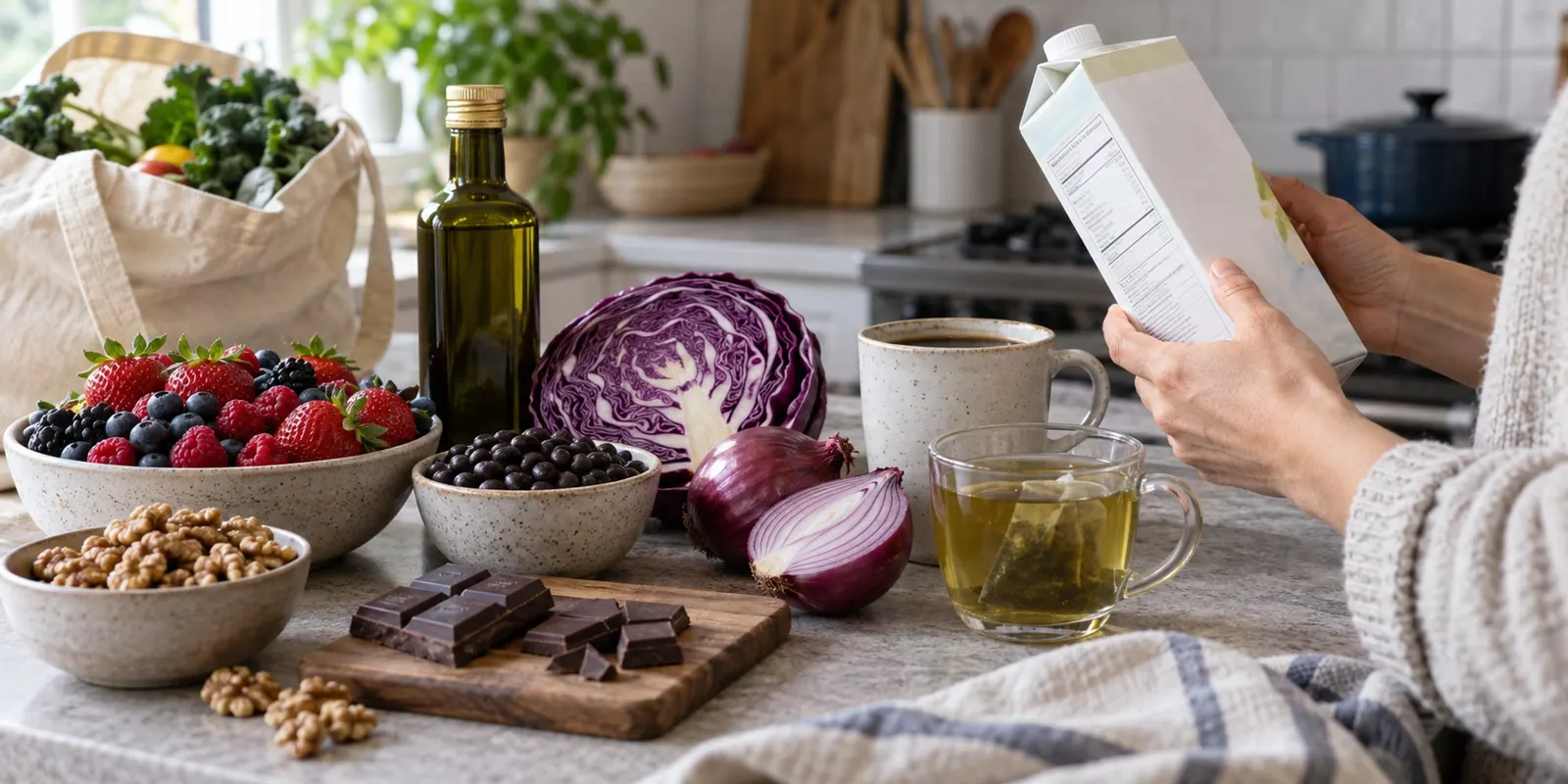
You've cut dairy, looked at everything that disappeared from the refrigerator, and started wondering whether polyphenols went with it. They didn't. Polyphenols are plant compounds, so dairy was never a meaningful source. Dairy free polyphenol foods are simply the foods that supply polyphenols in the first place: berries, vegetables, coffee, tea, olive oil, whole grains, nuts, legumes and dark chocolate. The useful task isn't replacing milk for polyphenols. It's putting a short, workable list in your cart and checking separate nutrients, especially calcium and vitamin B12. That distinction clears the fog.
Why dairy was never the source
Cutting dairy removes essentially no polyphenols from your diet because milk, cheese and yogurt don't supply a meaningful amount. The compounds come from plants. That means the produce aisle, coffee shelf and pantry were doing the work before you changed how you eat.
This is one of the rare nutrition questions with a reassuringly plain answer. You don't need a specialty substitute to recover lost polyphenols. Keep eating plant foods, and your intake can stay where it was or rise. Coffee and tea contribute a large share for many people because they're consumed so often. A mug you already drink may matter more across a week than an unfamiliar ingredient bought for a single meal.
Whole grains, nuts and legumes add polyphenols with fiber. Berries, red cabbage, red onion, spinach and artichoke are among the stronger everyday produce choices. Extra virgin olive oil carries hydroxytyrosol, oleuropein and oleocanthal, the phenolics behind its peppery bite. The source has always been plants. The biology is straightforward.
Berries, vegetables, legumes and whole grains can fit a satisfying eating pattern, but their polyphenol content alone doesn't establish a weight-loss effect. Build them into normal meals and judge the whole diet rather than one compound.
MCT is a separate fat choice and isn't an established route to polyphenols. Get polyphenols from berries, tea, coffee, legumes, nuts, whole grains and extra virgin olive oil.
The list, by aisle
Start in produce. Put berries, red cabbage, red onion, spinach and artichoke on the short list. You don't need all of them in the same week. Pick the ones that fit food you already make. Frozen berries are still berries, cabbage keeps well, and red onion can replace white onion without teaching yourself a new recipe.
In the drinks aisle, coffee and green or black tea are the obvious choices. Frequency is their advantage. People often drink them daily, so they can contribute more in practice than a food with an impressive value that appears once in the refrigerator.
In the oil aisle, choose extra virgin olive oil when you want the grade that retains phenolic compounds. In the pantry, look at dark chocolate, nuts, legumes and whole grains. That gives you snacks, cooking staples and a dessert without creating a separate polyphenol routine.
If you want the full grocery list, use it to broaden your choices after this short version is working. A List of foods highest in polyphenols can be useful, but exact rankings have limits. Cultivar, ripeness, storage and processing change content, so the value beside a food is an average rather than a measurement of what you bought.
| Aisle | What to get | Why |
|---|---|---|
| Produce | Berries, red cabbage, red onion, spinach, artichoke | The highest-content everyday items |
| Drinks | Coffee, green and black tea | The biggest daily contributors for most people |
| Oils | Extra virgin olive oil | The grade that keeps its phenolics |
| Pantry | Dark chocolate, nuts, legumes, whole grains | Polyphenols with fiber attached |
A List of polyphenol foods can quickly become too long to shop. This one has enough range for breakfast, lunch, dinner and snacks. If you prefer a Foods high in polyphenols PDF, save or print the table. The format doesn't change the advice: buy a few familiar plant foods and repeat them.
Chocolate, and the milk question
Chocolate is the one shelf where dairy and polyphenols visibly overlap. Milk chocolate contains less cocoa than dark chocolate, so it also carries fewer cocoa flavanols. Dark chocolate with a higher cocoa percentage has more flavanols and less sugar. Check the ingredient label if you need the bar itself to be dairy free, since a dark wrapper doesn't settle that manufacturing question.
Research has examined whether milk changes the absorption of cocoa flavanols, and the findings aren't settled. That uncertainty is different from saying milk removes polyphenols from your overall diet. It doesn't. The question concerns what happens to compounds from cocoa when they're consumed with milk.
Digestion, absorption and gut bacteria change polyphenols before they circulate. That makes simple claims about blocking absorption hard to defend from mixed research. I wouldn't reorganize breakfast around that question. Choose coffee or tea the way you enjoy it, then make the rest of the day's plant foods do their share.
Lists of Foods high in polyphenols and flavonoids often place dark chocolate near fruit and tea. That's reasonable as a source list, though it doesn't make every bar equal. Cocoa percentage matters, and milk chocolate starts with less cocoa. Foods high in polyphenols and flavonoids also include vegetables, legumes and whole grains, so chocolate doesn't have to carry the plan.
Chocolate doesn't need a complicated stack of supporting ingredients. A square of darker chocolate is a pantry choice, and the ingredient and allergen label tells you whether it fits a dairy-free diet.
What cutting dairy does cost you
Polyphenols aren't the nutritional issue to plan around after cutting dairy. Calcium and vitamin B12 are. Removing dairy can change where you get those nutrients, and a plant milk's name won't tell you whether it replaces them. Fortification varies widely, so read the label on the carton you actually buy.
That label check is more useful than debating which plant base sounds healthiest. Look for what has been added and how the serving fits the rest of your diet. No personal intake target follows from this food list. Polyphenols remain abundant in plants. Calcium and B12 may need deliberate attention.
The distinction matters because a Polyphenol diet plan can appear nutritionally complete while ignoring why dairy was removed. A Polyphenol diet plan built from berries, tea, olive oil, grains, nuts and legumes covers many plant foods. It doesn't automatically answer every nutrient question created by the change.
The same goes for a List of polyphenol foods. It tells you where plant compounds are, while your fortification label tells you something else. Keep those jobs separate. It makes shopping much less confusing.
NCCIH notes that diets containing more fruit and vegetables are associated with lower rates of chronic disease, while antioxidant supplements haven't produced the same benefit. Whole foods deliver polyphenols alongside fiber and other nutrients in amounts far below a concentrated capsule. You can browse more polyphenol-rich foods without turning this into a supplement hunt.
A List of foods highest in polyphenols may help you rotate choices, though exact values still change with variety and storage. Polyphenol-rich fruits and vegetables give you range without requiring dairy substitutes. Keep the list practical, then give calcium and B12 their own line on the shopping plan.
Common questions
What are the top 5 foods rich in polyphenols?
For a useful dairy-free five, choose berries, red cabbage, red onion, spinach and artichoke. Whole grains, nuts and legumes broaden the list and bring fiber with their polyphenols. Exact rankings vary with cultivar, ripeness, storage and processing, so treat any top five as a shopping shortcut.
Who should not take polyphenols?
Polyphenols in ordinary plant foods are different from taking a concentrated product. Dairy isn't a meaningful source, and whole foods supply these compounds with fiber and other nutrients at far lower amounts than a capsule. Anyone considering a supplement for a personal health reason should talk to a doctor or pharmacist.
Which foods are rich in polyphenols but low in lectins?
Berries, red cabbage, red onion, spinach and artichoke are produce options rich in polyphenols. Whole grains, nuts and legumes also contribute, though they may not fit a diet that's restricting lectins. This list doesn't rank lectin content, so check your specific restriction separately.
Can you give me a list of 100 foods high in polyphenols?
You can build a hundred-item list, but it won't improve a week's groceries. Start with berries, red cabbage, red onion, spinach, artichoke, coffee, tea, olive oil, dark chocolate, nuts, legumes and whole grains. Rotate within those groups rather than chasing an exact ranking.
Does milk block antioxidant absorption?
The research on milk and cocoa flavanol absorption isn't settled. That doesn't show that milk erases polyphenols from an entire diet. Plant milks vary in fortification, so choose one by reading its calcium and vitamin B12 label, not by assuming its plant base changes polyphenol absorption.
Is dark chocolate dairy free?
Some dark chocolate is dairy free, but you need to check the ingredient and allergen label. Higher cocoa percentage generally means more flavanols and less sugar than milk chocolate. The word dark tells you about the style of chocolate. It doesn't guarantee the absence of milk.
The short list
Buy berries or another high-polyphenol produce item, keep coffee or tea if you enjoy it, and add legumes, nuts or whole grains to the pantry. Extra virgin olive oil and darker chocolate can round things out. That's enough. Dairy wasn't supplying meaningful polyphenols, so replace it for taste and nutrition, not for plant compounds. Put your planning energy into calcium and vitamin B12 labels.
Food is the foundation of a dairy-free polyphenol plan. A standardized supplement can be useful when a specific human study supports its dose and purpose, but it won't replace the fiber in beans, berries and whole grains or the calcium and vitamin B12 planning that dairy removal may require.